

The best reef tank light depends on tank size and coral type: the AI Prime 16HD is the value pick for nano and small tanks, the Kessil A360X suits mixed reefs where shimmer matters, and the EcoTech Marine Radion XR15 G6 Pro is a top choice for SPS-focused tanks needing wide, controllable spread. For very large tanks, Orphek’s Atlantik series and multiple-fixture setups cover the width. Match the light’s footprint to your tank before comparing price.
Our top picks
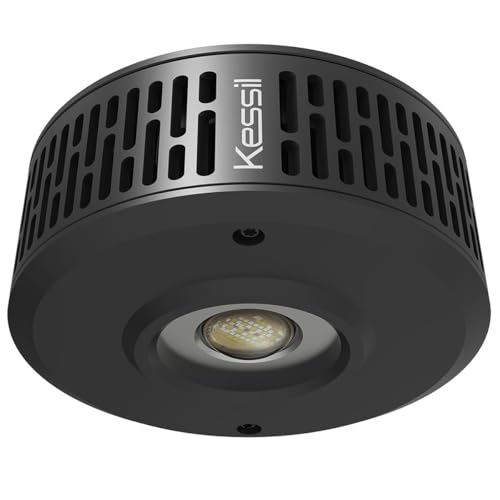 Kessil A360XE Tuna Blue Saltwater Reef Marine
- High-density LED cluster replicates the natural, dynamic shimmer…
- Tunable from deep 10,000K daylight to violet/actinic blue,…
- Adjust color temperature and overall brightness independently without…
 Kessil AP9X LED Aquarium Light
- The Kessil AP9X LED Aquarium Light is the…
- The new Kessil AP9X Mounting Arm is NOT…
- Lighter weight, lower profile design
 Kessil A160WE Controllable LED Aquarium Light
- The a160we features Kessil`s new proprietary Kessil logic
- External controllability in addition to its enhanced manual…
- Shimmer Kessil lights are the only leds capable…
| Product | Key specs | |
|---|---|---|
| Kessil A360XE Tuna Blue Saltwater Reef Marine | High-density LED cluster replicates the natural, dynamic shimmer… Tunable from deep 10,000K daylight to violet/actinic blue,… Adjust color temperature and overall brightness independently without… | Check price |
| Kessil AP9X LED Aquarium Light | The Kessil AP9X LED Aquarium Light is the… The new Kessil AP9X Mounting Arm is NOT… Lighter weight, lower profile design | Check price |
| Kessil A160WE Controllable LED Aquarium Light | The a160we features Kessil`s new proprietary Kessil logic External controllability in addition to its enhanced manual… Shimmer Kessil lights are the only leds capable… | Check price |
 NICREW HyperReef 100 Gen 2 LED Reef | The proven and enhanced violet and blue spectrum… A custom designed wide-angle optical system achieves extensive… Advanced heat management features a new fan and… | Check price |
As an Amazon Associate we earn from qualifying purchases at no extra cost to you.
Quick comparison by tank size
| Pick | Best for | Coverage (approx.) | Coral level | Price range |
|---|---|---|---|---|
| AI Prime 16HD | Nano and small tanks | About 24 x 24 in | Softies, LPS | Budget to mid-range |
| Kessil A160WE Tuna Blue | Small tanks, shimmer lovers | About 12 to 18 in spread | Softies, LPS | Mid-range |
| Kessil A360X | Mixed reefs up to 30 in wide | About 24 in | LPS, easy SPS | Upper-mid |
| Radion XR15 G6 Pro | SPS and precise control | Up to 30 x 30 in | SPS, all corals | Premium |
| Radion XR30 G6 Pro | Large SPS tanks | Wider than XR15 | SPS | Premium |
| Orphek Atlantik series | Large tanks, high PAR | Large footprint | SPS, demanding corals | Premium |
Best value: AI Prime 16HD
The Prime 16HD is a compact, bright LED with a wireless controller on newer models. Retail guides rate it for tanks up to roughly 24 x 24 inches, and it handles soft corals and LPS well. Its limit is spread: past about 24 inches you need a second fixture. It is the usual budget recommendation for nano reefs.
Best for shimmer: Kessil A360X
Kessil lights are point-source, which creates the rippling shimmer many reefers like. The A360X is a popular choice for mixed reefs and easy SPS. The trade-off is that one fixture may not evenly cover a long aquascape, so wide tanks need two. Kessil’s controllers make spectrum adjustment simple.
Best compact option: Kessil A160WE Tuna Blue
The A160WE suits small tanks and has a blue-leaning spectrum that makes coral colors pop. Its narrow spread makes it a poor fit for tanks wider than about 18 inches.
Best premium control: Radion XR15 G6 Pro
EcoTech recommends the XR15 for roughly a 24-inch-square area, with maximum spread up to 30 x 30 inches depending on mounting height and coral demand. Its strength is the multi-channel spectrum, and it can be paired with controllers. The cost is high and beginners rarely need that much capability. The XR30 is the larger version for tanks over about 100 gallons.
Best for large tanks: Orphek Atlantik series
Orphek lights target high PAR for large or deep tanks and are used for demanding SPS. They are powerful, which also means more heat management and a higher chance of burning corals if acclimation is skipped.
How to choose a reef light
- Coverage first: compare the footprint rating with your tank’s length and width, not just wattage.
- Coral type: softies need low to medium light; SPS needs high light and good spectrum.
- Depth: light weakens with depth, so deep tanks need stronger fixtures.
- Controls: dimming, ramp-up schedules and app control reduce coral stress.
- Mounting: check whether you need a hanging kit or arm.
Worked example: lighting a 40 gallon breeder
A 40 gallon breeder is about 36 x 18 inches. A single 24-inch-wide fixture leaves the ends dim, so two Prime 16HD units, one each side, give more even coverage than one bigger light. Run a 8 to 10 hour photoperiod and ramp intensity up over a few weeks for new corals.
Ownership realities
- LEDs fade gradually; plan to adjust intensity as the fixture ages.
- Fans on some units collect dust and may need cleaning.
- Saltwater creep corrodes connectors, so wipe fixtures and keep splash away.
- Always acclimate corals to a new light to avoid bleaching.
Acclimating corals to a new reef light
Corals bleach or brown when moved suddenly to a stronger light. A safe approach is to start at roughly 30 to 40 percent of the fixture’s intensity and raise it by 5 to 10 percent every few days over two to four weeks. Place new frags on the sand bed or low rockwork first and move them higher once color holds. Watch for pale tips on SPS or retracted softies, which signal too much light too fast.
Spectrum and color: what actually matters
Most reef LEDs mix royal blue, blue, violet, white and sometimes UV channels. Blue light penetrates water well and triggers fluorescence, so tanks viewed under mostly blue light look vivid, while more white gives a natural daylight look and can help growth. Rather than copy a preset, begin with the manufacturer’s default reef spectrum and adjust slowly, giving the corals time to adapt. If algae grows, shorten the photoperiod before changing the spectrum.
Power use and heat
A small light uses a modest amount of electricity, but high-output fixtures can draw a hundred watts or more and add heat to the water. In a hot room, check that your chiller or fans can keep the tank under about 80 degrees Fahrenheit. LED fans are quiet at low output but audible near maximum, which matters if the tank sits in a bedroom or office.
Frequently Asked Questions
How much light does a reef tank need?
It depends on coral. Soft corals do well in lower PAR, while SPS corals need much higher light. Check manufacturer PAR charts for your tank depth.
Is one light enough for a 40 gallon reef?
Often not, because spread is limited. Two smaller fixtures usually light a long tank more evenly than one.
Are Kessil lights good for SPS?
Kessil lights can grow easy SPS in the right model and placement. For dense SPS, multiple fixtures or higher output units are recommended.
How long should reef lights stay on?
Most keepers use 8 to 10 hours per day with a gradual ramp up and down.
Do I need a controller?
Not strictly, but controllers make scheduling and acclimation easier and help prevent coral shock.
Write Your Review
No reviews yet. Be the first to share your experience!