

For an aquascape, the best heater is one you cannot see: an inline heater such as the Hydor ETH on a canister filter hose hides entirely, while slim in-tank models such as the Cobalt Neo-Therm and Fluval M series disappear into hardscape and plants. Pair any of them with an external controller such as an Inkbird for tighter temperature control and a safety backup. The Eheim Jager is the dependable all-rounder, but its bulk is harder to hide in a minimalist scape.
Our top picks


As an Amazon Associate we earn from qualifying purchases at no extra cost to you.
Quick comparison of heaters for aquascaped tanks
| Pick | Best for | Style | Notable spec | Budget class |
|---|---|---|---|---|
| Hydor ETH inline heater | Zero visible equipment | External, in-line with canister hose | Needs compatible hose size and flow | Upper-mid |
| Cobalt Neo-Therm | Slim, stable, rimless tanks | Submersible, thin profile | Models from roughly 25 W to 150 W (per maker) | Mid-range |
| Fluval M series | Planted tanks, mirrored finish | Submersible, ultra-slim | Several wattages for nano to mid-size tanks | Mid-range |
| Eheim Jager TruTemp | Reliable all-rounder | Submersible, glass tube | Adjustable thermostat dial, wide wattage range | Mid-range |
| Inkbird controller plus heater | Precise control and safety backup | External thermostat with probe | Cuts power if the heater sticks on | Mid-range add-on |
What makes a heater good for aquascaping
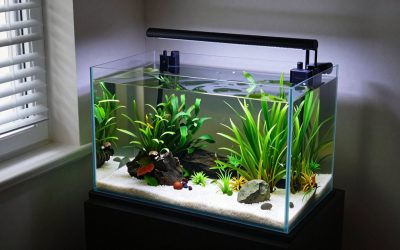
Aquascapes are judged by how clean they look and by how steady the conditions are. Heater choice therefore comes down to three things: visibility, accuracy and flow. A bulky glass tube in the middle of a carefully placed iwagumi looks wrong. A heater with a sloppy thermostat swings temperature a few degrees and stresses livestock and stunts plants. And a heater placed in dead water heats unevenly and creates warm spots.
Best invisible option: Hydor ETH inline heater
Inline heaters connect to the hose of a canister filter, so nothing is inside the tank. Reviewers recommend them for planted and display tanks where aesthetics come first, and forum users report accurate, reliable operation. The warm water goes straight into the filter return, so heat spreads evenly. The catch: you need a canister filter with the correct hose size and enough flow, and you need to turn the heater off if the filter stops, to avoid heating stagnant water.
Best slim in-tank heater: Cobalt Neo-Therm
The Neo-Therm is a thin, shatter-resistant heater that hides easily behind rocks and plants. It is offered in a range from about 25 W up to 150 W in the compact sizes listed by reviewers, and a BulkReefSupply comparison found it held the steadiest temperature among the heaters tested, with variation of around 0.05 degrees Fahrenheit. Choose it when your priority is accuracy plus a tiny footprint.
Best looks: Fluval M series
The Fluval M series has a mirrored, ultra-slim body that reflects its surroundings, so it nearly vanishes against glass and plants. Planted-tank owners often name it as a favorite for its accuracy and appearance. Choose the wattage to match your tank size and keep the heater fully submerged.
Best all-rounder: Eheim Jager TruTemp
The Jager is the most widely recommended heater across tank types. It has a precise thermostat, a durable glass tube and a calibration dial so you can match it to an independent thermometer. The only real downside for aquascaping is its size: the tube is thicker than the slim models, so it needs a corner or a rock cluster to hide it.
Best safety add-on: Inkbird controller
An Inkbird is not a heater. It is a thermostat with a temperature probe that switches whatever heater you plug into it. Forum users commonly suggest running an Eheim Jager or similar heater on an Inkbird, because the controller will cut power if the heater’s internal thermostat sticks on, and it lets you set the temperature to a tenth of a degree. Some Inkbird models also control cooling fans. Using two heaters at half the wattage each gives redundancy.
Wattage and placement worked example
- Estimate the wattage. A common rule is 3 to 5 watts per gallon for a rise of about 10 degrees Fahrenheit above room temperature. A 20 gallon aquascape in a 68 degree room that you want at 76 degrees needs a rise of 8 degrees, so about 60 to 80 watts works. Round up to a 100 W or two 50 W units.
- Split the load. Two 50 W heaters at opposite ends of a 36 inch tank give even heat and a backup if one fails.
- Place in flow. Put the heater near the filter outflow or a circulation pump so heat spreads. Avoid burying it in substrate or dense stem plants where flow is poor.
- Verify with a separate thermometer. Do not trust the dial alone; check temperature at several spots after 24 hours.
Decision matrix
| Your setup | Choose | Reason |
|---|---|---|
| Canister filter, minimalist scape | Hydor ETH inline | No equipment visible |
| Rimless tank, nano to 30 gallons | Cobalt Neo-Therm | Slim and stable |
| Planted tank with dark substrate | Fluval M series | Mirrored finish blends in |
| Mid-size tank, want proven reliability | Eheim Jager | Accurate with a calibration dial |
| Any tank with valuable livestock | Any heater plus Inkbird | Backup against stuck thermostats |
Hiding a heater without hurting performance
Hiding is fine, but never at the cost of flow or safety. Keep at least an inch of clearance between the heater and any rock, wood or plant leaves, because direct contact can scorch materials and trap heat. Point the heater diagonally near the bottom of the tank so rising warm water mixes with the circulation. Leave the cord and suction cups accessible so you can pull the heater without disturbing the scape. If you need to cover it, use a loose cluster of stones or a tall plant such as vallisneria rather than packing it into a tight cave.
Ownership notes
Unplug heaters for 15 to 20 minutes before removing them from the water, because a hot glass tube can crack in cold air. Check suction cups regularly and clean algae off the body, which can insulate the sensor. Replace heaters every few years even if they seem fine, since thermostat drift is a common cause of temperature swings.
Frequently Asked Questions
What is the best way to hide an aquarium heater?
An inline heater on a canister filter hides it entirely. If you use an in-tank model, choose a slim heater and place it behind rocks or driftwood near the filter output so it stays in flow.
How many watts do I need for a planted aquascape?
About 3 to 5 watts per gallon is the common guidance, adjusted for how cold the room gets. Colder rooms and large tanks need the higher end.
Is an external controller worth it?
For tanks with expensive plants or livestock, yes. A controller reads temperature with a separate probe and can cut power if the heater fails, which protects the tank.
Do heaters affect plant growth?
Temperature affects metabolic rate, and most tropical aquarium plants do well at about 72 to 78 degrees Fahrenheit. Stable temperature matters more than an exact number.
Can I use two heaters in one tank?
Yes, and many experienced keepers do. Two lower-wattage heaters spread heat and keep the tank warm if one fails, though a controller is still advisable.
Specifications and test results cited come from manufacturer information and published reviews. Check current models and ratings before buying.
Write Your Review
No reviews yet. Be the first to share your experience!