

Key takeaways
- Sizing by the maximum GPH on the box rather than the flow at your head.
- Using narrow or long suction lines. Larger diameter and fewer 90-degree elbows improve flow and reduce wear.
- Mounting the pump where it cannot drain or where a failed hose floods the pump house.
- Skipping a pre-filter or strainer basket, which lets debris into the impeller.
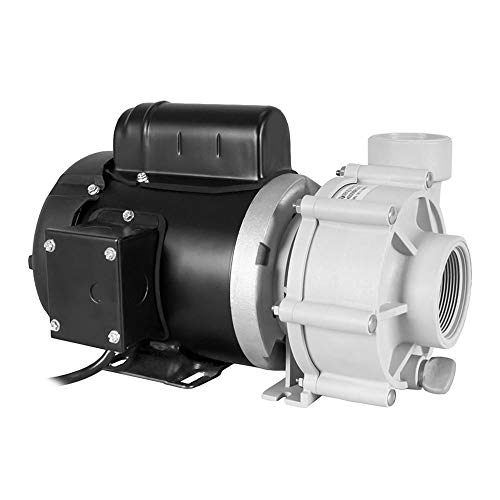
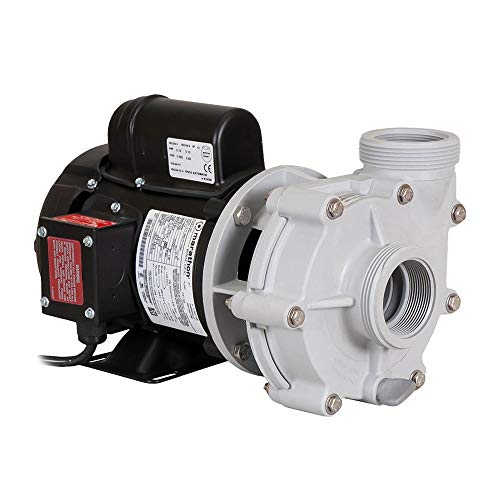
For a koi pond of 2,000 gallons or more, an external (dry-installed) pump such as the Sequence 1000 Series or the PerformancePro Artesian2 is usually the best choice, because it moves large volumes at low head pressure, runs efficiently around the clock and can be serviced without wading into the pond. Smaller ponds under about 1,000 gallons are often better served by a magnetic-drive submersible or inline pump. The right size depends on pond volume, plumbing head loss and electricity use, not on the biggest number on the box.
Our top picks
As an Amazon Associate we earn from qualifying purchases at no extra cost to you.
Quick comparison of external pump types
| Pick | Best for | Typical flow range | Pond size | Budget class |
|---|---|---|---|---|
| Sequence 1000 Series | Quiet, efficient serious koi systems | About 1,800 to 7,200 GPH (per the maker’s range) | 2,000 to 8,000 gallons | Upper-mid to premium |
| PerformancePro Artesian2 | High flow at low head, value-minded koi keepers | Multiple models up to several thousand GPH | 2,000 gallons and up | Mid-range to upper-mid |
| Budget external pump class | Cost-conscious first external setup | Roughly 2,000 to 5,000 GPH | 1,500 to 5,000 gallons | Mid-range |
| Variable-speed DC external class | Lowest running cost, adjustable flow | Adjustable, wide range | Large ponds and long-term installs | Premium |
| Danner Pondmaster Mag-Drive (inline-capable) | Small ponds, waterfalls, secondary duty | 700 to 2,400 GPH models | 150 to roughly 2,000 gallons | Budget to mid-range |
What “external” means and why koi keepers choose it
An external pump sits outside the pond, usually in a vault or pump house, and pulls water through a bottom drain or skimmer line. Because the motor is air-cooled and has no seal against the pond water, it tends to be more efficient and easier to repair than a submersible. For a koi system fed by bottom drains, this layout also lets you push the full pond volume through a filter every hour or two. The cost is plumbing: you need a prime, a clear suction line and a place to mount it that will not flood.
Best overall: Sequence 1000 Series
Sequence markets the 1000 Series as a low-RPM external pump with a flow range of about 1,800 to 7,200 gallons per hour, which covers most backyard koi ponds. The pitch is quiet operation, high efficiency and a long warranty. Retail sources note a 3-year warranty on the line. If you run the pump 24 hours a day, efficiency matters more than purchase price, and this is where the series earns its money back.
The trade-off is the upfront cost and the need for correct plumbing. A restrictive suction line will starve the pump and lose most of the efficiency advantage.
Best value: PerformancePro Artesian2
The PerformancePro Artesian2 is a widely used external pump that koi retailers describe as a top seller for ponds that need high flow at low head. Compared with the Sequence, it generally costs less, though it is not quite as quiet or as efficient in published comparisons. For many ponds the difference is small, especially if the pump will be inside a pump house.
Check the model chart for the exact GPH at your head height, since flow drops as head loss rises.
Best for tight budgets: entry-level external pumps
Budget external pumps exist and are the cheapest way into the dry-installed style. They are generally louder and draw more watts per gallon moved than the Sequence or Artesian2. If you choose one, plan on higher electricity costs and a shorter service life. This is the tier where reading the power-consumption table matters most.
Best for running costs: variable-speed DC external pumps
Variable-speed DC external pumps let you dial flow down overnight or in winter, which cuts power draw sharply, since power falls faster than flow when speed drops. They are quiet at low speed and efficient, but they sit at the top of the price range. They are a good fit for large ponds where the pump will run for a decade or more.
Best for small ponds and waterfalls: Danner Pondmaster Mag-Drive
Danner’s Pondmaster Mag-Drive line is a magnetic-drive design that runs submerged or inline. The Pondmaster 700 GPH is listed for ponds of 150 to 550 gallons with a 5-year limited warranty, and larger models in the series reach about 2,400 GPH. It is not a true external koi pump, but it is a sensible choice for a small pond, a waterfall feed or a secondary circuit.
Worked example: sizing a pump for a 4,000 gallon koi pond
- Set the turnover target. Many koi keepers aim to circulate the full pond volume about once per hour. For 4,000 gallons, that means at least 4,000 GPH at the working head, not at zero head.
- Estimate head. Add vertical lift and friction loss in pipe, fittings and filter. A typical gravity-fed external setup with a bottom drain, pre-filter and return might sit at 6 to 10 feet of total head.
- Read the curve. Find the model whose chart shows at least 4,000 GPH at your head. A pump rated for 5,000 GPH at zero head may deliver 4,000 GPH at 8 feet.
- Check the power. If the pump draws 250 watts continuously, that is 250 x 24 x 365 = 2,190 kilowatt-hours a year. Multiply by your local rate per kilowatt-hour to get the yearly cost; at that run time even a small difference in watts becomes real money.
- Compare efficiency. A pump that moves the same flow on 180 watts uses 1,577 kilowatt-hours, a saving of about 613 kWh each year, which pays back a higher purchase price over a few years.
How to choose: decision matrix
| Your situation | Choose | Why |
|---|---|---|
| 4,000 to 8,000 gallon koi pond, bottom drains | Sequence 1000 Series | Efficiency and quiet over many years |
| 2,000 to 4,000 gallon pond, moderate budget | PerformancePro Artesian2 | Strong flow at low head for less money |
| Under 1,500 gallons, waterfall | Danner Mag-Drive | Simple, proven, no plumbing vault |
| Large pond, want lowest power | Variable-speed DC external | Adjustable flow, lowest watts per gallon |
Common mistakes
- Sizing by the maximum GPH on the box rather than the flow at your head.
- Using narrow or long suction lines. Larger diameter and fewer 90-degree elbows improve flow and reduce wear.
- Mounting the pump where it cannot drain or where a failed hose floods the pump house.
- Skipping a pre-filter or strainer basket, which lets debris into the impeller.
Frequently Asked Questions
What is the difference between an external and a submersible koi pond pump?
An external pump sits outside the pond and pulls water through a drain or skimmer line. A submersible sits in the water. Externals are typically more efficient and easier to service at large sizes, while submersibles are simpler to install on small ponds.
How many gallons per hour do I need for a koi pond?
A common target is to turn over the full pond volume about once per hour at the actual working head. A 3,000 gallon pond therefore needs about 3,000 GPH delivered, which means choosing a pump with a higher zero-head rating.
Can an external pump run 24 hours a day?
Yes. Pumps built for ponds are designed for continuous duty, and koi systems need constant circulation and filtration to keep oxygen up and waste moving. Choose a model with a long warranty and efficient motor, since running time drives the cost.
Do external pumps need priming?
Most do. Installing the pump below water level, so gravity keeps the housing flooded, solves the problem. Otherwise you need a priming port and a check valve in the suction line.
Are mag-drive pumps good enough for koi?
For small to medium ponds, yes. Magnetic-drive pumps like the Danner Pondmaster are reliable and widely used. For large ponds with heavy filtration they are usually outclassed by dedicated external pumps in efficiency.
Flow ranges, warranties and pond sizes above come from manufacturer and retailer specifications and may vary by model year. Confirm current figures on the maker’s chart before buying.
Write Your Review
No reviews yet. Be the first to share your experience!