

Key takeaways
- A beginner guide to the best shrimp tanks and starter resources, with honest notes on tank size, cycling and water needs for freshwater shrimp.
Be aware before you shop: only one of the six listed items is an actual tank, and it is a 1.5 gallon kit that falls below the 5 gallon minimum most keepers recommend for freshwater shrimp. The rest are books and a mineral supplement. The best overall pick for a beginner building a shrimp tank is the guide titled Shrimp Tanks for Beginners, because it covers setup, cycling, stocking, feeding and maintenance in one place. A beginner shrimp tank is a cycled freshwater aquarium, ideally 5 to 10 gallons, with stable water for hardy species such as Neocaridina.
Quick List
- Shrimp Tanks for Beginners (guide) – best overall for planning setup, cycling, stocking and upkeep
- The Shrimp Tank (Neocaridina guide) – best for beginners who want to keep hardy Neocaridina and understand water chemistry
- Aquarium Shrimp (breeding and care guide) – best for readers who want broader care, feeding and breeding advice
- Crystalpro Shrimp Minerals – best for adding trace elements to a freshwater shrimp tank
- 1.5 Gallon Aquarium Starter Kit – best as a tiny desktop container, with limits, and a runner-up as a shrimp tank
- Freshwater Shrimp Farming (guide) – best for readers curious about production-scale shrimp, and a runner-up for hobby tanks
Which One Is Right for You?
| If you… | Choose |
|---|---|
| Want a complete walkthrough from first setup to monthly upkeep | Shrimp Tanks for Beginners (guide) |
| Plan to keep red cherry or similar Neocaridina and want help with water chemistry | The Shrimp Tank (Neocaridina guide) |
| Need a trace-element supplement for a shrimp tank that uses soft or RO water | Crystalpro Shrimp Minerals |
| Want broader reading on keeping, feeding and breeding shrimp | Aquarium Shrimp (breeding and care guide) |
| Have only a small desk space and accept the limits of a very small tank | 1.5 Gallon Aquarium Starter Kit |
| Are interested in raising shrimp at larger scale | Freshwater Shrimp Farming (guide) |
For most beginners, the best plan is to read first, then buy a larger tank than the kit offers. Pair a guide with a 5 to 10 gallon aquarium, a sponge filter and a minerals product only if your water needs it. Treat the 1.5 gallon kit as an exception rather than a recommendation, because small volumes change quickly.
All 6 Picks in Detail
1. Shrimp Tanks for Beginners (Guide) – Best Overall for Planning a First Tank
As an Amazon Associate we earn from qualifying purchases at no extra cost to you.

The title promises a complete guide to setting up, cycling, stocking, feeding and maintaining a healthy freshwater shrimp aquarium, which covers the exact sequence a new keeper needs. A guide like this is the best first purchase because the most common beginner failures are skipping the cycle, using the wrong water and adding shrimp too soon. We could only verify the title and subtitle from the listing, so confirm the format, page count and sample pages before buying. Look for clear parameter tables and a stocking plan.
It suits someone who has not yet bought a tank and wants a roadmap to avoid costly mistakes.
- Type: book or guide
- Stated scope: setup, cycling, stocking, feeding and maintenance
- Species focus: freshwater shrimp
- Format and length: confirm on listing
- Illustrations and charts: confirm on listing
When you read it, work through the setup chapters with your own tank in front of you: write down the target temperature, hardness and stocking numbers it recommends, then compare them with a test of your tap water. If the book’s targets and your water disagree, plan to adjust the water gradually, never overnight, and keep notes on every change so you can trace problems later.
Pros
- Scope matches the full beginner journey
- Title is aimed squarely at first-time keepers
Cons
- Content depth cannot be confirmed from the listing name
- Not a substitute for water testing
Compared with The Shrimp Tank, it covers the whole process, whereas the other title zooms in on Neocaridina chemistry.
Use it alongside a cheap liquid test kit so you can compare its target numbers with your own tap water.
2. Freshwater Shrimp Farming (Guide) – Runner-Up for Hobby Tanks

The title, From Beginner to Expert, describes a complete guide to freshwater shrimp farming. Farming guides often address larger freshwater prawns raised for food, with ponds, feed conversion and harvest planning, rather than ornamental dwarf shrimp in an aquarium. We could not confirm from the listing which type of shrimp it covers, so we place it last for hobby tank use. It may suit a reader curious about aquaculture, but check the description and sample pages for aquarium content before relying on it for a home tank.
- Type: book or guide
- Stated scope: freshwater shrimp farming
- Species and setting: confirm whether aquarium or pond
- Format and length: confirm on listing
- Level: beginner to expert, per title
A quick test is to open the sample pages and look for the words aquarium, dwarf shrimp, Neocaridina or Caridina. If the preview talks about ponds, feed conversion, harvest weight or prawns, it is aimed at production farming and will give limited help with a home display tank. In that case, pair a hobby guide with this one only if aquaculture interests you.
Pros
- Broad scope from beginner to advanced topics
- May offer useful insight on water management
Cons
- May not match aquarium dwarf shrimp
- Scale and equipment may be impractical for a home tank
Compared with Aquarium Shrimp, it is the less certain fit for a small home tank, so choose it only if farming is your goal.
Read the preview first to avoid buying a guide for the wrong kind of shrimp.
3. 1.5 Gallon Aquarium Starter Kit – Runner-Up Tiny Tank
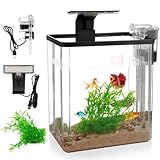
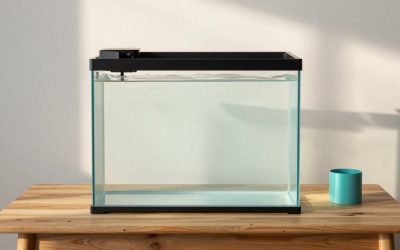
This is the only physical aquarium on the list: a 1.5 gallon plastic kit marketed for betta fish, with filtration, oxygenation, water circulation and lighting. It does not meet the usual 5 gallon recommendation for a first shrimp tank, so we place it as a runner-up. At 1.5 gallons, temperature and mineral levels swing quickly, and a small error in feeding can foul the water. It could house a few hardy shrimp for a keeper who tests often, but it is not the setup most guides would suggest.
- Volume: 1.5 gallons
- Material: plastic
- Included features: filtration, oxygenation, water circulation and lighting, per listing
- Marketed for: betta fish
- Filter intake safety for shrimp: confirm on listing
A safer way to use a tiny kit is as a temporary quarantine or hospital container, or as a place to grow out a few plants, rather than as the main colony tank. Check the listing for the filter design and whether the light can be switched off, because constant light promotes algae in a small volume.
Pros
- Complete kit in a tiny footprint
- Light and filter included
Cons
- Below the common 5 gallon minimum
- Filter intake may harm baby shrimp
Against the guides, it is the only tank, but it is the least forgiving size, so a larger glass tank with a sponge filter is a better home.
If you use it anyway, cover the intake with a fine sponge and test water every few days.
4. The Shrimp Tank (Neocaridina Guide) – Best for Hardy Species and Water Chemistry

This book is billed as a complete beginner’s guide to Neocaridina setup, water chemistry and building a thriving colony, and is part of an aquarium library series. Neocaridina, which includes red cherry shrimp, is the usual first species because it tolerates a wider range of water than Caridina. A guide focused on this group suits a beginner whose tap water is moderately hard and who wants a colony that breeds on its own. Confirm the table of contents and the way it handles water testing before you commit.
- Type: book or guide
- Species focus: Neocaridina
- Stated scope: setup, water chemistry and colony building
- Series: Aquarium Library, per listing
- Format and length: confirm on listing
Because Neocaridina come in many color varieties, a book like this is also a chance to plan which strains to keep. Mixing different colors usually leads to plain brown offspring over generations, so keeping a single color per tank is the common advice. Expect a first colony of 10 to 20 shrimp to take a few months to establish before it grows quickly.
Pros
- Species focus makes advice concrete
- Includes water chemistry, a common stumbling block
Cons
- Narrower than a general guide
- Less helpful if you want Caridina shrimp
Next to Shrimp Tanks for Beginners, it is the better pick if you already know you want Neocaridina.
Many keepers read both because a species-specific book fills the gaps a general one leaves.
5. Aquarium Shrimp (Breeding and Care Guide) – Best for Broader Care Advice

The title lists breeding, feeding, keeping and care with expert advice for freshwater shrimp in a tank, which makes it a general reference. It suits a keeper who has an established tank and wants to learn about diet, molting and breeding in more depth. Because the listing does not state which species it favors, confirm whether it covers both Neocaridina and Caridina, and how recent the advice is. Look for sections on molting, since failed molts are a leading cause of shrimp loss.
- Type: book or guide
- Stated scope: breeding, feeding, keeping and care
- Species coverage: confirm on listing
- Format and length: confirm on listing
- Level: beginner to intermediate, per title tone
Use it as a reference rather than reading cover to cover. Skim the feeding and molting sections first, then return to breeding when you see females carrying eggs. Compare any water targets it gives with the ones in your setup guide, and where two sources disagree, follow the more conservative range and keep conditions steady.
Pros
- Broader topics than a setup-only guide
- Useful once a colony is established
Cons
- Setup detail is not stated in the title
- Species coverage is unclear
It complements The Shrimp Tank, adding breeding and feeding where the other emphasizes chemistry.
Read the care sections before you add shrimp, and the breeding sections once they start berrying.
6. Crystalpro Shrimp Minerals – Best for Adding Trace Elements

This is a liquid supplement of aquarium salt and trace elements for freshwater shrimp tanks, listed as supporting both Caridina and Neocaridina, in a 4.2 ounce bottle. Minerals matter when you use soft tap water or reverse osmosis water, because shrimp need calcium and magnesium to harden their shells after molting. It is a supplement, not a tank, so it only matters if your water lacks minerals. Measure general hardness (GH) first, and follow the dosing directions on the label exactly, since overdosing can raise hardness too far.
- Type: liquid mineral supplement
- Size: 4.2 ounces
- Species: Caridina and Neocaridina, per listing
- Ingredients and dosing: confirm on listing
- Use case: soft or RO water remineralization
Think of it as an adjustment tool rather than a routine additive. Measure GH and KH before and after dosing so you see how the product shifts your water, and change the dose by small steps. Never combine it with other mineral products without checking how they interact, and keep shrimp-safe supplements separate from any fish medications.
Pros
- Supports molting in low-mineral water
- Covers both common shrimp groups
Cons
- Not needed if tap water is already adequately hard
- Requires testing to dose correctly
Unlike the guides, it is a consumable, and it works best alongside a book that explains how to read your hardness numbers.
Keep it capped, away from heat, and never pour copper-containing products into a shrimp tank.
Specs Compared
| Item | Type | Stated focus | Species | Size or format | Fit for a beginner tank |
|---|---|---|---|---|---|
| Shrimp Tanks for Beginners | Guide | Setup, cycling, stocking, feeding, maintenance | Freshwater shrimp | Confirm on listing | Strong |
| The Shrimp Tank | Guide | Setup, water chemistry, colony building | Neocaridina | Confirm on listing | Strong for Neocaridina |
| Aquarium Shrimp | Guide | Breeding, feeding, keeping, care | Confirm on listing | Confirm on listing | Good |
| Crystalpro Shrimp Minerals | Supplement | Trace elements and aquarium salt | Caridina and Neocaridina | 4.2 oz | Only if water is soft |
| 1.5 Gallon Starter Kit | Tank kit | Small tank with filter and light | Marketed for betta | 1.5 gallons, plastic | Limited (runner-up) |
| Freshwater Shrimp Farming | Guide | Shrimp farming | Confirm on listing | Confirm on listing | Uncertain (runner-up) |
How We Chose These
This is a research-based guide. The six listings in this set are a mix of books, a mineral supplement and a small tank kit, so we compared them by how directly each helps a beginner build a stable shrimp tank. We read titles and subtitles, product descriptions and category information, and we checked widely cited shrimp-keeping guidance for the tank size and water ranges mentioned below. Where a listing did not state a value such as page count or species coverage, we tell you to confirm it. We ranked items higher when their stated scope matches the beginner journey and lower when the fit is uncertain. The order reflects fit and stated features, not measured results.
What to Look For
Tank size and why bigger is easier
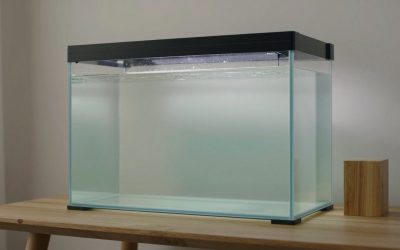
Most beginner guidance points to 5 gallons as a minimum and 10 gallons as a better start. Larger water volume dilutes waste, holds temperature and buffers chemistry, so a small mistake does not become a colony loss. A 10 gallon tank also allows a sponge filter, a heater and live plants without crowding. If space is tight, a 5 gallon is workable, but a 1.5 gallon container leaves almost no margin.
Cycling and water parameters
Cycle the tank for several weeks until ammonia and nitrite read zero before adding shrimp. For Neocaridina, commonly cited targets are a temperature around 72 to 76 degrees Fahrenheit, pH roughly 6.8 to 7.5, general hardness of about 6 to 8 dGH, carbonate hardness of about 2 to 4 dKH and nitrate under 20 parts per million. Stability matters more than perfect numbers, so avoid chasing small changes with chemicals. Caridina, such as crystal shrimp, needs softer, more acidic water and more experience.
Filtration, substrate and plants
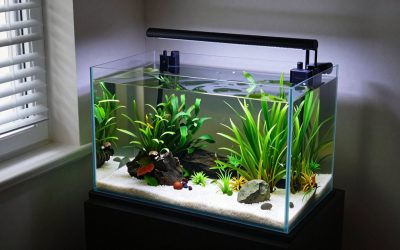
A sponge filter is the usual choice because it has no strong intake that traps baby shrimp, and it grows biofilm for grazing. Use an inert sand or gravel substrate that does not change pH, and add moss, floating plants and leaf litter for cover and food. Plants consume nitrate and give shrimp places to hide while they molt.
Copper, medications and safe care
Copper is toxic to shrimp even in trace amounts, so test your tap water and avoid fish medications and plant products that contain it. Acclimate new shrimp slowly with a drip over one to two hours, because sudden changes in water chemistry cause failed molts. Feed lightly, once a day at most, and remove uneaten food after a few hours.
Feeding, biofilm and molting
Shrimp graze on biofilm and algae all day, so a mature tank needs little added food at first. Offer a small pinch of shrimp pellets or blanched vegetables two or three times a week, and remove anything left after a few hours. Watch for pale shed shells, which are normal molts, and leave them in the tank because shrimp eat them to recover minerals. Hiding places such as moss and driftwood help shrimp feel safe while their new shells harden.
Heaters, lighting and a worked example
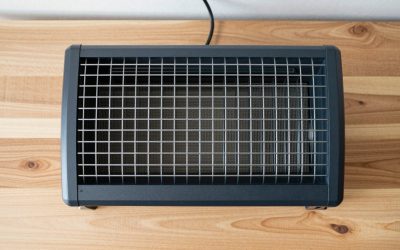
If your room drops below about 68 degrees Fahrenheit, use a small adjustable heater with a guard so shrimp cannot touch it. Keep lighting on a timer of 6 to 8 hours, and keep electrical cords looped below the outlet with a drip loop. As a worked example, a 10 gallon tank for a starter group of 10 to 20 Neocaridina would need a sponge filter, a 25 watt heater if the room runs cool, a test kit for GH, KH and ammonia and a cycle of about 4 to 6 weeks before the shrimp go in.
Questions
What size tank is best for beginner shrimp?
A 5 to 10 gallon tank is the common recommendation, with 10 gallons being easier to keep stable. Smaller containers can work for experienced keepers but leave little room for error.
Can I keep shrimp in a betta tank?
Some people do, but a 1.5 gallon betta kit is smaller than most guides advise and often has a filter intake that can trap baby shrimp. If you try it, cover the intake with sponge and test water often.
Do I need a mineral supplement?
Only if your water is soft or you use reverse osmosis water, because shrimp need minerals to molt. Test your general hardness first, then supplement according to the label.
Which shrimp is easiest for a beginner?
Neocaridina, such as red cherry shrimp, is the usual starting point because it tolerates a wider range of water conditions and breeds readily. Caridina species are more demanding and better suited to experienced keepers.
How long should a shrimp tank cycle?
Plan on at least four to six weeks, and wait until ammonia and nitrite read zero consistently. Some keepers wait several months for biofilm to develop before adding sensitive shrimp.
Why are my shrimp dying after I add them?
The usual causes are an uncycled tank, copper in the water, rapid parameter changes or hardness that is too low for molting. Test your water, acclimate more slowly next time and avoid medications that contain copper.
Update History
- October 20, 2026 – Initial publication; product set drawn from current catalog listings.
- Check the product page for current specifications and availability before buying.
Sources
- Retailer listing titles and descriptions for each book, supplement and tank kit
- General freshwater shrimp-keeping care guidance, used for tank size and water-parameter ranges
- General freshwater aquarium cycling guidance
Write Your Review
No reviews yet. Be the first to share your experience!