

Key takeaways
- Small stove: approximately 500–1,200 square feet and about 20,000–45,000 BTU per hour.
- Medium stove: approximately 900–2,000 square feet and about 35,000–75,000 BTU per hour.
- Large stove: approximately 1,500–3,000 square feet and about 50,000–100,000 BTU per hour.
Best Wood Stoves for Efficient Home Heating
The best wood stoves are the ones whose certified heat output and firebox size match your room and climate—not necessarily the stove with the largest firebox or the longest advertised burn time.
For many average homes, a medium non-catalytic stove rated around 40,000–75,000 BTU per hour is the most practical choice. Choose a catalytic or hybrid model when overnight heating, long burn times, and lower emissions matter more than simple operation. Small stoves suit well-insulated rooms, cabins, and shoulder-season use; oversized stoves often produce smoky, inefficient fires because owners must shut down the air supply to avoid overheating the room.
Our top picks


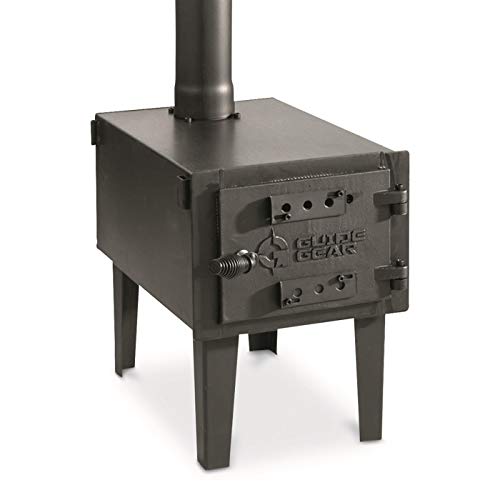
As an Amazon Associate we earn from qualifying purchases at no extra cost to you. Ratings are shown as listed on Amazon.
Quick picks by heating situation
| Situation | Best stove type or example | Why it fits | Main compromise |
|---|---|---|---|
| Small room, cabin, or occasional heating | Small non-catalytic stove, such as the Jøtul F 602 V3 | Compact footprint and a relatively small firebox reduce the risk of overheating | Shorter burn time and less whole-home heating capacity |
| Average living area and regular winter use | Drolet Escape 1800 or a similar medium stove | Useful balance of firebox volume, output, cost, and uncomplicated operation | Usually requires reloading more often than a large catalytic stove |
| Large, drafty, or open-plan home | Large stove such as the Drolet HT-2000 or a comparable model | Large firebox and higher output can support longer heating cycles | Greater oversizing risk, larger wood consumption, and more demanding installation |
| Overnight heat and low-emission operation | Blaze King Princess 32 or another catalytic stove | Thermostatic control and a catalyst can provide long, steady burns | Higher purchase price and catalyst maintenance |
| Traditional appearance and premium construction | Jøtul F 500 V3 Oslo | Cast-iron styling, substantial build, and a large-hearth presentation | Premium pricing and considerable weight |
Match heat output to room size
Manufacturers’ coverage figures are estimates, not guarantees. Insulation, ceiling height, outdoor temperature, window area, floor plan, and whether heat can move between rooms all affect the result. A rough starting point for a reasonably insulated home in a cold climate is:
- Small stove: approximately 500–1,200 square feet and about 20,000–45,000 BTU per hour.
- Medium stove: approximately 900–2,000 square feet and about 35,000–75,000 BTU per hour.
- Large stove: approximately 1,500–3,000 square feet and about 50,000–100,000 BTU per hour.
These ranges overlap because square footage alone is a poor sizing tool. A 1,500-square-foot well-insulated house may need less heat than a 1,000-square-foot older home with leaky windows. If the stove will heat only one room, size it for that room and the heat that can realistically circulate—not the entire floor area shown in a marketing specification.
A practical sizing calculation
Suppose a homeowner wants to heat a 1,200-square-foot, moderately insulated home in a cold region. Using a rough planning figure of 30 BTU per square foot gives 36,000 BTU per hour. That points toward a small-to-medium stove, not a 100,000-BTU large model. Because wood-stove ratings vary by test method and are often maximum or peak figures, selecting a unit with a normal operating range around that demand is safer than selecting the highest possible output.
Oversizing creates a common ownership problem: the fire is loaded with too much wood, the air is restricted, and the stove smolders. That reduces efficiency, increases creosote formation, and can cause the room to become uncomfortably hot. A slightly smaller stove operated with dry wood at an active burn is often more efficient in real use.
Firebox size, burn time, and emissions
Firebox volume is a useful comparison, but advertised burn time depends on wood species, moisture content, loading pattern, chimney draft, and the heat setting. A large firebox does not automatically mean efficient heating. It mainly allows more fuel to be loaded at once.
| Stove class | Typical firebox volume | Typical log length | Approximate practical burn cycle | Best use |
|---|---|---|---|---|
| Small | About 1.0–1.5 cubic feet | Up to 12–16 inches | 4–7 hours | Small spaces and intermittent fires |
| Medium | About 1.8–2.5 cubic feet | Up to 16–18 inches | 6–10 hours | Most living rooms and moderate daily heating |
| Large | About 2.8–4.0 cubic feet | Up to 18–22 inches | 8–14 hours | Large spaces and colder climates |
For emissions, compare the certified particulate-emission rate rather than relying on the words “clean burning.” Lower grams per hour generally indicate cleaner operation under the certification test, but poor fuel or restricted airflow can make any stove smoke heavily. Current EPA-certified models commonly fall near or below 2 grams per hour, while catalytic and hybrid designs can achieve particularly low emissions when operated correctly.
Non-catalytic versus catalytic and hybrid stoves
Non-catalytic stoves
Non-catalytic models use insulated baffles and secondary combustion tubes to burn wood gases above the fire. They are generally easier to operate, have fewer specialized replacement parts, and tolerate casual users better. The trade-off is a shorter low-output burn compared with the best catalytic designs.
Catalytic stoves
Catalytic models route smoke through a coated combustor that burns particulates at lower temperatures. They can provide long, steady burns and are attractive for overnight heating. The catalyst is a consumable component: its life depends on operation and may be roughly 6–12 years, sometimes less if exposed to prohibited fuels, ash, or repeated over-firing. Replacement cost should be included in the ownership budget.
Hybrid stoves
Hybrid stoves combine secondary combustion with a catalyst. They can deliver low emissions across a broad operating range, but they have more components to monitor and usually cost more than basic non-catalytic models.
Installation requirements that change the buying decision
A stove is only as efficient and safe as its chimney system. Before choosing a model, confirm the required flue diameter, rear and side clearances, hearth protection, chimney height, and whether an outside-air connection is required or recommended. A typical freestanding installation may need a 6-inch or 8-inch insulated stainless-steel chimney, but the stove manual and local code determine the correct specification.
- Have the chimney route assessed before purchasing; a difficult roof penetration can cost more than the stove.
- Use listed, compatible chimney components rather than mixing brands casually.
- Measure the hearth and wall clearances exactly; furniture and combustible trim often create hidden clearance problems.
- Ask the installer about make-up air in a very airtight home or one with powerful exhaust fans.
- Verify local permitting and insurance requirements.
A blower can improve heat distribution from a large stove, but it does not increase the stove’s certified heating capacity. It also needs electricity and may add fan noise. If power outages are common, prioritize a stove that can safely provide useful radiant heat without its blower.
Fuel quality determines real efficiency
Burn only dry, untreated firewood. Wood with moisture content at or below 20 percent by weight generally ignites more readily and produces more usable heat than freshly cut wood. A moisture meter is inexpensive compared with a season of wasted fuel. Split the wood, measure the freshly exposed face, and avoid testing only the dry outer surface.
Do not burn painted or pressure-treated lumber, plywood, household rubbish, glossy paper, or coal unless the stove is specifically designed and approved for it. These materials can damage components and release hazardous pollutants.
Ownership costs and maintenance
The first components likely to wear are door gaskets, baffle boards, firebricks, catalyst elements, and air-control parts. These are normal consumables rather than evidence of poor construction. Cast-iron panels can also crack after severe thermal shock or over-firing, while steel bodies may discolor if operated beyond their intended temperature.
Plan to remove ash regularly while leaving the small insulating bed recommended by the manufacturer. Inspect the chimney at least annually and sweep it whenever deposits accumulate; frequent users may require more than one inspection per season. A magnetic stovepipe thermometer or an approved temperature-monitoring method helps identify under-firing and over-firing, although it does not replace the manual’s operating instructions.
Which stove should you choose?
Choose a small non-catalytic stove when the heated space is compact or fires are occasional. Choose a medium non-catalytic model such as the Drolet Escape 1800 when you want a relatively simple, cost-conscious everyday heater for an average home. Choose a large model only when the building’s heat loss and floor plan justify it. For long overnight burns and controlled, steady output, a catalytic model such as the Blaze King Princess 32 is usually the stronger choice, provided you are willing to maintain its combustor. If appearance and cast-iron construction are priorities, the Jøtul F 500 V3 Oslo deserves consideration.
Before buying, compare the stove’s lowest practical operating output—not just its maximum BTU rating—against your room’s heating demand. That single check, combined with dry wood and a correctly installed chimney, does more for efficiency than choosing the biggest firebox available.

Write Your Review
No reviews yet. Be the first to share your experience!