

Key takeaways
- Buy the TP-Link RE705X for the best balance of coverage, WiFi 6 capability, and price. Choose the NETGEAR EAX80 for several wired devices or unusually heavy traffic, and the ASUS RP-AX58 when an ASUS AiMesh setup is important. For a single low-demand smart-home device, an…
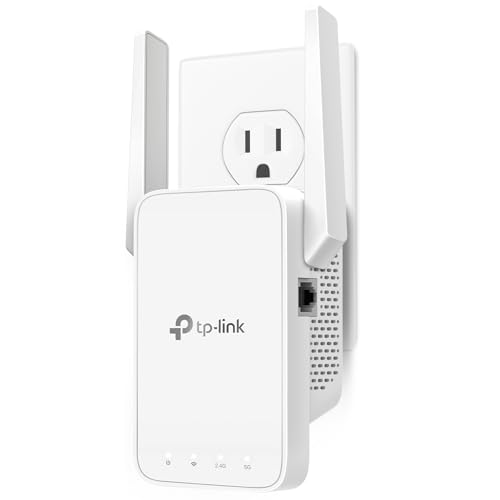
The best WiFi extenders for most homes in 2026 are the TP-Link RE705X for value, the NETGEAR EAX80 for large or busy homes, and the ASUS RP-AX58 for owners who want a more capable WiFi 6 extender without replacing their router.
A WiFi extender can improve coverage for aquarium cameras, smart plugs, leak sensors, automatic feeders, and phones in rooms where the router signal is weak. It cannot create unlimited bandwidth: the extender must receive data from the router before sending it to your device, so placement and the wireless band usually matter more than the headline speed.
Our top picks


As an Amazon Associate we earn from qualifying purchases at no extra cost to you. Ratings are shown as listed on Amazon.
Quick comparison of the best WiFi extenders
| Model | WiFi standard and rated speed | Useful real-world expectation | Approximate coverage claim | Ethernet | Best for |
|---|---|---|---|---|---|
| TP-Link RE705X | WiFi 6, AX3000; up to 2,402 Mbps on 5 GHz and 574 Mbps on 2.4 GHz | About 300–700 Mbps near the extender, depending on router and channel conditions | Up to about 2,500 sq. ft. in suitable conditions | 1 × gigabit | Most homes and WiFi 6 routers |
| NETGEAR EAX80 | WiFi 6, AX6000; up to 4,800 Mbps on each band | About 400–900 Mbps close to the unit with a strong WiFi 6 source | Up to about 2,500 sq. ft. | 4 × gigabit | Several wired devices or high-traffic households |
| ASUS RP-AX58 | WiFi 6, AX3000; up to 2,402 Mbps on 5 GHz and 574 Mbps on 2.4 GHz | About 250–650 Mbps in a favorable room | Up to about 2,200 sq. ft. | 1 × gigabit | ASUS AiMesh users and advanced settings |
| Linksys RE7350 | WiFi 6, AX1800; up to 1,201 Mbps on 5 GHz and 574 Mbps on 2.4 GHz | About 150–450 Mbps close to the extender | Up to about 1,500 sq. ft. | 1 × gigabit | Moderate coverage needs and simple setup |
| NETGEAR EX6120 | WiFi 5, AC1200; up to 867 Mbps on 5 GHz and 300 Mbps on 2.4 GHz | About 50–180 Mbps close to the extender | Up to about 1,500 sq. ft. | 1 × fast Ethernet | Low-cost coverage for basic smart devices |
The coverage and speed figures above are practical planning ranges, not guarantees. Wall materials, neighboring networks, router location, client-device capability, and the extender’s distance from the router can change results substantially. A rated AX3000 or AX6000 number is the combined theoretical capacity of multiple radio bands; it is not the speed one phone or camera will receive.
Our picks by situation
Best overall: TP-Link RE705X
The RE705X is the most balanced choice for a typical house or apartment. Its WiFi 6 support helps with newer phones, laptops, cameras, and smart-home hubs, while its gigabit Ethernet port can connect a desktop, television, network video recorder, or aquarium controller that is in the weak-signal room.
It is particularly suitable when the main router already supports WiFi 6. TP-Link’s OneMesh compatibility can provide a more unified experience with compatible TP-Link routers, but it should not be confused with universal mesh compatibility. With a router from another brand, it generally operates as a conventional extender using the router’s existing network.
Best for heavy traffic and wired equipment: NETGEAR EAX80
The EAX80 is physically larger and more expensive than plug-in models, but its desktop design and four gigabit Ethernet ports make it useful near a home office, media center, or aquarium equipment cabinet. Multiple wired devices can avoid adding separate switches, and the higher radio capacity gives it more headroom when several clients are active.
Choose it when the extender will serve streaming, video calls, game downloads, and several cameras at the same time. It is poor value for a single low-bandwidth temperature sensor or a basic 2.4 GHz feeder. A wired Ethernet backhaul is also worth considering with this model: connecting it to the router by cable removes the wireless hop and can produce a larger improvement than buying a faster extender.
Best for ASUS router owners: ASUS RP-AX58
The RP-AX58 is the logical choice when the existing router supports ASUS AiMesh. In that arrangement, compatible ASUS equipment can coordinate under one network name and allow clients to move between nodes more naturally than with a basic repeater. Confirm the router’s AiMesh support and firmware requirements before buying.
With a non-ASUS router, it remains a standard WiFi 6 extender. Its AX3000 class is enough for most homes, but there is little reason to pay extra for it solely because the box lists 2,402 Mbps on 5 GHz.
Best for a tight budget: NETGEAR EX6120
The EX6120 is a sensible low-cost option for simple tasks such as a smart plug, aquarium light controller, basic indoor camera, or occasional web browsing. Its WiFi 5 hardware is older and its fast Ethernet port limits wired connections to 100 Mbps, so it is not a good foundation for a modern high-speed office or multiple high-resolution cameras.
Use it when the problem is dead-zone coverage rather than internet speed. If your broadband plan is faster than 100 Mbps, or you expect several simultaneous users, a WiFi 6 model is usually the better long-term purchase. Typical market pricing is roughly $25–$45 for older AC1200 units, $60–$100 for mainstream AX1800 or AX3000 models, and $140–$220 for high-capacity desktop extenders.
WiFi extender or mesh system?
A conventional extender repeats the router’s network, often with a separate network name such as “Home_EXT.” It is cheaper and quick to deploy, but roaming can be less seamless and administration may involve a second app or web interface.
A mesh system replaces or works alongside the router with coordinated nodes. It is usually preferable for a large house, several dead zones, or a household that moves phones and tablets constantly between floors. It costs more and may require replacing the router. Extender features marketed as “mesh” are often brand-specific: TP-Link OneMesh, ASUS AiMesh, and NETGEAR’s compatible mesh features do not automatically interoperate.
| Your situation | Recommended direction | Reason |
|---|---|---|
| One weak room, under 10 connected devices | WiFi 6 AX1800 or AX3000 extender | Lower cost and simpler than a complete mesh system |
| Large home with weak signal in several rooms | Two- or three-node mesh system | More consistent roaming and node coordination |
| Existing ASUS router | ASUS RP-AX58 or compatible AiMesh node | Can use the router’s coordinated mesh features |
| Several wired devices in the remote room | NETGEAR EAX80 or an access point with Ethernet backhaul | Multiple ports and less wireless congestion |
| Only a feeder, sensor, or basic camera needs coverage | Budget AC1200 or AX1800 extender | These devices rarely need hundreds of megabits per second |
How to set up an extender for maximum usable speed
- Measure the problem first. Stand where the device will be used and check the router signal with a phone. If the signal is already extremely weak, an extender placed there will repeat a poor connection.
- Place the extender halfway between the router and the dead zone. The ideal location is usually a hallway or open room, not inside a cabinet or behind a large aquarium. Keep it away from metal, thick masonry, cordless-phone bases, microwaves, and dense electrical equipment.
- Use the 5 GHz band when speed matters. It is usually faster and less congested, but it loses strength through walls more quickly. Use 2.4 GHz for distant low-bandwidth sensors and devices that cannot use 5 GHz.
- Configure it with the manufacturer’s app or web interface. Match the extender to the router’s firmware and security settings. WPA2/WPA3 compatibility is more important than simply copying the network name.
- Test the actual device. A laptop speed test is useful, but a camera or aquarium controller may behave differently. Check live video stability, notification delay, and whether the device disconnects overnight.
- Use Ethernet backhaul if available. Run a network cable from the router to the extender when possible. This allows the extender to dedicate its wireless radios to clients instead of receiving and retransmitting every packet wirelessly.
Why advertised speeds rarely appear in a speed test
Suppose an AX3000 extender has a theoretical 2,402 Mbps 5 GHz link to the router. A client may connect at a lower rate because of its own antenna design, then lose capacity to protocol overhead, interference, distance, and the wireless relay. A practical 300 Mbps internet result can therefore be normal and still be sufficient for several 1080p cameras, browsing, and smart-home traffic.
As a planning example, four 1080p cameras might use approximately 4–8 Mbps each, depending on compression and motion. At 6 Mbps per camera, the total is 24 Mbps. Even after allowing substantial overhead, a stable 100 Mbps connection is more than enough for those streams; reliability and upload capacity matter more than an AX6000 label.
Ownership details that affect reliability
Extenders have no subscription and usually require little physical maintenance. The parts most likely to cause trouble are firmware, power connections, and placement rather than the radio hardware itself. Check for firmware updates every few months, especially after changing the main router. Rebooting can temporarily clear problems, but repeated dropouts usually indicate interference, excessive distance, incompatible security settings, or an overloaded wireless backhaul.
Do not install an extender inside an aquarium stand, closed media cabinet, or damp equipment area. Water, metal frames, pumps, and reinforced walls can weaken the signal, while humidity and splashes can shorten the life of consumer networking equipment. Keep the unit in a dry, ventilated position and route Ethernet cables away from areas where a leak could reach them.
Finally, avoid placing the extender beside the device that needs help. That maximizes the final hop but leaves the extender with a weak connection to the router. A strong source link, visible line of sight where practical, and a clear update path will usually outperform a more expensive extender placed in the wrong room.
Bottom line
Buy the TP-Link RE705X for the best balance of coverage, WiFi 6 capability, and price. Choose the NETGEAR EAX80 for several wired devices or unusually heavy traffic, and the ASUS RP-AX58 when an ASUS AiMesh setup is important. For a single low-demand smart-home device, an older AC1200 extender can be enough; for multiple dead zones or difficult roaming, skip extenders and invest in a proper mesh system.

Write Your Review
No reviews yet. Be the first to share your experience!