

Key takeaways
- Snakes do not need light at night, but they do need warmth. That is the whole reason a ceramic heat emitter exists: it is a heating element shaped.
Snakes do not need light at night, but they do need warmth. That is the whole reason a ceramic heat emitter exists: it is a heating element shaped like a bulb that produces infrared heat without visible light, so a snake enclosure can stay warm after dark without a lamp shining into the glass. The decision for this keyword is mostly about wattage, how the emitter is controlled and what kind of fixture it screws into, because the emitter by itself does nothing useful and can be hazardous without the right dome and thermostat.
The picks below mix bare emitters sold in multi-packs with kits that bundle a dome fixture and thermostat. All comparisons are drawn from the product titles: wattage, pack counts, fixture sizes and control features. Anything else, including how much heat a given wattage produces in a specific enclosure, depends on the room, the enclosure size and the thermostat, and should be confirmed on the listing before buying in 2026. Heating gear should always be used according to the manufacturer’s instructions, and a reptile veterinarian can answer husbandry questions.
Quick Picks
Our top picks


As an Amazon Associate we earn from qualifying purchases at no extra cost to you.
| Product | Best for | Key spec from the title |
|---|---|---|
| LUCKY HERP Ceramic Heat Emitter (50W, 100W, 150W) | Choosing a wattage in one product line | 2-pack, three wattage options |
| 150W Ceramic Heat Emitter for Snake and Ball Python | Larger or cooler setups | 150W, named for bearded dragon, snake, turtle, ball python |
| REPTI ZOO 100W Ceramic Heat Emitter 2-Pack | Spare bulb on hand | 100W, 2 pack, night heat lamp |
| REPTI HOME 100W Ceramic Heat Emitter 2-Pack | Value pair | 100W, 2 pack, ceramic heater |
| DXOPHIEX Deep Reptile Light Fixture with Thermostat and Timer | One-box emitter, dome and controls | 5.5 inch deep dome, thermostat, timer, 100W emitter |
| Reptile Heat Lamp Fixture with Dimming Thermostat | Fine-tuned control | 5.5 inch dome, PID thermostat, fits emitter or basking bulb |
| ReptiKing 5.5 Inch Dome Light Fixture | Basic fixture to pair with an emitter | 5.5 inch standard dome for basking bulb, heat lamp or emitter |
How to Choose
Wattage follows enclosure size and room temperature
Lower wattage emitters, such as 50W, suit small enclosures and warm rooms, while 100W and 150W models suit larger enclosures and cooler rooms. There is no universal answer because heat depends on the enclosure volume, the ceiling height, the distance from the emitter to the animal and the room itself. A cautious approach is to pick the lowest wattage that reaches the target temperature, paired with a thermostat that cycles or dims the output, rather than guessing at a high wattage and hoping for the best.
A thermostat is part of the system
Ceramic emitters get very hot and run continuously unless controlled. Pulse-proportional or dimming thermostats adjust output smoothly, while simple on-off controllers cycle the emitter. A PID thermostat, as named in one title, adjusts power continuously, which keeps the temperature steadier. Place the thermostat probe at the animal’s level, away from direct emitter contact, and verify the actual temperature with a separate thermometer. Following the manufacturer’s instructions and the species guidance of a reptile veterinarian is the safest approach.
Fixture type matters as much as the bulb
Emitters need a fixture rated for them, usually a ceramic socket and a dome that tolerates the heat. A 5.5 inch dome is a common size, and a deeper dome offers more clearance. Check that the fixture is rated for the emitter wattage on the listing, never exceed the rated load and make sure the cord and plug are intact. Plastic sockets and thin domes are corners that budget fixtures sometimes cut, so read the description carefully.
Placement and safety
Mount the emitter on top of a screen or in a way that keeps the snake from touching it, and use a guard or cage where needed. Keep it clear of wood, plastic and anything flammable, and never cover the dome. Do not use the emitter in a sealed enclosure without airflow, and place the fixture so cords stay away from the hot surface. Packs of two make sense because emitters can fail, and having a spare avoids a cold night.
The 7 Best Options
LUCKY HERP Ceramic Heat Emitter (2-Pack)
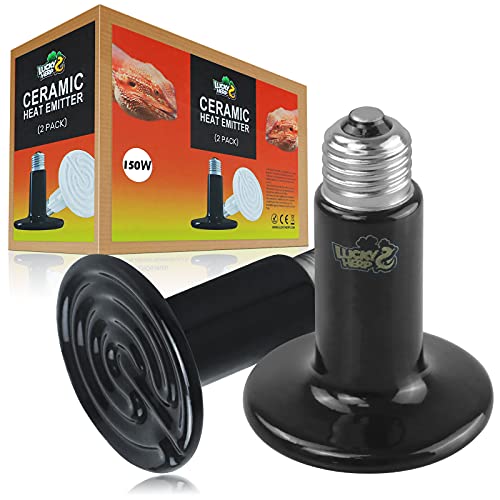
LUCKY HERP sells ceramic emitters in two-bulb packs at 50W, 100W and 150W, labeled for reptiles and amphibians as well as chicken and pet use. The range of wattages is the draw, because a keeper can try a lower option first and move up if the enclosure runs cool, all within the same style of bulb and the same socket type.
- Strength: three wattage options in one product line
- Strength: two bulbs per pack keep a spare ready
Trade-off: bare emitters need a compatible fixture and a thermostat bought separately. Skip it if a complete kit is preferred. Start with the lowest wattage that suits the enclosure and verify the temperature before adding an animal. Running the setup for a full day beforehand shows whether the heat stays steady overnight.
150W Ceramic Heat Emitter for Snake and Ball Python
This listing is a 150W emitter named for bearded dragons, snakes, turtles, ball pythons and chicken coops, with a title that calls it a 24/7 heat source. It is aimed at larger or cooler setups. Where a basement room or a tall rack system loses heat quickly, a stronger emitter can make up the difference, as long as a controller keeps the output in check.
- Strength: 150W gives headroom for larger enclosures
- Strength: named use with snakes and ball pythons
Trade-off: 150W is a lot of heat for a small enclosure and needs a thermostat to avoid overheating. Skip it if the enclosure is small or the room is warm. The brand is not visible in the title, so check what is included, including whether a fixture, cord or guard comes with the bulb.
REPTI ZOO 100W Reptile Heat Lamp 2-Pack
REPTI ZOO sells two 100W emitters per pack for night heat in terrariums. They suit medium enclosures and keepers who want spares on hand. Emitters can burn out without warning, and a replacement already in a drawer means a cold enclosure does not have to wait for shipping.
- Strength: 100W is a middle wattage for many setups
- Strength: two bulbs in the pack
Trade-off: no fixture or thermostat is included. Skip it if a bundled kit is preferred, and confirm the socket type matches the fixture at home. The title lists terrarium use broadly, so snake-specific guidance has to come from other sources.
REPTI HOME 100W Ceramic Heat Emitter 2-Pack
REPTI HOME offers another pair of 100W emitters, labeled for amphibians, brooders, chickens, dogs and cats as well as reptiles. It works as a straightforward replacement pair. Buyers with an existing dome and thermostat can drop these in without changing the rest of the setup, which keeps the upgrade simple.
- Strength: 100W pair is a simple replacement or starter set
- Strength: broad labeling suggests general-purpose use
Trade-off: the broad labeling means reptile-specific guidance should come from the manufacturer and a veterinarian. Skip it if a fixture is needed in the same purchase. As with any bare emitter, the wattage should be matched to the thermostat rating before plugging in.
DXOPHIEX Deep Reptile Light Fixture with Thermostat and Timer
DXOPHIEX bundles a 5.5 inch deep fixture, a thermostat, a timer and a 100W emitter. The title names turtles, frogs, geckos and snakes as intended animals. Having the timer in the box helps keepers who want heat to follow a daily schedule, while the deep dome offers extra clearance around the bulb compared with a shallow reflector.
- Strength: dome, controller and emitter arrive as a set
- Strength: timer plus thermostat allow scheduled heating
Trade-off: bundled controllers are only as good as the probe placement. Skip it if a more advanced PID thermostat is wanted. Confirm the thermostat’s rated wattage against the emitter on the listing.
Reptile Heat Lamp Fixture with Dimming Thermostat
This fixture pairs a 5.5 inch light dome with a PID dimming thermostat and is described as suitable for ceramic emitters and basking bulbs. The emitter may not be included, so the listing needs a close read. Keepers who have used simple on-off thermostats and found the temperature swing too wide are the natural audience, since dimming smooths the output instead of cycling it hard.
- Strength: PID dimming control gives smoother temperature management
- Strength: dome works with either emitter or basking bulb
Trade-off: the emitter is likely a separate purchase. Skip it if a fully bundled set is preferred. Verify the dimmer’s wattage rating against the chosen emitter.
ReptiKing 5.5 Inch Dome Light Fixture
ReptiKing is a simple 5.5 inch standard dome for basking bulbs, heat lamps or ceramic heat emitters, with no controls attached. It suits a keeper who already owns a thermostat and just needs a spare or replacement dome, or someone building a custom setup piece by piece.
- Strength: standard 5.5 inch size fits common emitters
- Strength: a plain dome is easy to pair with any thermostat
Trade-off: a fixture alone provides no temperature control. Skip it if a thermostat is not already owned, and make sure the fixture rating covers the emitter wattage.
Which One Fits Your Situation
A first snake setup that needs everything
The DXOPHIEX set includes dome, thermostat, timer and a 100W emitter in one purchase, which removes the guesswork about whether the pieces work together and lowers the number of listings to compare.
A keeper with a fixture already
The REPTI ZOO or REPTI HOME 100W pairs supply spare emitters at a modest tier.
A large or cool-room enclosure
The 150W emitter or the LUCKY HERP 150W pack gives more output when paired with a thermostat.
Precise temperature control
The dimming PID fixture suits keepers who want gradual adjustments.
Common Mistakes
- Using an emitter without a thermostat and letting the enclosure overheat.
- Choosing a higher wattage than the enclosure needs.
- Mounting the emitter within reach of the animal.
- Skipping a fixture rated for the wattage chosen.
- Relying on a single thermometer instead of confirming temperature at the animal’s level, or placing the thermostat probe right under the emitter where it reads far too hot.
Related guides
- Canister Filter For 55 Gallon Freshwater Tank
- How Often To Clean An Aquarium Canister Filter
- Aquarium Light For Low Tech Planted Tanks
Frequently Asked Questions
Do ceramic emitters produce light?
They produce heat without visible light, which is why they are used for night heating. Daytime lighting is a separate decision.
Which wattage is right for a snake enclosure?
It depends on enclosure size, room temperature and the thermostat. Start low and confirm temperatures with a thermometer, then adjust only if the target range is not reached. A reptile veterinarian or the care sheet for the species gives the temperatures to aim for.
Can an emitter be used without a thermostat?
That is not advised. Emitters run hot continuously, so a thermostat or similar control is a standard part of the setup.
Do bare emitters include a fixture?
No. Packs of bulbs need a compatible dome and socket. Check the wattage rating on the fixture before use.
More from Amazon
Programs that pair well with the guide above. Offers and eligibility are set by Amazon and may change.
Set up recurring deliveries of everyday items on eligible products. Terms and savings are set by Amazon.
Explore Subscribe & SaveFree shipping on eligible items, Prime Video and more. Eligible new members can start with a free trial.
Start a Prime free trialAudiobooks and podcasts to listen to on the go. Eligible new members can start with a free trial.
Try Audible freeRead from a large library of eBooks and audiobooks on any device. Check Amazon for current plans.
Explore Kindle UnlimitedAs an Amazon Associate we earn from qualifying purchases.


Write Your Review
No reviews yet. Be the first to share your experience!