

Key takeaways
- 𝗠𝗔𝗞𝗘 𝗟
- 𝗛𝗢𝗟𝗗𝗦 𝗧𝗛𝗘 𝗥𝗜𝗚𝗛𝗧 𝗧𝗘𝗠𝗣 𝗙𝗢𝗥 𝗨𝗣 𝗧𝗢 𝟰𝟴…
- 𝗕𝗨𝗜𝗟𝗗 𝗬𝗢𝗨𝗥 𝗢𝗪𝗡 𝗦𝗨𝗣𝗘𝗥 𝗚𝗨𝗧
The best yogurt makers depend on your routine: choose a multi-jar machine for different flavors, a large Greek-yogurt system for weekly meal prep, or a programmable model when precise incubation matters more than compact storage.
Our top picks
 Ultimate Probiotic Yogurt Maker with TruTemp™ Adjustable
- 𝗠𝗔𝗞𝗘 𝗟
- 𝗛𝗢𝗟𝗗𝗦 𝗧𝗛𝗘 𝗥𝗜𝗚𝗛𝗧 𝗧𝗘𝗠𝗣 𝗙𝗢𝗥 𝗨𝗣 𝗧𝗢 𝟰𝟴…
- 𝗕𝗨𝗜𝗟𝗗 𝗬𝗢𝗨𝗥 𝗢𝗪𝗡 𝗦𝗨𝗣𝗘𝗥 𝗚𝗨𝗧
 Ultimate Probiotic Yogurt Maker with TruTemp™ Adjustable
- 𝗠𝗔𝗞𝗘 𝗧𝗥𝗜𝗟𝗟𝗜𝗢𝗡𝗦 𝗢𝗙 𝗟𝗜𝗩𝗘 𝗣𝗥𝗢𝗕𝗜𝗢𝗧𝗜𝗖𝗦 𝗙𝗥𝗢𝗠 𝗛𝗢𝗠𝗘 -…
- 𝗕𝗨𝗜𝗟𝗗 𝗬𝗢𝗨𝗥 𝗢𝗪𝗡 𝗦𝗨𝗣𝗘𝗥 𝗚𝗨𝗧 - Make probiotics…
- 𝗔𝗗𝗝𝗨𝗦𝗧𝗔𝗕𝗟𝗘 𝗧𝗘𝗠𝗣𝗘𝗥𝗔𝗧𝗨𝗥𝗘 𝗖𝗢𝗡𝗧𝗥𝗢𝗟 & 𝗥𝗨𝗡 𝗧𝗜𝗠𝗘 - 𝟭𝟬𝟬%…
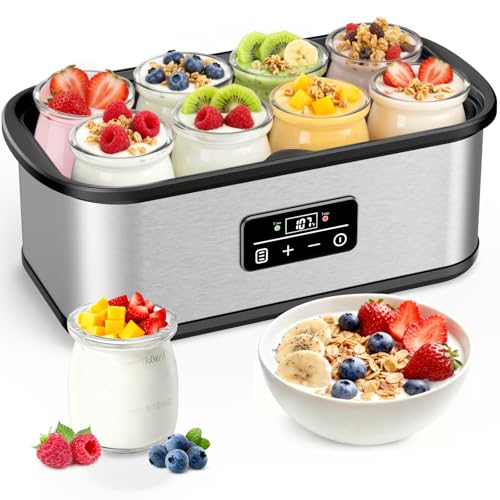 Yogurt Maker with Adjustable Time & Temp
- Precision Fermentation Control
- Powerful Probiotic Production
- Eight BPA-Free Glass Jars Included
| Product | Key specs | |
|---|---|---|
| Ultimate Probiotic Yogurt Maker with TruTemp™ Adjustable | 𝗠𝗔𝗞𝗘 𝗟 𝗛𝗢𝗟𝗗𝗦 𝗧𝗛𝗘 𝗥𝗜𝗚𝗛𝗧 𝗧𝗘𝗠𝗣 𝗙𝗢𝗥 𝗨𝗣 𝗧𝗢 𝟰𝟴… 𝗕𝗨𝗜𝗟𝗗 𝗬𝗢𝗨𝗥 𝗢𝗪𝗡 𝗦𝗨𝗣𝗘𝗥 𝗚𝗨𝗧 | Check price |
| Ultimate Probiotic Yogurt Maker with TruTemp™ Adjustable | 𝗠𝗔𝗞𝗘 𝗧𝗥𝗜𝗟𝗟𝗜𝗢𝗡𝗦 𝗢𝗙 𝗟𝗜𝗩𝗘 𝗣𝗥𝗢𝗕𝗜𝗢𝗧𝗜𝗖𝗦 𝗙𝗥𝗢𝗠 𝗛𝗢𝗠𝗘 -… 𝗕𝗨𝗜𝗟𝗗 𝗬𝗢𝗨𝗥 𝗢𝗪𝗡 𝗦𝗨𝗣𝗘𝗥 𝗚𝗨𝗧 - Make probiotics… 𝗔𝗗𝗝𝗨𝗦𝗧𝗔𝗕𝗟𝗘 𝗧𝗘𝗠𝗣𝗘𝗥𝗔𝗧𝗨𝗥𝗘 𝗖𝗢𝗡𝗧𝗥𝗢𝗟 & 𝗥𝗨𝗡 𝗧𝗜𝗠𝗘 - 𝟭𝟬𝟬%… | Check price |
| Yogurt Maker with Adjustable Time & Temp | Precision Fermentation Control Powerful Probiotic Production Eight BPA-Free Glass Jars Included | Check price |
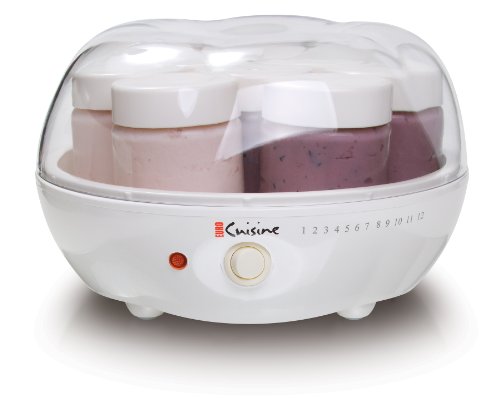 Euro Cuisine YM80 Electric Yogurt Maker Machine- | Save Money and Cultivate Powerhouse Probiotics Unlock the Health Benefits of Homemade Yogurt -… User-Friendly Yogurt Maker - No confusing buttons here!… | Check price |
As an Amazon Associate we earn from qualifying purchases at no extra cost to you.
Quick picks by yogurt-making routine
- Best for families and several flavors: Euro-Cuisine YM260, with seven individual glass jars and an approximately 2-quart total batch.
- Best for large batches: Dash Greek Yogurt Maker, which uses a large straining container and is suited to thick Greek-style yogurt.
- Best for a simple one-container routine: Cuisinart CYM-100 Electronic Yogurt Maker, with a larger stainless-steel vessel and digital controls.
- Best for compact, low-cost experimentation: A basic single-temperature, single-container yogurt maker with a 1-quart to 2-quart capacity.
- Best for people who want reusable glass jars: Euro-Cuisine models such as the YM260 or YM100, depending on whether you prefer multiple jars or one larger container.
What separates the best yogurt makers?
Yogurt makers do not “make” yogurt through complex cooking. They hold milk and starter culture at a warm, stable temperature while beneficial bacteria ferment lactose into lactic acid. The useful differences are therefore practical: how much yogurt you can make, how accurately the machine holds heat, whether you can select incubation time, how easily you can strain or portion the result, and how much equipment must be washed.
Temperature stability is more important than a long list of buttons. Most yogurt cultures work within a warm incubation range of roughly 100°F to 115°F (38°C to 46°C), depending on the culture. Excessive heat can weaken or kill the culture, while insufficient heat may produce thin yogurt or require a much longer incubation. A built-in timer is convenient, but it does not replace a reliable thermometer during your first few batches.
Head-to-head comparison
| Model or type | Batch format | Approximate capacity | Container material | Controls | Best fit |
|---|---|---|---|---|---|
| Euro-Cuisine YM260 | Seven individual jars | About 2 quarts total | Glass jars | Simple timed incubation | Families, varied flavors, grab-and-go portions |
| Euro-Cuisine YM100 | One large container | About 2 quarts | Glass container | Simple timed incubation | One flavor and fewer parts to fill |
| Dash Greek Yogurt Maker | Large vessel with strainer | About 2 quarts before straining | Plastic outer components with straining insert | Timer-based incubation | Greek-style yogurt and batch prep |
| Cuisinart CYM-100 | One main vessel | About 1.5 quarts | Stainless-steel container | Digital time and temperature settings | Users wanting more control and one larger batch |
| Basic single-container maker | One jar or tub | 1 to 2 quarts | Plastic or glass, depending on model | Usually one heat setting | Lowest cost and occasional use |
Capacities are approximate because manufacturers may state the vessel’s maximum volume rather than the practical fill level. Leave headspace when using a container, especially if you plan to stir in flavorings later.
Best yogurt makers by situation
Choose individual jars for flexible portions
The Euro-Cuisine YM260 is a strong choice when the household does not finish one flavor at the same pace. Its seven glass jars let you prepare plain, vanilla, fruit, and smaller experimental batches at the same time. Glass also resists absorbing odors from strongly flavored ingredients and can usually be washed separately from the heating base.
The trade-off is filling and washing seven vessels. Individual jars are also less convenient if you want to strain the entire batch into thick Greek-style yogurt. For a household that eats yogurt daily, portion control may outweigh the extra cleanup.
Choose one large vessel for the simplest workflow
A single-container design, such as the Euro-Cuisine YM100, reduces the number of lids and containers involved. It works well when everyone eats the same plain yogurt or when you use yogurt as an ingredient in smoothies, sauces, marinades, or baking.
The main limitation is serving flexibility. You need to scoop from one container, and adding fruit to the entire batch reduces its storage versatility. A large container can also take more refrigerator space than a row of short jars.
Choose a Greek-yogurt maker when straining is routine
The Dash Greek Yogurt Maker is designed around a straining insert, so it is more suitable than a standard jar machine if thick yogurt is your normal target. Straining is not free: whey drains away, the final volume decreases, and the insert adds another part to clean.
A practical yield estimate is useful. Suppose you incubate 2 quarts of milk and remove about 20% to 35% as whey. Your finished thick yogurt may be approximately 1.3 to 1.6 quarts, depending on the milk, culture, and desired thickness. If you want two full quarts of finished Greek-style yogurt, you may need to begin with more than two quarts of milk or make two batches.
Choose digital temperature control for repeatability
The Cuisinart CYM-100 suits users who want a programmable electronic unit rather than a warm enclosure with one preset. Adjustable time and temperature settings can help when working with different cultures or making yogurt at a preferred firmness.
More control creates more opportunities for incorrect settings. Record the temperature and incubation time that produce a result you like, then repeat those settings. A machine with adjustable controls is not automatically better if you only make the same plain yogurt every week.
Decision matrix
| Your priority | Recommended design | Why | Acceptable compromise |
|---|---|---|---|
| Lowest initial cost | Basic single-container maker | Fewer controls and parts reduce the price | Less temperature and time flexibility |
| Small kitchen or limited cabinet space | One-container model under about 8 inches wide | Smaller footprint and fewer accessories | Less portioning convenience |
| Daily yogurt for several people | 1.5- to 2-quart vessel or seven-jar system | Fewer weekly cycles | More refrigerator space |
| Several flavors at once | Multi-jar glass model | Each jar can contain a different flavor | More lids and washing |
| Very thick yogurt | Greek-yogurt maker with strainer | Straining is built into the workflow | Lower final yield and extra cleanup |
| Frequent experimentation | Digital adjustable-temperature model | Useful for comparing incubation conditions | Higher price and a steeper learning curve |
How to set up a reliable batch
- Heat the milk if using a traditional process. Many home makers heat milk to about 180°F (82°C), then cool it to the culture’s recommended inoculation temperature. This can improve body by changing milk proteins, but follow the culture instructions if they specify another method.
- Add starter at the correct temperature. Mixing culture into very hot milk can damage it. Use a clean thermometer rather than judging by touch.
- Fill containers evenly. Equal volumes make the jars finish at similar times and make portion planning easier.
- Incubate without unnecessary movement. Opening the lid or shifting the machine can disturb the developing gel.
- Chill before judging texture. Yogurt often firms substantially after several hours in the refrigerator. Stirring it while warm can make it appear thinner than the final product.
Cleanup, durability, and ownership costs
The heating base usually needs only a wipe with a damp cloth; it should not be submerged unless the manufacturer explicitly permits it. Wash jars, lids, strainers, and seals promptly so dried milk does not collect around threads and corners. Dishwasher compatibility varies, especially for plastic strainers and silicone seals, so check the manual before using a hot cycle.
The parts most likely to become inconvenient are lids, gaskets, and strainers rather than the heating element. Lids can warp or lose their seal, while fine mesh inserts may retain milk solids if scrubbed aggressively. Before buying, check whether replacement jars or lids are available separately. A machine that costs less initially can become less economical if one missing lid makes the entire set awkward to use.
Starter culture is an ongoing consumable. Commercial yogurt with live cultures can work for some batches, while freeze-dried starter packets offer more predictable dosing. If you reserve a portion of each batch as starter, replace it periodically with fresh culture because repeated reuse can gradually produce weaker or less consistent results.
General food-safety practices matter: use clean equipment, refrigerate finished yogurt promptly, and discard a batch with an unusual smell, visible mold, or unexpected color. Yogurt makers are kitchen appliances, not medical devices; people with dietary restrictions, immune concerns, or questions about fermented foods should seek advice from a qualified health professional.
Bottom line
The best yogurt makers are not the ones with the most buttons. Pick the Euro-Cuisine YM260 for individually portioned flavors, the Euro-Cuisine YM100 for a straightforward large container, the Dash Greek Yogurt Maker for regular straining, or the Cuisinart CYM-100 when adjustable electronic control justifies the additional complexity. Match the container style to how you actually eat yogurt, then prioritize stable temperature, replaceable wear parts, and cleanup that you will be willing to do every week.
More from Amazon
Programs that pair well with the guide above. Offers and eligibility are set by Amazon and may change.
Set up recurring deliveries of everyday items on eligible products. Terms and savings are set by Amazon.
Explore Subscribe & SaveFree shipping on eligible items, Prime Video and more. Eligible new members can start with a free trial.
Start a Prime free trialAudiobooks and podcasts to listen to on the go. Eligible new members can start with a free trial.
Try Audible freeRead from a large library of eBooks and audiobooks on any device. Check Amazon for current plans.
Explore Kindle UnlimitedAs an Amazon Associate we earn from qualifying purchases.

Write Your Review
No reviews yet. Be the first to share your experience!