

Key takeaways
- Colour displays: easier to interpret when several icons or modes are active, although brightness and viewing angle still matter.
- Backlit monochrome displays: often adequate indoors and can use less power, but may be harder to read in direct sunlight.
- Digital viewfinders: valuable beyond roughly 30–50 metres or in bright conditions when the laser dot disappears.
- IP54: protects against limited dust and splashing; suitable for normal indoor work and light outdoor use.
- IP65: provides stronger dust protection and resistance to water jets, but it is still not a tool for submersion.
The best laser rangefinders for most aquarium, workshop, and household measurements are the Bosch GLM 50-27 C for general indoor use, the Leica DISTO D2 when you want a compact premium tool, and a 100-metre model such as the Bosch GLM 100-25 C for long indoor or outdoor measurements.
Choosing between them depends less on maximum distance than on the surface, lighting, working environment, and measurement modes you actually need. For aquarium projects, a clear display, reliable short-distance accuracy, and resistance to splashes and dust are usually more valuable than a headline range of 100 metres.
Our top picks

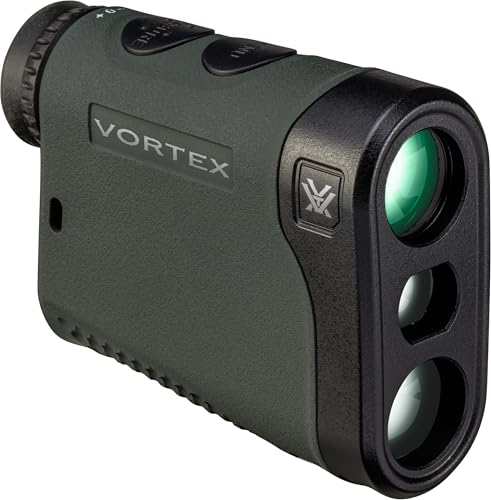


As an Amazon Associate we earn from qualifying purchases at no extra cost to you. Ratings are shown as listed on Amazon.
Best laser rangefinders by situation
| Situation | Best fit | Why it suits the job | What to watch for |
|---|---|---|---|
| Routine room, cabinet, and aquarium measurements | Bosch GLM 50-27 C | 50 m range, ±1.5 mm accuracy, colour display, Bluetooth, IP65 protection | More features than needed for occasional one-wall measurements |
| Compact premium tool for frequent indoor use | Leica DISTO D2 | 100 m range, ±1.5 mm accuracy, useful area and indirect modes, Bluetooth | IP54 protection is adequate but less sealed than IP65 |
| Long walls, ceilings, and brighter outdoor conditions | Bosch GLM 100-25 C | 100 m range, digital viewfinder, Bluetooth, 1.5 mm stated accuracy | Long-range performance depends heavily on target contrast and sunlight |
| Lowest-cost occasional indoor measuring | A basic 40–50 m laser distance meter | Usually offers length, area, volume, and continuous measurement at lower cost | Often has a dimmer display, weaker outdoor visibility, and less rugged sealing |
Head-to-head comparison
| Model | Maximum range | Stated accuracy | Protection | Power | Useful modes | Typical market range |
|---|---|---|---|---|---|---|
| Bosch GLM 50-27 C | 50 m | ±1.5 mm | IP65 | 2 AAA batteries | Length, area, volume, indirect height, continuous, Bluetooth | About $100–$160 |
| Leica DISTO D2 | 100 m | ±1.5 mm | IP54 | 2 AAA batteries | Length, area, volume, indirect, continuous, Bluetooth | About $150–$230 |
| Bosch GLM 100-25 C | 100 m | ±1.5 mm | IP54 | 2 AA batteries | Length, area, volume, indirect, continuous, digital viewfinder, Bluetooth | About $170–$250 |
| Basic 40–50 m laser meter | 40–50 m | Usually ±2–3 mm | Often IP54 or unstated | Usually 2 AAA batteries | Length, area, volume, continuous | About $25–$70 |
Published specifications are not identical to real-world results. Accuracy is generally specified under favourable conditions, with a suitable target, stable temperature, and a clean lens. At short distances, the difference between a ±1.5 mm and ±3 mm instrument is rarely important. It becomes more noticeable when calculating a large room, aligning several cabinets, or transferring dimensions repeatedly.
Bosch GLM 50-27 C: the best all-round choice
The GLM 50-27 C is the strongest general recommendation for aquarium hobbyists and DIY users because its 50-metre range covers nearly every indoor task while its IP65 housing offers useful protection against dust and water jets. Its colour display is easier to read than a basic monochrome screen, especially when moving between a dim room and a brightly lit window.
It supports area and volume calculations, continuous measurement, indirect measurements, and Bluetooth data transfer. Continuous mode is particularly useful when one person is measuring an awkward gap: move the tool until the live distance reaches the required dimension rather than repeatedly pressing the measure button.
For an aquarium stand, cabinet, or canopy, the practical advantages are its compact size, rubberised protection, and reliable short-range accuracy. The main drawback is that its 50-metre maximum is not intended for surveying large outdoor spaces. Its display is also not a substitute for a viewfinder in harsh sunlight.
Leica DISTO D2: best compact premium option
The Leica DISTO D2 combines a small body with a 100-metre maximum range and ±1.5 mm stated accuracy. It is a good choice for frequent users who want a refined interface, dependable geometry functions, and Bluetooth transfer without carrying a larger outdoor instrument.
Its area, volume, indirect-height, and continuous modes cover the measurements most people need for rooms, furniture, shelving, and aquarium installations. The integrated end-piece reference is useful when measuring from a corner or edge, but it must be fully opened or closed as appropriate; an incorrect reference setting can introduce a repeatable error into every reading.
IP54 protection means it is guarded against dust and splashing, not immersion or heavy wash-down. Keep it away from open aquarium water and dry it promptly if condensation or spray reaches the case.
Bosch GLM 100-25 C: best when visibility matters
A 100-metre rangefinder becomes worthwhile when you regularly measure long rooms, high ceilings, building exteriors, or garden structures. The GLM 100-25 C adds a digital viewfinder, which helps you aim at a distant point when the red laser dot is difficult to see in daylight.
The viewfinder does not eliminate every outdoor limitation. Dark, shiny, transparent, or highly reflective surfaces can still produce inconsistent readings. A pale matte target, temporary piece of card, or dedicated reflective target often improves reliability more than simply buying a longer-range meter.
This model uses two AA batteries rather than two AAA cells, so it is physically less compact. In return, AA cells are widely available and can be convenient for heavy users who keep a spare set in a tool bag.
What matters for aquarium measurements
Measure the tank, not the reflection
Laser distance meters need a solid surface that returns enough light to the sensor. Clear glass, glossy black backgrounds, mirrors, and moving water can scatter or redirect the beam. Do not aim through the front glass and assume the reading represents the inside length of the aquarium. Measure the external cabinet, rim, or dry interior before filling the tank.
For a filled aquarium, use a rigid ruler or tape measure for water depth and internal aquascape dimensions. A laser meter is better suited to the surrounding room, stand, canopy, wall clearance, and equipment cabinet.
Use the correct reference point
Most instruments can measure from the front or rear of the device, and some have a fold-out end piece for corners. Before taking a series of readings, place the tool against a known reference and confirm whether the displayed distance includes the instrument’s body length.
Prefer area and volume modes for planning
For a cabinet, first measure width and height, then select area mode if you need panel coverage. For example, a 1.2 m-wide by 0.8 m-high panel has an area of:
1.2 × 0.8 = 0.96 m²
If you are estimating aquarium water volume, do not rely on the external dimensions. Glass thickness, substrate, rocks, equipment, and the unfilled space below the rim all reduce actual water volume. Use the laser meter for the enclosure and calculate working capacity separately.
Display, outdoor use, and weather resistance
- Colour displays: easier to interpret when several icons or modes are active, although brightness and viewing angle still matter.
- Backlit monochrome displays: often adequate indoors and can use less power, but may be harder to read in direct sunlight.
- Digital viewfinders: valuable beyond roughly 30–50 metres or in bright conditions when the laser dot disappears.
- IP54: protects against limited dust and splashing; suitable for normal indoor work and light outdoor use.
- IP65: provides stronger dust protection and resistance to water jets, but it is still not a tool for submersion.
Regardless of the rating, avoid measuring through rain, fog, or heavy condensation. Water droplets can interfere with the beam and may eventually reach buttons, seals, or the optical window.
Battery longevity and ownership costs
Battery life varies with model, temperature, Bluetooth use, display brightness, and how long the laser remains active. A realistic expectation for a quality AAA or AA laser meter is several thousand individual readings from a fresh alkaline set, with less runtime in continuous-use or cold conditions. Rechargeable NiMH batteries reduce waste but may show a lower voltage and shorter apparent runtime than alkalines in some devices.
At 10 measurements per week, a set lasting 3,000 readings would theoretically cover about 300 weeks. In practice, replace batteries earlier if the device is stored for long periods, because leakage damage is more expensive than the batteries. Remove alkaline cells before long-term storage, and use the same chemistry and charge level in both battery positions.
Maintenance mistakes that reduce accuracy
- Wipe the optical window with a clean microfibre cloth; do not use abrasive paper towels.
- Keep the tool still until the measurement confirms. Hand movement can matter more than the advertised accuracy.
- Do not cover the receiver or laser aperture with a finger.
- Check the reference setting after switching from corner mode to ordinary end-to-end measurements.
- Verify an important dimension twice from opposite directions or against a tape measure.
- Store the meter in a case rather than loose with metal tools that can scratch the display or optics.
Final buying decision
Choose the Bosch GLM 50-27 C if you mainly measure indoors and want the best balance of accuracy, readability, modes, and protection. Choose the Leica DISTO D2 for a compact, premium-feeling 100-metre tool with strong geometry functions. Choose the Bosch GLM 100-25 C when long distances and outdoor aiming make a digital viewfinder important. If you measure only occasionally, a basic 40–50-metre model is sufficient—provided it has a readable backlight, a continuous mode, and at least splash protection.

Write Your Review
No reviews yet. Be the first to share your experience!