

Key takeaways
- Bookcases up to 7 feet: A 5- to 7-foot hook-on or fixed ladder is usually sufficient. A broad third or fourth tread is more useful than excessive height.
- Bookcases from 8 to 10 feet: Look for a 7- to 9-foot ladder with a stable rail connection and at least a 250-pound rating.
- Bookcases from 11 to 14 feet: A rolling system is usually the most practical. Choose a rail designed for the ladder’s length and load rather than adapting a decorative curtain or barn-door track.
- Ceiling-height shelving: Confirm that the ladder can park without striking light fixtures, crown molding, sprinkler heads, or ceiling fans. Extra height is not helpful if the top tread cannot be used safely.
Best Library Ladders for Tall Bookshelves
The best library ladders for bookshelves are usually rolling ladders with a 7- to 10-foot rail for frequent access, while a lightweight fixed ladder is the better choice for occasional use, tight rooms, or lower budgets.
Choosing one is less about finding the tallest ladder and more about matching the ladder’s working height, rail system, hook position, tread width, weight rating, and storage footprint to your shelves. A ladder that reaches the top shelf but cannot clear the bookcase, support the user comfortably, or park safely is not a practical solution.
Our top picks

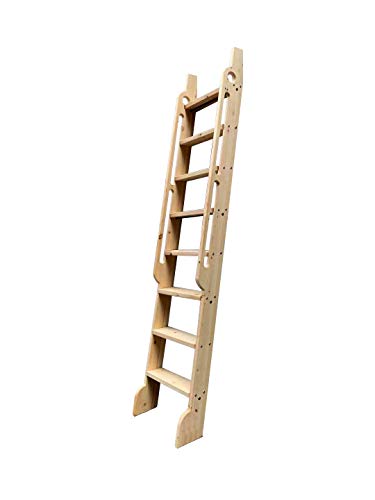
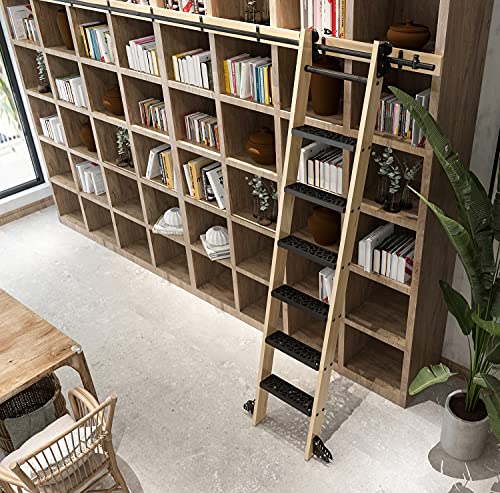

As an Amazon Associate we earn from qualifying purchases at no extra cost to you. Ratings are shown as listed on Amazon.
Quick comparison of library ladder types
| Ladder type | Typical height | Typical weight rating | Tread width | Best for | Main drawback |
|---|---|---|---|---|---|
| Fixed leaning ladder | 5–10 ft | 200–300 lb | 14–18 in | Occasional access and small budgets | Must be lifted and repositioned |
| Hook-on library ladder | 5–12 ft | 250–350 lb | 14–18 in | One bookcase or a narrow wall | Hooks and rail must align precisely |
| Rolling ladder on a rail | 6–14 ft | 300–500 lb | 16–20 in | Frequent use across a long bookcase | Higher cost and permanent installation |
| Folding library ladder | 5–10 ft | 200–300 lb | 12–16 in | Renters and rooms needing clear floor space | Less stable and less convenient for repeated trips |
These are useful buying ranges rather than universal specifications. Always use the manufacturer’s rating, which should include the person, clothing, tools, and anything being carried up the ladder.
Choose by your bookshelf height
Measure from the floor to the highest shelf you need to reach, then compare that measurement with the ladder’s usable standing height, not merely its overall length. A ladder normally needs to lean at an angle, so a 10-foot ladder does not provide a 10-foot vertical reach.
- Bookcases up to 7 feet: A 5- to 7-foot hook-on or fixed ladder is usually sufficient. A broad third or fourth tread is more useful than excessive height.
- Bookcases from 8 to 10 feet: Look for a 7- to 9-foot ladder with a stable rail connection and at least a 250-pound rating.
- Bookcases from 11 to 14 feet: A rolling system is usually the most practical. Choose a rail designed for the ladder’s length and load rather than adapting a decorative curtain or barn-door track.
- Ceiling-height shelving: Confirm that the ladder can park without striking light fixtures, crown molding, sprinkler heads, or ceiling fans. Extra height is not helpful if the top tread cannot be used safely.
Leave enough clearance above the highest usable tread for your head and shoulders. A ladder that places your feet near the top shelf may still force you to lean sideways, which defeats the purpose of a safer access system.
Rolling versus fixed: the practical head-to-head
Rolling ladders
A rolling ladder is the strongest choice when one ladder serves a long wall of shelves. It travels along a horizontal rail, so you can reach different sections without repeatedly lifting the ladder. Good systems use purpose-built wheels or rollers, a secure top hook, and a lower angle that keeps the user facing the bookcase.
Rolling ladders need more planning. The rail must be mounted into structural framing or suitable masonry anchors, and its ends need enough clearance for the ladder to stop without hitting a wall. A ladder that rolls freely but cannot be locked or parked securely can become a hazard, especially on smooth flooring.
Fixed and hook-on ladders
A fixed leaning ladder costs less, takes less time to install, and works well when the shelves are short or access is infrequent. A hook-on model can be lifted away when the floor area is needed, but its hooks must match the rail diameter and spacing.
Do not assume that a ladder hook will fit any library rail. Check the inside hook width, hook depth, tube diameter, rail centerline, and the distance between the two hooks. A mismatch can leave the ladder tilted, noisy, or vulnerable to lifting off the rail.
Rail and hook compatibility checklist
- Confirm the rail is rated for the complete ladder and user load.
- Check whether the rail is a round tube, flat bar, or proprietary track.
- Measure the rail diameter and compare it with the hook’s internal opening.
- Verify that the hook reaches far enough over the rail without binding.
- Look for end stops so the ladder cannot roll off the rail.
- Make sure the rail projects far enough from the bookcase for the ladder to clear shelf fronts and trim.
- Confirm whether the ladder needs a lower wheel, floor glide, or stabilizing foot.
A rail mounted flush against a bookcase may look tidy but can leave too little space for the user’s toes and knees. The correct projection depends on the ladder angle and tread design; follow the system’s installation dimensions rather than estimating from appearance.
Tread width, materials, and weight ratings
For regular use, prioritize treads at least 16 inches wide. Narrow 12- to 14-inch treads can work in confined spaces, but they provide less room for both feet and make it harder to turn while holding a book. Treads with a flat, textured surface are preferable to narrow round rungs.
Wood ladders suit traditional interiors and can be comfortable underfoot, but the finish may eventually wear where shoes contact the treads. Powder-coated steel or aluminum is generally easier to wipe clean and may resist dents better, although metal can feel colder and become slippery if the tread surface is smooth.
A 250-pound rating is a sensible minimum for many home users. Choose 300 pounds or more if the ladder will be used while carrying several large books, a storage box, or cleaning equipment. The rating is not a recommendation to climb with both hands full; keep one hand available for support whenever possible.
Decision matrix for common buying situations
| Your situation | Best configuration | Target specifications | Why |
|---|---|---|---|
| Occasional access, limited budget | Fixed leaning ladder | 5–7 ft, 200–250 lb rating, 14–16 in treads | Low purchase and installation cost |
| Weekly use across one short bookcase | Hook-on ladder and short rail | 6–8 ft, 250–300 lb rating, 16 in treads | Convenient without a full-length rolling system |
| Daily use across a long wall | Rolling ladder with rail | 7–10 ft, 300 lb or higher, 16–20 in treads | Reduces lifting and repositioning |
| Rented home or shared multipurpose room | Folding or removable ladder | 5–8 ft, locking hinges, 200–250 lb rating | Stores away when the room changes function |
| Heavy books and frequent cleaning | Heavy-duty rolling ladder | 8–12 ft, 350–500 lb rating, reinforced rail | Greater reserve capacity and durability |
Installation requirements that affect the real cost
A fixed or rolling library ladder may require more than drilling holes into the bookcase. First identify studs, blocking, concrete, or masonry behind the rail. A tall ladder creates leverage as the user climbs, so drywall anchors alone are generally unsuitable for a permanent rail.
- Measure the bookcase length and mark the rail’s usable travel area.
- Locate structural mounting points and determine whether the supplied fasteners are appropriate.
- Set the rail height according to the ladder instructions, allowing clearance for the top hook and the user’s shoulders.
- Install rail brackets at the specified spacing; do not omit intermediate brackets on a long rail.
- Fit end stops before placing the ladder on the rail.
- Test the unloaded ladder, then apply gradual weight while checking for rail movement, flex, scraping, and unwanted wheel lift.
Budget for the rail, brackets, end stops, mounting hardware, and possibly professional installation. General market pricing in 2026 is roughly $100–$350 for a basic fixed or folding ladder, $250–$700 for a hook-on ladder with rail components, and $600–$1,800 or more for a custom rolling system. Custom wood finishes, unusual ceiling heights, and masonry installation can increase the total substantially.
Ownership details people often overlook
The first parts to wear are usually wheel bearings, floor glides, hook contact surfaces, tread finishes, and rail fasteners that loosen from repeated movement. Inspect these areas every few months if the ladder is used frequently. Replace damaged rollers or cracked hooks rather than lubricating around a structural defect.
Keep the rail free of dust and grit with a dry or slightly damp cloth. Excess oil can attract dust and transfer it to the ladder or books; use only a lubricant specifically approved for the roller mechanism. Tighten accessible fasteners periodically, but do not over-tighten hardware into wood and crush the mounting surface.
Common mistakes include exceeding the weight rating, standing on the top cap when it is not a step, moving a rolling ladder while someone is on it, installing a rail into unsupported shelving, and storing a removable ladder where children can climb it unsupervised.
Bottom line
For most tall home libraries, choose a rolling ladder with 16- to 20-inch treads, a 300-pound-or-higher rating, purpose-built rail hardware, and enough rail length to reach every section without overextending. Choose a fixed or hook-on ladder when the shelves are shorter, the room is tight, or access is occasional. Measure the actual working height and mounting structure first; those two checks matter more than decorative finish or maximum advertised ladder length.

Write Your Review
No reviews yet. Be the first to share your experience!