

Key takeaways
- Find the best aquarium fish food for angelfish, from slow-sinking granules and crisps to worm-like sticks and freeze-dried treats for colorful fish.
Angelfish are graceful, tall-bodied cichlids from the Amazon basin, and they feed best in mid-water. In the wild, they pick at small invertebrates, insect larvae, crustaceans, and soft plant material, so a good aquarium diet should copy that mix. A varied diet built around a quality staple, with a protein-rich treat in rotation, supports steadier growth, fuller fins, and more vivid colour.
The best aquarium fish food for angelfish is TetraColor Tropical Granules for most adult angelfish, because it is made for larger tropical fish such as discus and angelfish, it sinks slowly through the mid-water column where angelfish prefer to feed, and it adds colour-enhancing nutrition to a daily staple. If your angelfish ignore pellets, Hikari Vibra Bites is the strongest alternative, because its worm-like sticks drift slowly and appeal to fish that prefer live-style food. For a mixed community tank, add a flake such as Ultra Fresh Tropical Flakes, and rotate in TetraPro Tropical Color Crisps and Tetra BloodWorms as a freeze-dried treat.
As an Amazon Associate, we earn from qualifying purchases.
Table of Contents
- Quick Picks
- How to Choose Food for Angelfish
- 1. TetraColor Tropical Granules
- 2. Hikari Vibra Bites
- 3. TetraPro Tropical Color Crisps
- 4. Ultra Fresh Tropical Flakes
- 5. Tetra BloodWorms
- How Much and How Often to Feed Angelfish
- Common Feeding Mistakes to Avoid
- FAQ
- Conclusion
Quick Picks
| Food | Form | Best For |
|---|---|---|
| TetraColor Tropical Granules | Slow-sinking granules | Adult angelfish as a daily staple |
| Hikari Vibra Bites | Slow-sinking sticks | Picky angelfish that prefer worm-like food |
| TetraPro Tropical Color Crisps | Floating crisps | Color-enhancing crisps for tropical fish |
| Ultra Fresh Tropical Flakes | Flakes | Surface and mid-water feeding in mixed tanks |
| Tetra BloodWorms | Freeze-dried treat | A protein-rich supplement two or three times a week |
How to Choose Food for Angelfish
Angelfish are omnivores with a lean toward animal protein, so look for a named animal ingredient near the start of the ingredient list, such as krill, shrimp, salmon, or insect larvae, rather than a vague filler. Protein content matters, but the source matters more than a single number.
Size is the next decision. Adult angelfish have a surprisingly small mouth for their height, so medium granules, small sticks, and flakes that soften quickly suit them better than very large pellets. Juvenile angelfish need smaller pieces still. A slow-sinking food is ideal, because angelfish feed in mid-water and will often ignore food that floats for a long time or drops straight to the gravel.
Form also affects waste. Flakes break apart quickly and can cloud water if overfed, while granules and sticks hold together longer and are easier to dose in small amounts. Freeze-dried foods are convenient and shelf-stable, but they are best used as a supplement rather than the whole diet. Rotating two staples and one treat across the week gives more nutritional variety than feeding one tub at every meal.
1. TetraColor Tropical Granules
TetraColor Tropical Granules are designed for larger tropical fish such as discus and angelfish, and that direct match is the main reason they lead this list. The granules sink slowly, so they pass through the mid-water column where angelfish feed, instead of sitting on the surface or falling straight past them. Tetra describes the formula as a colour-enhancing staple, with essential nutrition for large tropical fish and added vitamin C, plus the maker’s ProCare formula to support immune health.
That combination suits a daily feeding routine. The granules are large enough for an adult angelfish to take one at a time, yet small enough to be eaten without long chewing, and the slow-sinking action gives slower fish time to reach food before faster tankmates take it all. Use it as the base of the diet, with a flake or a freeze-dried food rotated in for variety. The listed size is the 10.58 ounce pack, which suits a keeper with several angelfish or a larger community tank.
Specs
| Feature | Detail |
|---|---|
| Product | TetraColor Tropical Granules |
| Brand | Tetra |
| Form | Slow-sinking granules |
| Size | 10.58 oz |
| Best for | Adult discus and angelfish |
| Feeding zone | Mid-water |
| Key features | Colour-enhancing nutrition, vitamin C, ProCare formula |
| Protein content | Not stated in the listing excerpts checked |
| ASIN | B0D7VQ7ZG6 |
2. Hikari Vibra Bites
Hikari Vibra Bites are worm-like sticks made for tropical fish that prefer live food, and Hikari’s own guidance names larger angelfish among the fish they suit. The sticks sink very slowly and drift in the water, which mimics the movement of a bloodworm and often tempts angelfish that refuse ordinary pellets or flakes. For a picky adult, or for a new angelfish that is still settling into a tank, that lifelike shape can make the difference between a fish that eats and a fish that watches food fall past.
The published ingredient list begins with fish meal and krill meal, followed by wheat flour, flaked corn, brewers dried yeast, cuttlefish meal, wheat germ meal, and wheat gluten meal, with fish oil, whole crushed silkworm pupae, mealworm, astaxanthin, and garlic also listed. That is a protein-led recipe with several animal ingredients, rather than a single fish meal plus cereal. The listed size here is 9.8 ounces, which is a generous pack for a single angelfish tank and better suited to a group or a community tank. Feed a small pinch at a time and watch the fish take them before adding more.
Specs
| Feature | Detail |
|---|---|
| Product | Hikari Vibra Bites |
| Brand | Hikari |
| Form | Very slow-sinking worm-like sticks |
| Size | 9.8 oz |
| Best for | Picky tropical fish, including larger angelfish |
| Feeding zone | Mid-water |
| Key ingredients | Fish meal, krill meal, cuttlefish meal, silkworm pupae, garlic |
| Protein content | Not stated in the listing excerpts checked |
| ASIN | B07KDGQHNW |
3. TetraPro Tropical Color Crisps
TetraPro Tropical Color Crisps are floating crisps made for tropical fish, with natural color enhancers and biotin, and they give angelfish a different form from the granules and flakes elsewhere in this list. Each crisp has a colorful outer ring of essential nutrients, while the inner layer contains algae meal for concentrated color and high-protein krill for muscle growth. The crisps stay at the surface at first, where angelfish that rise to feed can take small bites, and they soften as they take up water rather than staying hard.
That color focus is the reason to include them. Angelfish color shows best on a varied diet, and a crisp built around algae meal and krill adds carotenoid-rich ingredients that a plain staple may lack. The maker states that the crisps leave up to 35 percent less waste behind than ordinary flakes, which helps keep the water clearer when the food is dosed in small amounts. The listed size is 7.41 ounces, a generous jar for a single angelfish tank, so store it sealed and use it as part of a rotation rather than the only food in the tank.
Specs
| Feature | Detail |
|---|---|
| Product | TetraPro Tropical Color Crisps |
| Brand | Tetra |
| Form | Floating crisps |
| Size | 7.41 oz |
| Best for | Tropical fish, including angelfish |
| Feeding zone | Surface, softening as they soak |
| Key features | Natural color enhancers, biotin, algae meal, krill |
| Protein content | Not stated in the listing excerpts checked |
| ASIN | B00JN9I7F4 |
4. Ultra Fresh Tropical Flakes
Ultra Fresh Tropical Flakes are a useful flake option for angelfish keepers who want a light, easy-to-dose food for surface and mid-water feeding. The Amazon listing names discus, angelfish, and tropical fish in its breed recommendation, so this is not a generic flake that happens to suit angelfish, but one whose maker lists angelfish as a target fish. Flakes spread across the surface and soften quickly, which helps angelfish take small mouthfuls without chasing large pellets.
The maker describes the flakes as all-natural and colour-boosting, with complete nutrition for tropical fish, discus, and angelfish. The listed size here is 0.7 ounces, a small jar suited to a single tank or to a keeper who wants to try a flake before buying a larger pack. A small jar also helps keep the food fresh, because flakes lose aroma and nutrients faster than sealed pellets once opened. Use flakes as part of a rotation rather than the only food in the tank, and crush large flakes lightly for juveniles.
Specs
| Feature | Detail |
|---|---|
| Product | Ultra Fresh Tropical Flakes |
| Brand | Ultra Fresh |
| Form | Flakes |
| Size | 0.7 oz |
| Best for | Discus, angelfish, and tropical fish |
| Feeding zone | Surface and mid-water |
| Key features | All-natural flakes, colour-boosting formula |
| Manufacturer | Azoo |
| Protein content | Not stated in the listing excerpts checked |
| ASIN | B0FMDZ1J9T |
5. Tetra BloodWorms
Tetra BloodWorms are a freeze-dried treat rather than a daily staple, and that is exactly why they belong in an angelfish diet. Angelfish respond strongly to bloodworms, which resemble the small invertebrate prey they eat in the wild, and a freeze-dried version is shelf-stable, easy to store, and simple to dose in small amounts. Tetra describes this food as a premium-quality, nutritious supplement to use along with a staple diet such as TetraMin flakes, and recommends feeding it two or three times a week.
The listed size is 0.25 ounces, which sounds small, but a little goes a long way because freeze-dried bloodworms are light and expand slightly when they take up water. Tetra notes that it is suitable for small to medium tropical fish, which covers most adult angelfish. Use bloodworms as a supplement, not as the whole diet, because bloodworms alone lack the plant matter, vitamins, and varied protein an omnivore needs.
Specs
| Feature | Detail |
|---|---|
| Product | Tetra BloodWorms |
| Brand | Tetra |
| Form | Freeze-dried bloodworms |
| Size | 0.25 oz |
| Best for | Small to medium tropical fish as a supplement |
| Feeding zone | Surface, then sinking as they soak |
| Feeding frequency | Two or three times a week, alongside a staple food |
| Key features | Freeze-dried supplement, child-safety lid |
| Protein content | Not stated in the listing excerpts checked |
| ASIN | B08F6W32MS |
How Much and How Often to Feed Angelfish
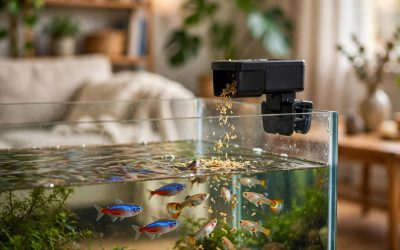
Feed adult angelfish once or twice a day, with only as much food as they finish in two to three minutes. Juveniles benefit from two or three smaller meals a day, with the same two-to-three-minute rule for each meal. A small pinch, watched until it is eaten, is a better guide than a fixed count of pellets, because tank size, tankmates, and temperature all change how much a group eats.
Rotate foods across the week rather than feeding the same item at every meal: a granule staple on most days, a flake on one or two days, and a freeze-dried treat on two or three days. If food reaches the gravel uneaten on a regular basis, reduce the portion before changing the food itself.
Common Feeding Mistakes to Avoid
The most common mistake is overfeeding. Angelfish will keep eating while food is available, and uneaten food decays quickly in warm water. Feed less than you think, watch the fish finish it, and only then consider a second small pinch.
A second mistake is feeding only one food for months. A single flake or pellet cannot match the variety of an omnivore’s natural diet, so keep at least two staples and one treat in rotation. A third mistake is choosing food that is too large or too small, or feeding at the wrong depth. Match the piece to the mouth, and favour slow-sinking foods that reach angelfish in mid-water.
FAQ
What is the best staple food for angelfish?
A slow-sinking granule made for larger tropical fish or cichlids is a strong staple, because angelfish feed in mid-water and need a piece they can take one at a time. TetraColor Tropical Granules fit that pattern directly, aimed at discus and angelfish, while TetraPro Tropical Color Crisps add a floating crisp with color-enhancing ingredients for variety. Use a flake or a freeze-dried treat in rotation for variety.
How often should angelfish be fed?
Adult angelfish do well on one or two small meals a day, while juveniles benefit from two or three smaller meals a day. In both cases, feed only what the fish finish in two to three minutes. If food reaches the gravel uneaten on a regular basis, reduce the portion before changing the food itself.
Can angelfish eat bloodworms every day?
Bloodworms can be offered two or three times a week as a supplement, but they should not replace a staple food every day. A freeze-dried bloodworm treat adds protein and variety, yet a diet based on one ingredient alone lacks the plant matter and vitamins an omnivore needs. Pair bloodworms with a granule or flake staple for a more balanced diet.
Do angelfish need plant matter as well as protein?
Yes, angelfish are omnivores, so their diet should include plant-based ingredients alongside animal protein. Many quality staples already include plant matter such as peas, spirulina, kelp, or other vegetable ingredients, and a varied rotation of granules, flakes, and treats helps cover that need. A food that lists only animal ingredients, with no plant matter at all, is better used as a treat than as the sole staple.
Conclusion
The best food for angelfish is a slow-sinking staple that matches their mid-water feeding style, with a protein-rich treat in rotation for variety. TetraColor Tropical Granules lead this list for adult angelfish, Hikari Vibra Bites suit picky fish, TetraPro Tropical Color Crisps add a color-enhancing crisp, Ultra Fresh Tropical Flakes cover light flake feeding, and Tetra BloodWorms provide a freeze-dried supplement. Choose the staple your fish accept most readily, feed small portions once or twice a day, and rotate foods across the week.
|—|—|
More from Amazon
Programs that pair well with the guide above. Offers and eligibility are set by Amazon and may change.
Set up recurring deliveries of everyday items on eligible products. Terms and savings are set by Amazon.
Explore Subscribe & SaveFree shipping on eligible items, Prime Video and more. Eligible new members can start with a free trial.
Start a Prime free trialAudiobooks and podcasts to listen to on the go. Eligible new members can start with a free trial.
Try Audible freeRead from a large library of eBooks and audiobooks on any device. Check Amazon for current plans.
Explore Kindle UnlimitedAs an Amazon Associate we earn from qualifying purchases.
Write Your Review
No reviews yet. Be the first to share your experience!