

Key takeaways
- Find the best aquarium fish food for cichlids: five cichlid-specific pellets, granules, and sticks compared for color, growth, and daily feeding.
The best aquarium fish food for cichlids is a cichlid-specific pellet, granule, or stick that matches the size of the fish, sinks or floats where the fish naturally feed, and supplies the animal protein and color-supporting ingredients cichlids need as a daily diet. For most keepers, a sinking cichlid pellet is the most practical staple, since many popular cichlids feed in the middle and lower parts of the tank, while a floating pellet or stick suits larger top-feeding species such as oscars.
Cichlids are not one kind of fish: African peacocks, South American dwarf cichlids, and large predators such as oscars have different mouth sizes, feeding levels, and dietary leanings. Pellet diameter matters as much as the ingredient list: a pellet that is too large gets spat out, while one that is too small gets ignored or eaten by tank mates first.
Table of Contents
- How to Choose Fish Food for Cichlids
- New Life Spectrum Cichlid Formula
- Fluval Bug Bites Cichlid Formula
- Omega One Super Color Sinking Cichlid Pellets
- Tetra JumboMin Large Floating Sticks
- NorthFin Cichlid Formula
- How to Feed Cichlids
- Frequently Asked Questions
- Conclusion
How to Choose Fish Food for Cichlids
Start with the fish, not the jar. A ram needs a small pellet that sinks slowly enough to be found. A peacock or a hap needs a medium pellet that holds together in the water column. An oscar needs a large floating pellet or stick that can be taken at the surface in one bite. When the pellet size is right, less food ends up uneaten on the substrate.
Feeding level is the next filter. Floating foods suit top-feeding cichlids and make it easy to watch how much is eaten. Slow-sinking pellets suit mid-water feeders and give shy fish time to approach the food, while sinking pellets suit bottom-oriented feeders. Many keepers use one staple and add a second format only when a particular fish is being outcompeted at feeding time.
Ingredients tell the rest of the story. Cichlid formulas are generally built around aquatic animal protein such as whole fish, krill, squid, or salmon, often with seaweed or spirulina for omnivorous species. Color-supporting ingredients such as astaxanthin appear in many cichlid diets, described by manufacturers as supporting natural coloration. A food that lists a named aquatic protein first is a reasonable starting point.
Protein level is useful as a comparison point, but it is not a score on its own: herbivorous grazers such as many mbuna need a different balance from a carnivorous oscar. Check the feeding guidance for the species being kept, and treat the guaranteed analysis on the container as the reference for the exact pack. Pack size matters for freshness too, so a small or medium pack used within a few months is usually the better choice.
New Life Spectrum Cichlid Formula
New Life Spectrum Cichlid Formula is a sinking pellet diet made as a daily food for cichlids, and the most versatile pick here for a mixed cichlid tank. The manufacturer describes it as a daily diet for the hearty appetite of cichlid aquarium fish, built around the core high-density Spectrum Nutrition Formula, with color vibrancy and general health as the stated aims. It is also the formula behind the Spectrum Guarantee, which the manufacturer presents as a promise of improved color, health, and vitality when fed exclusively for thirty days, along with help reversing malnutrition-related head, fin, and lateral line erosion.
Published ingredient information names whole Antarctic krill, giant squid, whole fish, and several seaweeds, plus garlic, ginger, astaxanthin, spirulina, and omega-3 fish oil. The published guaranteed analysis lists a minimum of 37 percent crude protein and a minimum of 8 percent crude fat. The regular sinking pellets measure approximately 1 to 1.5 millimeters, suiting small to medium cichlids such as peacocks, haps, acaras, and firemouths, and they sink gradually through the water column. This premium pick suits keepers who want one staple across African and American cichlids, although it is not right for strict herbivores or very large predators.
Specs
| Specification | Detail |
|---|---|
| Form | Sinking pellets |
| Pellet size | Approximately 1 to 1.5 mm |
| Pack size | 150 g |
| Minimum crude protein | 37 percent |
| Minimum crude fat | 8 percent |
| Key ingredients | Whole Antarctic krill, squid, fish, seaweed, spirulina |
| Best for | Small to medium African and American cichlids |
| Feeding level | Mid-water to bottom |
| Price group | Premium |
Fluval Bug Bites Cichlid Formula
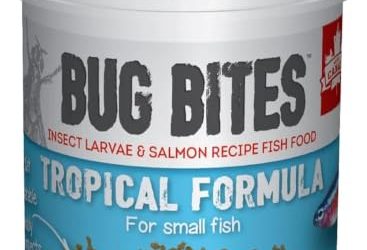
Fluval Bug Bites Cichlid Formula is built around insect protein. The first ingredient listed by the manufacturer is dried black soldier fly larvae, followed by salmon, fish protein concentrate, green peas, potato, and wheat. The manufacturer describes Bug Bites as a complete fish food with a unique insect-based formulation, enriched with multiple quality proteins and carbohydrates ideal for tropical fish, especially cichlids. Black soldier fly larvae are a natural food source for insect-eating fish in the wild.
The granule format is the other defining feature: small granules rather than round pellets, sized for small to medium fish, including juveniles and dwarf species that struggle with larger pellets. The granules sink slowly, suiting mid-water feeders as well as fish that pick food up after it settles. The published ingredient list also includes calcium carbonate, dicalcium phosphate, and several vitamins. The manufacturer presents the formula as a complete daily diet, not a treat. The main feeding risk is overfeeding, so small amounts fed more than once a day work better than one large feeding. This mid-range pick suits small to medium cichlids, or as a second food to rotate with a pellet staple.
Specs
| Specification | Detail |
|---|---|
| Form | Granules |
| Pellet size | Small granules for small to medium fish |
| Pack size | 1.59 oz |
| First ingredient | Dried black soldier fly larvae |
| Other key ingredients | Salmon, fish protein concentrate, green peas, potato |
| Best for | Small to medium cichlids and juvenile cichlids |
| Feeding level | Mid-water |
| Price group | Mid-range |
Omega One Super Color Sinking Cichlid Pellets
Omega One Super Color Sinking Cichlid Pellets are a sinking pellet diet made for cichlids of all types and sizes, with color enhancement as the headline feature. The manufacturer describes them as offering superb color enhancement with strong nutrition and palatability, and the range covers small, medium, and large pellets. The large size covered here uses 2 millimeter pellets in a 20 ounce jar, suiting medium to large cichlids that feed below the surface.
The recipe is built around fresh seafood rather than fishmeal. Published product information names whole salmon as the first ingredient, with Alaskan halibut, krill, and shrimp also in the formula, along with ocean kelp. The manufacturer describes the formula as fishmeal-free, with guaranteed levels of omega-3 and omega-6 fatty acids to support cichlid health, growth, and coloration, and natural pigments in salmon skins are described as promoting vibrant colors. The sinking format gives shy fish a better chance at feeding time than a floating food monopolized at the surface. The 20 ounce jar suits a keeper with several medium or large cichlids; for a tank with only a few small fish, a smaller pack is the better choice.
Specs
| Specification | Detail |
|---|---|
| Form | Sinking pellets |
| Pellet size | 2 mm, large pellets |
| Pack size | 20 oz |
| First ingredient | Whole salmon |
| Other key ingredients | Alaskan halibut, krill, shrimp, ocean kelp |
| Best for | Medium to large South American and rift lake cichlids |
| Feeding level | Mid-water to bottom |
| Price group | Premium |
Tetra JumboMin Large Floating Sticks
Tetra JumboMin Large Floating Sticks are the large-format pick here, made for big cichlids and other large aggressive fish. The manufacturer describes JumboMin as a nutritionally balanced live food alternative, developed for aggressive, carnivorous fish, with concentrated levels of dried krill and shrimp. The listing names cichlids, oscars, piranhas, and arowanas among the fish the sticks are intended for, which makes this the clearest large-fish choice in the group.
The stick format is the point. Large floating sticks stay on the surface where they are easy to see and monitor, so the keeper can watch how much is eaten and remove leftovers before they sink and decay. The sticks are also large enough for a big cichlid to take in a single bite, reducing the mess from a large fish crushing and spitting out small pellets. Published label information lists shrimp meal first and freeze-dried krill among the early ingredients; keepers should check the pack they receive for the current declaration. This budget pick suits oscars, large Central American cichlids, or other big aggressive fish, but not small cichlids or bottom-feeding species that rarely come to the surface.
Specs
| Specification | Detail |
|---|---|
| Form | Large floating sticks |
| Pack size | 7.4 oz, 1 liter |
| Key ingredients | Shrimp meal, dried krill, shrimp |
| Best for | Large cichlids, oscars, and other large aggressive fish |
| Feeding level | Surface |
| Price group | Budget |
NorthFin Cichlid Formula
NorthFin Cichlid Formula is a slow-sinking pellet diet made in Canada, and the most ingredient-focused pick here. The manufacturer positions it as a premium, high-protein, all-natural cichlid diet with no fillers and no hormones, made to enhance color and growth. The slow-sinking format is a deliberate middle ground: the pellets sink gradually, so mid-water and bottom feeders both get a chance at them.
The 2 millimeter pellet size covered here suits medium cichlids, including many peacocks, haps, and American cichlids that have outgrown small pellets but do not yet need a large stick. The 2.5 kilogram pack is a bulk size for a keeper with a large cichlid tank, several tanks, or a fish room where a single staple is used across many fish. Smaller packs exist for a single tank, and are the better choice when only a few fish are being fed, since freshness matters more than bulk size. The slow-sinking pellet is designed to hold together in the water rather than breaking apart on contact.
Specs
| Specification | Detail |
|---|---|
| Form | Slow-sinking pellets |
| Pellet size | 2 mm |
| Pack size | 2.5 kg |
| Best for | Medium African and American cichlids |
| Feeding level | Mid-water to bottom |
| Price group | Premium |
How to Feed Cichlids
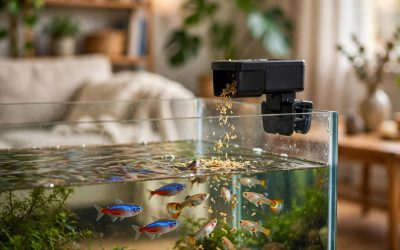
Feed small amounts that the fish finish within two to three minutes, once or twice a day. Cichlids are enthusiastic eaters, and it is easy to overfeed a tank that always looks hungry. Uneaten food decays on the substrate and makes water quality problems more likely. A small pinch, watched until it is eaten, is a better routine than a large pinch left to sink.
Match the amount to the fish in the tank, not to the size of the jar. Juvenile cichlids that are growing need feeding more often, in smaller amounts, than adult fish. Rotate formats when the tank needs it, rather than changing foods every week: a sinking pellet staple plus a floating stick for large fish, or a granule for juveniles plus a pellet for adults, covers most tanks. Introduce a new food gradually, mixing it with the old food for several feedings. Store food sealed, in a cool and dry place, and replace it if it smells stale or has been open for many months.
Frequently Asked Questions
What is the best food for African cichlids?
A cichlid-specific sinking or slow-sinking pellet in a size the fish can take in one bite is a good staple for most African cichlids, including peacocks and haps. Check whether the species is an omnivore or a herbivorous grazer, since mbuna and other algae grazers need a different balance from a carnivorous hap.
How much should I feed my cichlids each day?
Feed only as much as the fish finish within two to three minutes, once or twice a day. Juvenile fish that are growing can be fed smaller amounts more often, while adult fish usually do well on one or two small feedings a day.
Can cichlids eat the same food as other tropical fish?
Cichlids can eat a general tropical food occasionally, but a cichlid-specific formula is a better daily diet. Cichlid foods are made with the protein level, pellet size, and feeding level that cichlids need, while general tropical flakes and pellets are made for smaller community fish and may be the wrong size or balance for a cichlid tank.
Do cichlids need floating or sinking food?
It depends on where the fish feed. Top-feeding cichlids such as oscars do well on floating pellets or sticks, while many African and South American cichlids feed in the middle and lower parts of the tank and do better on slow-sinking or sinking pellets. Choose the format that matches the species being kept.
Conclusion
The best aquarium fish food for cichlids is the cichlid-specific food that fits the fish in the tank: the right pellet size, the right feeding level, and a recipe built around aquatic protein with color-supporting ingredients. For a mixed tank of small to medium cichlids, a sinking pellet such as New Life Spectrum Cichlid Formula is the most versatile staple. For small to medium fish and juveniles, an insect-based granule such as Fluval Bug Bites Cichlid Formula is a practical alternative. For medium to large cichlids that feed below the surface, Omega One Super Color Sinking Cichlid Pellets and NorthFin Cichlid Formula cover the premium sinking range. For large top-feeding cichlids, Tetra JumboMin Large Floating Sticks are the large-format pick. Start with one staple and feed small amounts once or twice a day.
As an Amazon Associate, we earn from qualifying purchases.
|—|—|
More from Amazon
Programs that pair well with the guide above. Offers and eligibility are set by Amazon and may change.
Set up recurring deliveries of everyday items on eligible products. Terms and savings are set by Amazon.
Explore Subscribe & SaveFree shipping on eligible items, Prime Video and more. Eligible new members can start with a free trial.
Start a Prime free trialAudiobooks and podcasts to listen to on the go. Eligible new members can start with a free trial.
Try Audible freeRead from a large library of eBooks and audiobooks on any device. Check Amazon for current plans.
Explore Kindle UnlimitedAs an Amazon Associate we earn from qualifying purchases.
Write Your Review
No reviews yet. Be the first to share your experience!