

Key takeaways
- Buying by maximum GPH without considering the tank’s size and the fish’s tolerance.
- Placing the pump directly under the filter outlet, which wastes flow.
- Skipping the spec sheet: confirm the pump is rated for your water type and for tanks with shrimp or fry before you buy.
- Forgetting a drip loop in the cord, which lets water run down to the outlet.
For most freshwater fish tanks, the best aquarium water pump is a small powerhead such as the Hydor Koralia Nano for tanks up to about 30 gallons, or a Koralia Evolution or Sicce Voyager for larger tanks. You only need one when the filter leaves dead spots, when you want to move debris toward the intake, or when the tank is long and the filter sits at one end. This guide covers water pumps and powerheads for circulation, not air pumps, which are a different product.
Our top picks


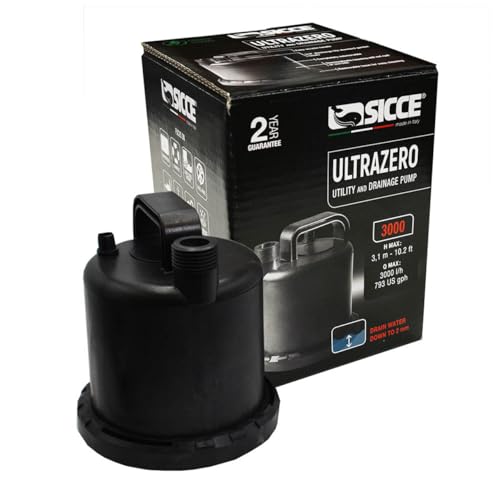
As an Amazon Associate we earn from qualifying purchases at no extra cost to you.
Quick comparison of aquarium circulation pumps
| Pick | Best for | Flow range (per maker) | Tank size | Budget class |
|---|---|---|---|---|
| Hydor Koralia Nano | Small freshwater and nano tanks | About 240 to 565 GPH | 10 to 40 gallons by model | Budget |
| Hydor Koralia Evolution | Broad, gentle flow in mid-size tanks | About 550 to 1,500 GPH | 40 to 150 gallons by model | Mid-range |
| Fluval Sea CP series | Compact, quiet circulation | About 530 to 2,800 GPH across the line | Up to 25 gallons (CP2) and larger | Mid-range |
| Sicce Voyager | All-round freshwater or saltwater use | Several sizes, up to the thousands of GPH | 20 to 200 gallons by model | Mid-range |
| Jebao Cross Flow | Long, large tanks needing wide flow | About 2,700 to 7,500 GPH | Large tanks, 100 gallons and up | Upper-mid |
| Tunze Turbelle | Premium, adjustable, very quiet pumps | Varies by model, controller-based | Display tanks of many sizes | Premium |
Do you actually need a water pump?
If your filter turns the tank volume over four to six times an hour and the water surface ripples gently across the tank, you probably do not. Add a pump when you see debris collecting in corners, when plants on one side look dusty while the other side is clean, or when temperature differs between top and bottom. A powerhead also lets you point extra flow at a sponge filter or use an inline heater setup more evenly.
Best for small tanks: Hydor Koralia Nano
The Koralia Nano is one of the most commonly recommended small circulation pumps. The 240 GPH model is suited to freshwater tanks of roughly 16 to 28 gallons, per Hydor’s sizing, and the line goes up to about 565 GPH. It has a suction-cup mount, a compact body and a broad, gentle flow pattern that does not blast fish. Reviewers describe the Nano as quieter than some competitors in its class.
Trade-off: it is a simple AC pump with no speed control, so you cannot dial flow down. If a betta is in the tank, point it at the glass or the surface.
Best for mid-size tanks: Hydor Koralia Evolution
The Evolution line covers about 550 to 1,500 GPH and uses a wider outlet to spread the flow. It is popular for 40 to 120 gallon tanks, including planted and cichlid setups. Flow is broad and relatively gentle, and the swivel mount makes aiming easy. Because it is an older design, it lacks the controllable cycle modes of newer DC wavemakers.
Best compact option: Fluval Sea CP series
The Fluval CP2 is rated for freshwater and saltwater aquariums up to 25 gallons, and the line scales up from there. It is small and low-profile. One reviewer found the Hydor Nano quieter and steadier on its mount at a similar price, so choose by noise tolerance and tank size.
Best all-rounder: Sicce Voyager
Sicce is an Italian pump maker, and the Voyager is a flexible powerhead that works in fresh or salt water. Roundups highlight the Voyager 4 as a strong freshwater choice. It offers a range of flow settings through different models and is robust enough for long-running use. It costs more than the Koralia Nano but gives a wider size range.
Best for large tanks: Jebao Cross Flow
Cross flow pumps spread water through a wide slot instead of a single nozzle, which creates a sheet-like current across the tank. Jebao’s Cross Flow line is listed at about 2,700 to 7,500 GPH. It is useful in long tanks of 4 to 6 feet where a single powerhead leaves dead zones. The noise level and warranty length are the points reviewers most often mention as areas for improvement.
Best premium: Tunze Turbelle
Tunze Turbelle pumps are widely treated as the professional standard in saltwater aquariums, with silent magnetic drive and electronic controllers. They suit owners who want precise, variable flow and are willing to pay for it. For a basic freshwater tank, they are more than you need.
How to size a circulation pump
- Calculate your goal flow. For freshwater community tanks, total circulation of 5 to 10 times tank volume per hour (filter plus pumps) is a common starting point. For a 40 gallon tank with a 160 GPH filter, you can add a 240 GPH pump to reach 400 GPH, which is 10 times the volume.
- Subtract what the filter already provides. Do not count rated numbers as real flow; media and clogging cut flow by 30 percent or more over time.
- Choose by fish. Bettas and long-finned fancy goldfish want less flow. Danios, rainbowfish and many plecos like more.
- Position for circulation. Aim the pump along the length of the tank, not straight at the glass, so water travels around and returns to the filter intake.
- Protect fish. Fit a foam sleeve or pre-filter if the intake can trap small fish or shrimp.
Ownership realities
Impellers collect algae and debris, so clean them every two to three months. Soak the pump in a white vinegar solution to remove deposits, then rinse in tank water or dechlorinated water. Replace the rubber impeller shaft cushion if the pump starts to rattle. Suction cups harden over time, so replace them rather than trusting an old one to hold a heavy pump.
Common mistakes
- Buying by maximum GPH without considering the tank’s size and the fish’s tolerance.
- Placing the pump directly under the filter outlet, which wastes flow.
- Skipping the spec sheet: confirm the pump is rated for your water type and for tanks with shrimp or fry before you buy.
- Forgetting a drip loop in the cord, which lets water run down to the outlet.
Frequently Asked Questions
What is the difference between a powerhead and a water pump for an aquarium?
A powerhead is a small submersible pump that moves water within the tank, typically for circulation. The term water pump is broader and can include return pumps for sumps and external filters. For a normal freshwater tank, a powerhead is what most people need.
How much flow does a freshwater tank need?
Most community tanks do well with a total of about 5 to 10 times the tank volume per hour. Planted tanks and tanks with river fish may want more, while slow-water species such as bettas need less.
Can I use a saltwater pump in a freshwater tank?
Generally yes. Powerheads such as the Hydor Koralia and Sicce Voyager are used in both. Check the manufacturer’s spec sheet for any water-type restrictions.
Are aquarium water pumps noisy?
Quality models are quiet when mounted correctly. Noise often comes from a loose suction cup, an air bubble in the housing or a dirty impeller. A rubber pad or sleeve helps reduce vibration.
Do I need an air pump as well?
Not if the surface is rippling from filter output or a powerhead aimed at the surface. Air pumps are mainly used for sponge filters, air stones and decor. They are separate from circulation pumps.
Flow ranges and tank sizes come from manufacturer specifications and published roundups and vary by model. Check the current model chart before buying.

Write Your Review
No reviews yet. Be the first to share your experience!