

Key takeaways
- Filter media. Cartridge filters need replacement every few weeks, while sponge and ceramic media can be rinsed and reused for months.
- Electricity. An LED light and a small filter use very little power. A heater is the main draw, especially in a cool room.
- Water treatment. Dechlorinator is inexpensive and lasts a long time.
- Food. A small community uses a very small amount of food each week.
- Livestock. This is often the biggest cost. Hardy fish like zebra danios, platies and corydoras suit new tanks.
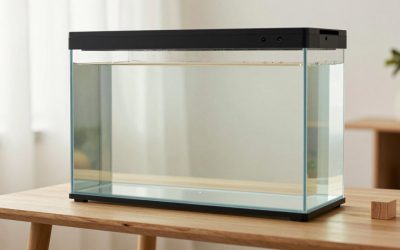
The best fish tank starter kit for most beginners in 2026 is a 15 to 20 gallon kit with a built-in filter, an LED hood and a lid, such as the Fluval Flex or the Aqueon LED kit. Bigger is easier than smaller: more water volume means steadier temperature and ammonia levels, which is why a 5 gallon desktop kit is usually harder for a beginner than a 20 gallon. This guide lines up the kits by size, what they include and what you will still need to buy.
Our top picks


As an Amazon Associate we earn from qualifying purchases at no extra cost to you.
Quick Comparison of Starter Kits
| Kit | Best for | Volume | Filtration | Lighting | Price tier |
|---|---|---|---|---|---|
| Fluval Flex 15 | Best overall | About 15 gallons | Built-in 3-stage rear filter | Multi-color LED | Mid-range |
| Aqueon LED kit, 20 gallon | Best value for community fish | 20 gallons | Hang-on-back filter | LED hood | Budget to mid |
| Tetra 20 gallon starter kit | Best budget full kit | 20 gallons | Hang-on-back filter | LED hood | Budget |
| Fluval Evo V | Best small desktop | About 5 gallons | Built-in filter | Adjustable LED | Mid-range |
| Marineland Portrait 5 gallon | Best for a single betta | 5 gallons | Hidden filter | Blue and white LED | Budget to mid |
| Fluval Flex 32.5 | Best step-up size | About 32 gallons | Built-in 3-stage filter | Multi-color LED | Upper-mid |
Kit contents change between production runs. Check what is in the box before you plan your shopping list.
Why Tank Size Matters More Than Anything Else
Water chemistry changes slowly in large volumes and quickly in small ones. If a fish eats and produces waste, ammonia climbs. A 5 gallon tank can swing from safe to dangerous within a day, while a 20 gallon has a four-times larger buffer.
| Tank size | Water weight (approx.) | Beginner suitability | Stocking idea |
|---|---|---|---|
| 5 gallons | About 42 lb | Tricky | One betta or a small group of shrimp |
| 10 gallons | About 83 lb | Fair | A few small nano fish |
| 20 gallons | About 167 lb | Good | A small school plus a few bottom dwellers |
| 30 gallons or more | 250 lb plus | Very good | Community tank with varied species |
Remember that water weighs about 8.3 pounds per gallon before glass, substrate and a stand. A 20 gallon tank, fully set up, can pass 200 pounds, so confirm that your furniture or stand can take it.
The Best Fish Tank Starter Kits
Best overall: Fluval Flex 15
The Flex line uses a curved-front glass tank with a hidden three-stage filter chamber at the back, a lid and an LED light with a remote or app in newer versions. It looks tidy because there is no external hang-on filter. The built-in design takes some of the usual setup guesswork out of a first aquarium, and it fits on a sturdy dresser.
Trade-off: the filter media bay is compact, so plan on regular cartridge or sponge cleaning, and the filter is not a stand-in for good stocking choices.
Best value: Aqueon LED kit, 20 gallon
Aqueon’s kit typically includes a glass tank, a hang-on-back filter, a heater in some versions, a hood with LED lighting and starter items such as water conditioner and food. The 20 gallon size gives enough volume for a community of peaceful fish. It is easy to find replacement filter cartridges.
Trade-off: lights and hoods are basic, and the included filter can be modest for heavily stocked tanks.
Best budget full kit: Tetra 20 gallon starter
Tetra’s kit follows a similar plan and is one of the most affordable ways to get a complete 20 gallon setup. Tetra’s cartridges are everywhere, which keeps running costs predictable.
Trade-off: expect to upgrade the heater or add a thermometer if they are not included, and plan to improve the lighting if you want live plants.
Best small desktop: Fluval Evo V
The Evo V is a 5 gallon tank with a clean look, built-in filtration and a LED light with adjustable brightness. It suits a single betta, an office or a bedside table.
Trade-off: the small volume leaves little margin for error, and it is not suitable for goldfish or active schooling fish.
Best for a betta: Marineland Portrait 5 gallon
The Portrait’s curved front and hidden filter make it a favorite for a betta tank on a counter. It is a well-known format with easy replacement parts.
Trade-off: you will want to add a heater, because bettas prefer a steady 78 F or so, and the stock lighting is simple.
Best step-up size: Fluval Flex 32.5
For a beginner willing to commit space, the larger Flex gives plenty of room for a planted community tank and long-term stability. It keeps the tidy built-in filter.
Trade-off: it needs a strong stand and a higher up-front cost, and filter maintenance takes more water and time.
Kit or Separate Parts? A Decision Matrix
A kit is the lowest-effort way to start, but it is not always the best value. Buying a tank, filter and light separately can give better parts at a similar price. The matrix below shows when each route makes sense.
| Your situation | Better route | Reason |
|---|---|---|
| First aquarium, want it simple | All-in-one kit | Parts are matched, so there are fewer decisions |
| Small space such as a desk or bedroom | Built-in filter kit | No hang-on equipment, tidier look |
| Want live plants | Kit plus a stronger light | Stock lights are usually fine for easy plants but weak for others |
| Plan to go bigger later | Tank only, buy filter and light separately | Better equipment carries over to the next tank |
| Tight budget | Budget 20 gallon kit | Lowest cost per gallon, which gives you the most stability |
Cost Per Gallon and Ongoing Costs
Judging a kit by its sticker price hides the ongoing bill. A rough way to compare is to divide the kit price tier by the gallons it holds: small kits cost more per gallon, larger kits less. Running costs are modest but real.
- Filter media. Cartridge filters need replacement every few weeks, while sponge and ceramic media can be rinsed and reused for months.
- Electricity. An LED light and a small filter use very little power. A heater is the main draw, especially in a cool room.
- Water treatment. Dechlorinator is inexpensive and lasts a long time.
- Food. A small community uses a very small amount of food each week.
- Livestock. This is often the biggest cost. Hardy fish like zebra danios, platies and corydoras suit new tanks.
Beginner Stocking Examples
| Tank | Starter stocking idea | Avoid |
|---|---|---|
| 5 gallons | One betta, or a small shrimp colony | Goldfish, large schooling fish |
| 10 gallons | Six small tetras or rasboras | Cichlids, anything that grows past 3 inches |
| 20 gallons | Six to eight small schooling fish plus a few corydoras | Overcrowding, mixing aggressive and peaceful species |
| 30 gallons or more | Community of peaceful fish, one centerpiece species | Adding all the fish in the first week |
What a Kit Does Not Include
- Substrate and decor. Gravel, sand or planted soil, plus hiding places.
- A water test kit. A liquid test for ammonia, nitrite and nitrate is more useful than test strips.
- Dechlorinator. Needed for every water change and top-off.
- A heater, if not included. Most tropical fish need 76 to 80 F.
- A siphon and bucket. Use ones that are only for your aquarium.
Your First Month: The Cycle in Brief
- Set up and dechlorinate. Fill, add conditioner and run the filter and heater.
- Add an ammonia source. Bottled ammonia or a pinch of fish food starts the nitrogen cycle.
- Test every few days. Ammonia rises, then nitrite, then nitrate. When ammonia and nitrite read zero, the tank is cycled. This often takes 4 to 6 weeks.
- Add fish slowly. Start with a few hardy species and wait a couple of weeks before adding more.
Frequently Asked Questions
What is the best size fish tank for a beginner?
A 20 gallon tank is a strong starting point. It is large enough for stable water and small enough to fit a home. Smaller tanks are possible but less forgiving.
Do starter kits include everything I need?
No. Most include a tank, filter, light and lid, but you still need substrate, decor, a test kit and dechlorinator. Some include a heater, many do not.
How long before I can add fish?
If you cycle the tank first, expect about 4 to 6 weeks. Fishless cycling is gentler on animals than adding fish immediately.
Are 5 gallon tanks bad for beginners?
They can work for a single betta or shrimp but require careful water changes because conditions shift quickly. Many experienced keepers recommend starting bigger.
Do I need a heater?
For tropical fish, yes unless your room stays near 78 F. Goldfish and some white cloud minnows tolerate cooler water.
How often should I clean the tank?
A weekly water change of 20 to 30 percent is a standard routine. Rinse filter media in old tank water, not tap water.
Which Kit Should You Buy?
Buy the Fluval Flex 15 if you want a clean, built-in design, the Aqueon 20 gallon for the best mix of size and price, the Tetra 20 gallon when you want the lowest cost, the Evo V or Marineland Portrait for a single betta, and the Flex 32.5 if you have space and want room to grow. Details come from manufacturer specifications and general aquarium guidance, so double-check the contents of the specific kit you choose.
Write Your Review
No reviews yet. Be the first to share your experience!