

Key takeaways
- Slope the bed. A bed deeper at the back and thin at the front adds depth and gives debris a place to settle.
- Cap soils. A thin layer of sand over active soil can limit clouding and ammonia release.
- Vacuum lightly. Hover over sand rather than plunging in, and skip deep vacuuming of planted areas.
- Insert root tabs. Replace them every few months in inert beds.
- Do not mix hard and soft materials. Aragonite mixed into an active soil defeats the soil’s purpose.
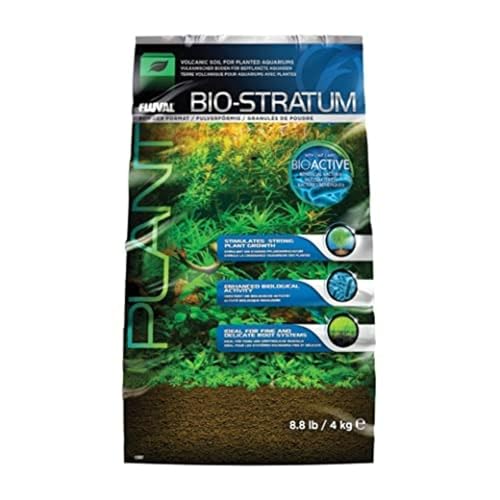
The best aquarium substrate for most planted freshwater tanks in 2026 is CaribSea Eco-Complete, a nutrient-rich volcanic material that supports root feeders without needing to be replaced. For stem plants and shrimp tanks, active planted soils such as Fluval Stratum or ADA Aqua Soil Amazonia give faster growth but lower water hardness and pH. For fish-only setups, a plain inert gravel or sand is enough. This guide shows how to pick by plant needs, fish behavior and budget.
Our top picks


As an Amazon Associate we earn from qualifying purchases at no extra cost to you.
Quick Comparison of Aquarium Substrates
| Substrate | Best for | Type | Effect on water | Typical bag size | Price tier |
|---|---|---|---|---|---|
| CaribSea Eco-Complete | Best overall planted | Volcanic, nutrient-rich | Mostly neutral, mild | 20 lb | Mid-range |
| Fluval Stratum | Best for shrimp and plants | Volcanic active soil | Softens water, lowers pH | About 17 to 18 lb | Mid-range |
| ADA Aqua Soil Amazonia | Best premium aquascaping soil | Active soil | Strongly lowers pH and hardness | About 9 L | Premium |
| Seachem Flourite | Best long-lived clay gravel | Fired clay | Inert | 15.4 lb | Mid-range |
| CaribSea Arag-Alive | Best for hard-water fish, cichlids | Aragonite sand | Raises pH and hardness | Various | Mid-range |
| Pool filter sand | Best budget sand | Silica sand | Inert | 50 lb bags | Budget |
Exact bag sizes vary by color and retailer. Verify the quantity on the label before buying.
Step One: Work Out How Much You Need
A common target is about 1 to 2 pounds of substrate per gallon for a 2 inch bed, though this depends on tank footprint. A better method is volume: length times width times depth in inches, divided by 231 for gallons, then converted into weight using the product’s density.
| Tank | Footprint (L x W) | 2 inch bed | 3 inch bed |
|---|---|---|---|
| 10 gallon | 20 x 10 in | About 10 lb | About 15 lb |
| 20 gallon long | 30 x 12 in | About 18 lb | About 27 lb |
| 29 gallon | 30 x 12 in | About 18 lb | About 27 lb |
| 55 gallon | 48 x 13 in | About 31 lb | About 47 lb |
These are estimates for dense substrates with weights near 1 lb per square foot per inch of depth. Lighter volcanic soils need fewer pounds, so use the manufacturer’s coverage chart if provided.
The Best Aquarium Substrates
Best overall: CaribSea Eco-Complete
Eco-Complete is a black volcanic material that ships wet and loaded with minerals. It supports root-feeding plants such as amazon swords and cryptocorynes, buffers little and does not need a separate fertilizer base layer. Because it does not break down the way soft soils do, you can reuse it between setups. Rinse it lightly or not at all depending on the manufacturer’s directions, to avoid washing away its coating.
Trade-off: the dark, coarse look is not for everyone, and it can cloud water at first.
Best for shrimp and plants: Fluval Stratum
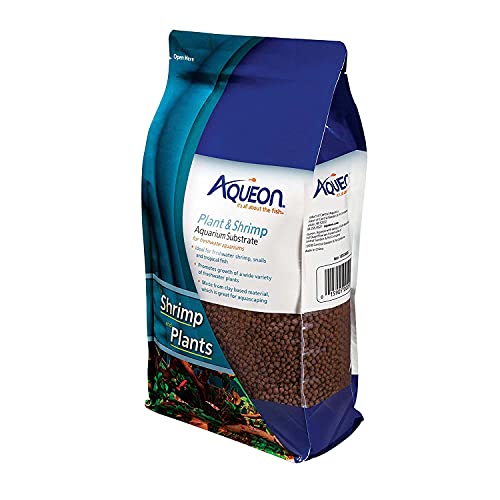
Fluval Stratum is a porous volcanic soil designed for planted tanks and shrimp. It lowers pH and hardness over time, which many shrimp species enjoy, and its small grains work well for carpeting plants. A Plant and Shrimp Stratum version is common. It is lighter than many gravels, so you need less weight per gallon.
Trade-off: it can crumble after repeated disturbance, and its pH effect is unwelcome with hard-water fish.
Best premium soil: ADA Aqua Soil Amazonia
Amazonia is the choice in many aquascaping contest tanks. It supplies nutrients to plant roots and makes water slightly soft and acidic, which suits many soft-water plants and fish. Grains are rounded and uniform, which makes planting easy.
Trade-off: it is expensive, it releases ammonia in the first weeks and it is rarely worth the cost in low-tech tanks.
Best long-lived clay: Seachem Flourite
Flourite is a porous clay gravel known for lasting through many years of use. It contributes iron and other minerals and doesn’t wash out. Rinse it thoroughly before use, because it produces a lot of dust.
Trade-off: it needs a good rinse and has sharper edges than rounded gravel, which matters for bottom feeders.
Best for hard-water fish: CaribSea Arag-Alive
Arag-Alive is aragonite sand that slowly dissolves, which raises pH and carbonate hardness. It suits African cichlids, livebearers and marine systems.
Trade-off: it is the wrong choice for soft-water fish and plants that prefer acidity.
Best budget sand: pool filter sand
Silica pool filter sand is inexpensive and inert and is a favorite of keepers with corydoras and loaches. Rinse it until the water runs clear, and keep layers thin to prevent gas pockets.
Trade-off: it supplies no nutrients, so rooted plants need root tabs, and sand compacts if the bed is too deep.
Choosing by Fish and Plants
| You keep | Best substrate type | Why |
|---|---|---|
| Corydoras, loaches | Smooth sand | Protects barbels and allows natural digging |
| Shrimp | Active soil or small inert gravel | Stable softer water and good biofilm |
| Rooted plants | Nutrient-rich substrate or sand plus root tabs | Heavy root feeders pull nutrients from the bed |
| African cichlids | Aragonite or crushed coral | Buffers pH upward |
| Anubias and java fern only | Anything inert | Rhizome plants feed from the water, not the bed |
Layering, Rinsing and Maintenance
- Slope the bed. A bed deeper at the back and thin at the front adds depth and gives debris a place to settle.
- Cap soils. A thin layer of sand over active soil can limit clouding and ammonia release.
- Vacuum lightly. Hover over sand rather than plunging in, and skip deep vacuuming of planted areas.
- Insert root tabs. Replace them every few months in inert beds.
- Do not mix hard and soft materials. Aragonite mixed into an active soil defeats the soil’s purpose.
Active Soil vs Inert Substrate: Which Route Fits You?
This is the biggest decision in planted tank setup. Active soils feed plants and soften water, while inert substrates stay neutral and last for years. Neither is wrong; they suit different goals.
| Factor | Active soil | Inert gravel or sand |
|---|---|---|
| Plant growth | Fast, especially for carpets and stems | Slower unless you add root tabs |
| Water chemistry | Lowers pH and hardness | No change |
| Lifespan | About 1 to 2 years of strong nutrient release | Indefinite |
| Startup | Ammonia release in the first weeks, needs patience | Ready right after rinsing |
| Cost | Higher per bag | Low |
| Best for | Shrimp tanks, aquascapes, soft-water fish | Fish-first tanks, hard-water fish, simple setups |
If your tap water is already hard and alkaline, active soil will only partly offset it. Test your tap with a kit for pH, general hardness (GH) and carbonate hardness (KH) before you decide.
How to Install a Substrate Step by Step
- Dry-fit the tank. Place the empty tank on its stand and confirm it is level.
- Prepare the material. Rinse sand and gravel in a bucket until the water is mostly clear. Do not rinse coated planted soils beyond the label’s advice.
- Add the layers. Place a base layer first, then cap with sand or fine gravel if you want a clean look.
- Shape the bed. Use your hands or a spoon to slope it from back to front.
- Add hardscape and plants. Place rocks and wood on the glass or deep in the bed so burrowing fish cannot topple them.
- Fill slowly. Pour water onto a plate or bag to avoid blowing out the bed.
- Cycle and monitor. With active soil, test ammonia regularly and do extra water changes early on.
Frequently Asked Questions
How deep should aquarium substrate be?
Aim for 2 to 3 inches for planted tanks and about 1 to 2 inches for fish-only tanks. Shallower beds work for rhizome plants, deeper beds help rooted plants and carpets.
Do I need to rinse aquarium gravel?
Yes for most gravel and sand, until the water runs fairly clear. Many pre-washed or coated substrates should not be rinsed heavily, so check the label.
What is the best substrate for a betta tank?
Smooth sand or rounded fine gravel is gentle on fins. If you plant the tank, a nutrient-rich substrate gives plants a boost.
Can I mix sand and gravel?
You can, but they tend to separate and the mix collects debris. Many keepers choose one material and use decor to create zones.
How often should substrate be replaced?
Inert gravel and sand can last indefinitely. Active soils lose potency over one to two years and may compact and need renewal.
Does substrate affect water chemistry?
Some do. Active soils soften water and lower pH. Aragonite and crushed coral raise pH and hardness. Inert gravel and silica sand do not change water.
Which Substrate Should You Buy?
Choose Eco-Complete for a flexible planted tank, Fluval Stratum for shrimp and carpets, Aqua Soil Amazonia for contest-style scapes, Flourite for a durable gravel, Arag-Alive for hard-water fish and pool filter sand for a low-cost, fish-first tank. These notes reflect manufacturer information and general planted tank practice, so test your tap water and match the substrate to your livestock.
Write Your Review
No reviews yet. Be the first to share your experience!