

Key takeaways
- Measure from the finished wall, not the baseboard or an unfinished stud wall.
- Measure to the center of the bolts, not the front edge of the flange.
- Confirm whether the existing toilet has been moved forward with spacers or an offset flange.
- Check the manufacturer’s specification sheet for the toilet’s actual tank-to-wall clearance.
- Do not assume that a “12-inch rough-in” toilet will sit exactly the same distance from the wall as another brand.
The best tall toilets for easy comfort are usually 16½–18½ inches from floor to seat, with a 12-inch rough-in, an elongated bowl, and a properly matched flush system; for most bathrooms, the Kohler Highline Classic, American Standard Cadet Pro, TOTO Drake, and Kohler Cimarron are the strongest starting points.
Our top picks


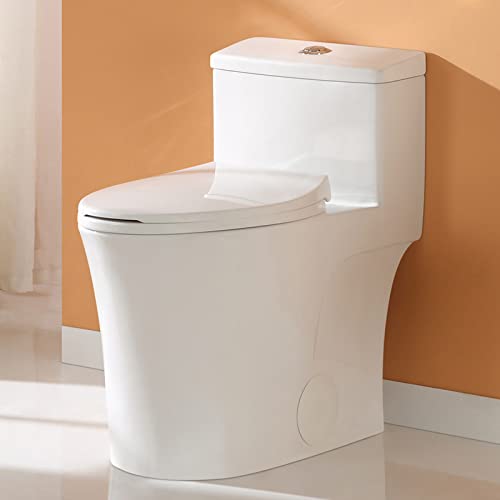

As an Amazon Associate we earn from qualifying purchases at no extra cost to you. Ratings are shown as listed on Amazon.
Quick picks by bathroom and budget
| Best for | Recommended type or model | Typical seat height | Flush approach | What to know before buying |
|---|---|---|---|---|
| Lowest practical cost | Two-piece 16½-inch comfort-height toilet | About 16½ inches | 1.28 gallons per flush | Usually easier to install and service than a one-piece model |
| Balanced all-round choice | Kohler Highline Classic | About 16½ inches | 1.28 gallons per flush, gravity-assisted | Check the exact bowl and seat combination; trim packages vary |
| Strong everyday flushing | American Standard Cadet Pro or Champion 4 | About 16½ inches | 1.28 gallons per flush on many current configurations | Champion versions are often physically larger and need careful clearance checks |
| Simple, refined two-piece design | TOTO Drake in a comfort-height configuration | Roughly 16½–17½ inches, depending on version | Gravity flush, commonly 1.28 gallons per flush | Confirm the exact CST model, bowl shape, seat, and rough-in |
| Maximum height | Extra-tall toilet or toilet with an approved seat riser | 18–21 inches | Depends on the toilet | More comfortable for some users, but can feel too high and may require accessibility planning |
How tall is tall enough?
Manufacturers generally describe toilets around 16½ inches high as “comfort height” or “chair height.” The measurement usually refers to the porcelain bowl rim, not the final sitting height. Add a seat that is approximately 1 inch thick and the user sits around 17½ inches from the floor.
ADA-oriented toilets are often about 17–19 inches from floor to seat. An extra-tall toilet can exceed 19 inches, but height alone does not guarantee comfort. A person with shorter legs may find an overly tall bowl uncomfortable because the feet do not rest securely on the floor. That position can also make standing and sitting feel less natural.
For a mixed household, a 16½–17½-inch bowl-plus-seat height is usually the safest compromise. If the toilet is for a particular user with mobility concerns, compare the finished seat height with the user’s current chair height and ask a qualified occupational or healthcare professional for individualized guidance.
Head-to-head: the features that matter most
Elongated versus round-front bowls
Elongated bowls usually provide more room at the front and are the preferred choice for many adults. They commonly project about 2 inches farther into the room than a round-front bowl. Round-front toilets can be a better fit in compact bathrooms, especially when the front clearance is tight.
Do not assume that a tall toilet must be elongated. Both shapes are available in comfort-height designs. Measure from the center of the mounting bolts to the nearest wall, cabinet, or door before choosing.
One-piece versus two-piece construction
A two-piece toilet has a separate tank and bowl. It is commonly less expensive, easier to carry through a home, and simpler to replace individual components on. The joint between tank and bowl needs periodic cleaning, and the tank bolts must be tightened evenly during installation.
A one-piece toilet has fewer external seams and is often easier to wipe clean. It is heavier, more awkward to move, and usually more expensive. This can be worthwhile in a frequently used bathroom where cleaning convenience matters more than installation simplicity.
Gravity flush versus pressure-assisted flush
Most residential toilets use gravity: water from the tank flows through the bowl and trapway to clear waste. A larger trapway, effective rim distribution, and a well-designed flush valve can matter more than a high-sounding marketing label.
Pressure-assisted toilets use compressed air inside the tank to produce a forceful flush. They can clear the bowl effectively and resist some clogging problems, but they are often louder and use specialized replacement parts. For a quiet ensuite, a well-designed gravity toilet is usually the better fit. For a busy household bathroom, pressure assistance may be worth considering if noise is acceptable.
Rough-in measurements: the purchase can fail here
The rough-in is the distance from the finished wall behind the toilet to the center of the floor mounting bolts, or to the center of the waste outlet when the bolts are not visible. The common measurement is 12 inches, but 10-inch and 14-inch rough-ins are also used.
- Measure from the finished wall, not the baseboard or an unfinished stud wall.
- Measure to the center of the bolts, not the front edge of the flange.
- Confirm whether the existing toilet has been moved forward with spacers or an offset flange.
- Check the manufacturer’s specification sheet for the toilet’s actual tank-to-wall clearance.
- Do not assume that a “12-inch rough-in” toilet will sit exactly the same distance from the wall as another brand.
A toilet that is too large for its rough-in may leave an unattractive gap, interfere with the wall, or prevent the tank from sitting level. A toilet that fits the rough-in can still fail the bathroom-fit test if the bowl blocks a cabinet or leaves too little space in front.
Bathroom-fit checklist
| Measurement | Useful planning target | Why it matters |
|---|---|---|
| Front clearance | At least 21 inches; more is preferable | Allows normal legroom and door movement |
| Side clearance | At least 15 inches from bowl centerline to each side obstruction | Reduces crowding beside the seat |
| Finished seat height | About 17½ inches for a typical comfort-height setup | Balances ease of standing with stable foot contact |
| Rough-in | Usually 12 inches | Determines which toilet models can connect without plumbing changes |
| Water supply position | Clear of the toilet base and tank footprint | Prevents the shutoff valve from being trapped behind porcelain |
When space is limited, compare the toilet’s total depth rather than just bowl length. A round-front bowl may save 2 inches or more, while a compact elongated bowl can preserve front comfort without projecting as far as a full-size model.
Decision matrix: which tall toilet suits your situation?
- Budget-conscious replacement: Choose a two-piece, 16½-inch, 1.28-gallon gravity toilet with a standard 12-inch rough-in. This generally offers the lowest purchase and repair cost.
- Small bathroom: Choose a round-front or compact elongated bowl, then verify the complete depth and the door swing. Do not choose solely by seat height.
- Frequent household use: Prioritize a proven flush valve, a fully glazed trapway, readily available flapper and fill-valve parts, and a seat with sturdy hinges.
- Quiet bathroom: Favor gravity flushing and a soft-close seat. Pressure-assisted toilets can be effective but are commonly louder.
- Inexperienced installer: A standard two-piece model is usually easier to maneuver. Have a plumber handle flange repairs, corroded bolts, or an uncertain rough-in.
- Very tall user: Compare finished seat heights of 18 inches or more, but check that feet can rest comfortably on the floor and that the bowl does not create a cramped forward posture.
Installation details that prevent later problems
Replacing a toilet is often within the ability of a careful DIY homeowner, but the floor flange must be sound and level. A typical installation involves shutting off and draining the water, removing the old toilet, scraping away the old wax seal, checking the flange, installing a new seal, lowering the bowl without twisting it, tightening the bolts evenly, attaching the tank if it is a two-piece model, and connecting the supply line.
Use a new wax ring or the seal specified for the installation; never reuse the old seal. Shim a bowl that rocks before tightening the bolts, because overtightening can crack porcelain. After reconnecting the water, flush several times and inspect around the base, tank bolts, and supply connection. A slow leak can damage flooring before it becomes obvious.
If the flange is below the finished floor, the floor flexes, the mounting bolts are badly corroded, or the waste pipe moves when the toilet is lifted, stop and arrange a plumbing repair. A new toilet cannot compensate for an unstable connection.
Ownership realities: what wears out first?
The flapper or flush-valve seal, fill valve, supply line, and seat hinges typically need attention before the porcelain does. Hard water can cause mineral deposits around rim holes and valves, while chlorine-based drop-in tank cleaners can degrade rubber components. Use a bowl cleaner recommended for glazed ceramic, avoid abrasive pads, and clean under the seat hinges where moisture collects.
A 1.28-gallon-per-flush toilet saves water compared with older 3.5- or 5-gallon models, but it depends on adequate drain design and correct use. Do not flush wipes, paper towels, sanitary products, or excessive paper. Repeated clogging may indicate a drain or vent problem rather than a defective toilet.
Bottom line
For most people searching for the best tall toilets, start with a 16½–17½-inch finished seat height, an elongated bowl if the room allows it, a 12-inch rough-in, and a 1.28-gallon gravity flush. The Kohler Highline Classic, American Standard Cadet Pro, American Standard Champion 4, and suitable TOTO Drake configurations are sensible comparison points. Confirm the exact model number, bowl shape, seat height, rough-in, depth, and included components before ordering, because those details can change within the same product family.

Write Your Review
No reviews yet. Be the first to share your experience!