

Key takeaways
- Best overall for varied crafts: Cricut Maker 3. It handles adhesive vinyl, iron-on, cardstock, paper, fabric, leather, chipboard, and other materials with the appropriate tool. Its larger tool ecosystem makes it the most flexible option, although that flexibility adds cost and a steeper learning curve.
- Best for straightforward vinyl work: Cricut Explore 3. It is easier to justify if your projects mainly involve adhesive vinyl, heat-transfer vinyl, paper, and cardstock. It supports the same general 12-inch class of projects as the Maker 3 without paying for tools you may never use.
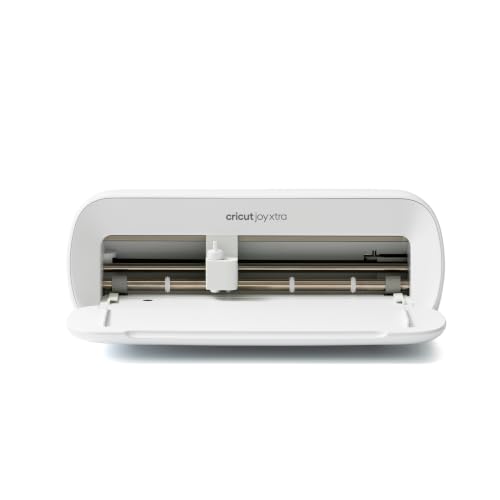
- Best for limited space: Cricut Joy Xtra. This compact model is a good match for labels, small signs, card-making, and short decal runs. Its narrower cutting area becomes restrictive for shirt graphics, wide tank backgrounds, and larger wall lettering.
- Best software for experienced crafters: Silhouette Cameo 5. Silhouette Studio offers more direct control over nodes, offsets, layers, cut settings, and nesting than a beginner-focused workflow. The trade-off is that new users may need more time to understand the interface.
- Best portable Silhouette option: Portrait 4. Choose it when 8.5-inch-class materials are sufficient and the machine will be stored between projects. It is less suitable for long banners or full-width shirt designs.
- Best for frequent production: Siser Juliet. Juliet is aimed at users who cut regularly and value speed, accurate small details, and a more production-oriented workflow. Its higher purchase price makes less sense for a few labels each month.
The best vinyl cutting machines in 2026 are the Cricut Maker 3 for broad material compatibility, Silhouette Cameo 5 for software control, Cricut Joy Xtra for small spaces, and Siser Juliet for faster, more precise production work.
The right choice depends less on maximum cutting force than on the width of your projects, the materials you expect to use, how much you value wireless control, and whether you want a simple guided app or more advanced design tools. For aquarium hobbyists, these machines are particularly useful for tank labels, storage-bin decals, plant-care tags, club signs, and stencil work.
Our top picks

As an Amazon Associate we earn from qualifying purchases at no extra cost to you. Ratings are shown as listed on Amazon.
Best vinyl cutting machines compared
| Machine | Maximum practical width | Approx. weight | Software and connection | Best fit |
|---|---|---|---|---|
| Cricut Maker 3 | 11.5 in. on a 12-in. mat; Smart Materials up to 11.75 in. | 15.4 lb | Design Space; Bluetooth and USB | Mixed materials and ambitious home projects |
| Cricut Explore 3 | 11.5 in. on a 12-in. mat; Smart Materials up to 11.75 in. | 11.2 lb | Design Space; Bluetooth and USB | Everyday adhesive and heat-transfer vinyl |
| Cricut Joy Xtra | Approximately 8.5 in. on a mat | 6.0 lb | Design Space; Bluetooth | Small workspaces and occasional projects |
| Silhouette Cameo 5 | 12 in. on a mat or roll | Approximately 12 lb | Silhouette Studio; Bluetooth and USB | Users who want detailed layout control |
| Silhouette Portrait 4 | Approximately 8.5 in. on a mat | Approximately 5.5 lb | Silhouette Studio; Bluetooth and USB | Portable, narrow projects |
| Siser Juliet | Approximately 12 in. cutting width | Approximately 13.5 lb | Leonardo Design Studio; USB and wireless connectivity | Frequent users prioritizing speed and precision |
Widths vary slightly according to the mat, pinch-roller position, material type, and whether a design includes registration marks. Treat the figures above as working dimensions rather than guaranteed finished decal sizes.
Our picks by situation
- Best overall for varied crafts: Cricut Maker 3. It handles adhesive vinyl, iron-on, cardstock, paper, fabric, leather, chipboard, and other materials with the appropriate tool. Its larger tool ecosystem makes it the most flexible option, although that flexibility adds cost and a steeper learning curve.
- Best for straightforward vinyl work: Cricut Explore 3. It is easier to justify if your projects mainly involve adhesive vinyl, heat-transfer vinyl, paper, and cardstock. It supports the same general 12-inch class of projects as the Maker 3 without paying for tools you may never use.
- Best for limited space: Cricut Joy Xtra. This compact model is a good match for labels, small signs, card-making, and short decal runs. Its narrower cutting area becomes restrictive for shirt graphics, wide tank backgrounds, and larger wall lettering.
- Best software for experienced crafters: Silhouette Cameo 5. Silhouette Studio offers more direct control over nodes, offsets, layers, cut settings, and nesting than a beginner-focused workflow. The trade-off is that new users may need more time to understand the interface.
- Best portable Silhouette option: Portrait 4. Choose it when 8.5-inch-class materials are sufficient and the machine will be stored between projects. It is less suitable for long banners or full-width shirt designs.
- Best for frequent production: Siser Juliet. Juliet is aimed at users who cut regularly and value speed, accurate small details, and a more production-oriented workflow. Its higher purchase price makes less sense for a few labels each month.
Head-to-head: Cricut versus Silhouette versus Siser
Cutting width and material compatibility
For most home users, a 12-inch machine is the useful middle ground. It accommodates common 12-by-12-inch mats and gives enough room for shirt graphics, storage labels, and medium signs. An 8.5-inch machine saves space but may force you to split a design into sections.
Cricut has the clearest advantage when you want to move beyond vinyl. The Maker 3 can use a broad range of blades and tools for fabric, thicker craft materials, scoring, engraving, and other tasks. The Explore 3 is more focused, while the Joy Xtra is intentionally limited to lighter-duty projects.
Silhouette machines are strong choices for roll-fed vinyl and detailed decal layouts. The Cameo 5 also supports a wide range of materials, but you should check the specific blade, adapter, and clearance requirements before buying specialty media. Siser Juliet is particularly attractive for repeated vinyl production, but its accessory ecosystem is not as broad as Cricut’s.
Software and learning curve
Cricut Design Space is approachable: select a material, load the mat, and follow the prompts. This is useful for a first project, but advanced users can encounter more restrictions in file handling and layout control. An internet connection may also be needed for parts of the workflow, although some projects can be prepared for offline use.
Silhouette Studio provides deeper control over vector editing and cut preparation. The basic software is usable without paying for every feature, but some advanced functions and file-import options depend on the edition. That makes Silhouette attractive to designers who want to refine their own SVG files rather than rely mainly on a project library.
Siser Leonardo Design Studio is less familiar to many beginners but is designed around Juliet’s precision workflow. Expect a greater setup investment than with a simple beginner machine, especially if you are importing custom artwork or calibrating repeated jobs.
Wireless control
Bluetooth is convenient when the machine sits away from your computer or when you design from a tablet. It is not automatically faster or more reliable than USB. Large files, firmware updates, and troubleshooting are usually easier over a wired connection. Before buying, check whether your preferred device supports the machine’s app; wireless compatibility can differ between Windows, macOS, iPadOS, Android, and older tablets.
Decision matrix
| Your situation | Recommended direction | Why |
|---|---|---|
| Under roughly $250 and occasional use | Joy Xtra, Portrait 4, or an entry-level 12-inch model during a sale | Lower initial cost and smaller storage footprint |
| Beginner making labels, cards, and shirts | Explore 3 | Simple workflow without paying for the Maker’s specialty tools |
| Experienced crafter using fabric or thicker materials | Maker 3 or Cameo 5 | More tool and material options |
| Very little desk space | Joy Xtra or Portrait 4 | Much easier to store and set up between uses |
| Weekly decal orders or club merchandise | Cameo 5 or Juliet | Better layout control and a more efficient production workflow |
| Large signs and long lettering | Cameo 5, Juliet, or another 12-inch roll-capable machine | Less piecing together of narrow sections |
Ownership costs: the machine is only the beginning
For a small decal, material waste often costs more than the cut itself. Suppose a 12-inch roll costs $12 and contains 48 inches of usable length. The nominal vinyl cost is $0.25 per linear inch. A 6-by-10-inch label uses about 10 inches of roll length, or $2.50 of material, before backing paper, transfer tape, test cuts, and waste. At 25 percent waste, the practical cost rises to about $3.13. A cheaper machine can therefore become expensive if it produces misaligned cuts or frequent failed transfers.
Budget for replacement cutting mats, blades, transfer tape, weeding tools, and application squeegees. Mats lose grip from dust, fibers, and repeated handling. Blades usually wear first when cutting abrasive glitter vinyl, flocked heat-transfer material, cardstock, or heavily contaminated media. Keep separate mats for paper and vinyl when possible; paper fibers can reduce the mat’s grip and leave debris in adhesive vinyl projects.
Setup and maintenance that prevent failed cuts
- Measure the finished surface first. Add a small margin around the design and confirm that the machine’s usable width—not its headline width—will accommodate it.
- Clean and flatten the material. Dust, curled corners, and fingerprints can cause lifting. Burnish the vinyl onto the mat with a squeegee or scraper.
- Run a small test cut. A two-inch square or simple letter reveals whether the pressure and blade depth are correct without sacrificing a full sheet.
- Weed soon after cutting. Very small details are easier to remove while the vinyl is supported by its liner and before adhesive collects dust.
- Cover the mat after use. Replace its protective sheet and store it flat. Do not wash it with household cleaners unless the manufacturer specifically permits it.
- Check the blade and rollers regularly. Remove scraps from the blade housing and keep roller paths clear. A small fragment under a roller can affect tracking on long cuts.
For aquarium projects, use vinyl according to its intended environment. A decal applied to the outside of a dry glass panel is a different use from material placed inside a tank or submerged in water. Do not assume that a craft vinyl’s adhesive, dye, or laminate is suitable for aquatic contact. For tank labels and cabinet signs, outside-glass application is the safer, simpler use; follow the vinyl manufacturer’s instructions for cleaning and moisture exposure.
Bottom line
Choose the Cricut Maker 3 if versatility matters most, the Explore 3 if you want dependable everyday vinyl cutting, and the Joy Xtra if storage space is the deciding factor. Pick the Silhouette Cameo 5 when software control and roll-fed projects matter, Portrait 4 for compact occasional crafting, or Siser Juliet for frequent, precision-focused production. Whichever machine you choose, include mats, blades, transfer tape, test cuts, and material waste in the long-term budget—not just the advertised machine price.




Write Your Review
No reviews yet. Be the first to share your experience!