

Key takeaways
- O-rings: Silicone or rubber seals can dry out, flatten, or collect grit. Inspect them after opening the battery compartment and replace damaged seals.
- Charging ports: USB-C covers and magnetic contacts accumulate dust and moisture. Dry the light before charging and do not charge it while wet.
- Threads: Dirty or dry threads can cause flickering and poor electrical contact. Wipe them clean and apply a very thin layer of manufacturer-approved silicone grease.
- Clips: Repeated bending weakens spring steel. Do not use the clip as a lever or force it over unusually thick fabric.
- Rechargeable cells: Use the correct protected or manufacturer-approved battery. Do not carry loose lithium-ion cells with coins or keys, and replace cells that are swollen, damaged, or unusually hot.
Best EDC Flashlights: Quick Picks
The best EDC flashlight for most people is a compact 18650 model such as the Wurkkos FC11C, while the Acebeam Pokelit AA is the safer choice for replaceable batteries, the Nitecore TINI 3 wins for keychain carry, and the Fenix PD36R Pro is best when maximum brightness and beam distance matter more than pocket space.
Choosing between them is less about chasing the highest lumen number and more about matching the flashlight to your daily carry. Consider pocket size, sustained brightness, beam shape, battery availability, charging convenience, clip security, and resistance to rain or accidental immersion.
Our top picks

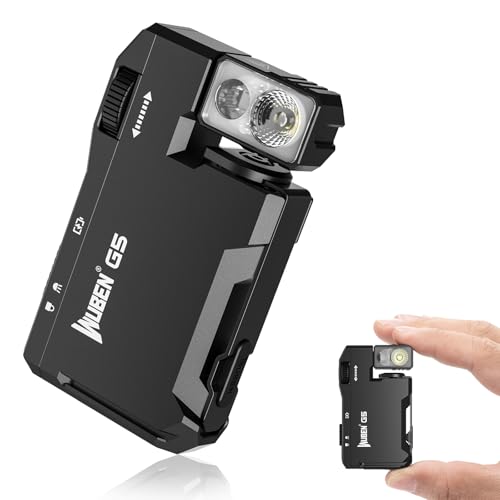

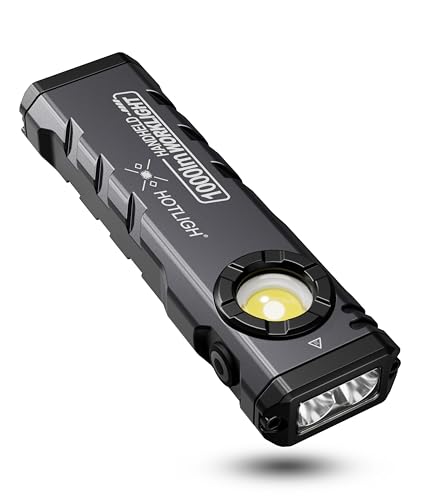
As an Amazon Associate we earn from qualifying purchases at no extra cost to you. Ratings are shown as listed on Amazon.
Best EDC Flashlights Compared
| Model | Size and weight | Maximum output | Beam distance | Battery | Water resistance | Typical market range |
|---|---|---|---|---|---|---|
| Nitecore TINI 3 | 65 mm; about 22 g | 600 lumens | 90 m | Built-in 330 mAh Li-ion | IP54 | $30–$45 |
| Acebeam Pokelit AA | 78 mm; about 38 g | 550 lumens | 58 m | AA or rechargeable NiMH | IP68 | $20–$35 |
| Wurkkos FC11C | 116 mm; about 56 g without battery | 700 lumens | 130 m | Replaceable 18650 Li-ion | IPX8 | $25–$45 |
| Olight Baton 4 | 95 mm; about 53 g | 1,300 lumens | 170 m | Built-in 650 mAh Li-ion | IPX8 | $65–$90 |
| Fenix PD36R Pro | 143 mm; about 169 g with battery | 2,800 lumens | 380 m | Replaceable 21700 Li-ion | IP68 | $100–$150 |
Figures are manufacturer-rated maximums and dimensions can vary slightly by version or included battery. Maximum output is normally available only for a short period because heat causes automatic reduction. For ordinary use, sustained medium output is a more useful comparison.
Best Choices by Carry Situation
| Your situation | Best fit | Why | Main compromise |
|---|---|---|---|
| Very little pocket space or keychain carry | Nitecore TINI 3 | Extremely small, USB-C rechargeable, bright enough for close-range tasks | Built-in battery and limited water resistance |
| You want common, replaceable batteries | Acebeam Pokelit AA | Runs on widely available AA cells and rechargeable NiMH batteries | Shorter beam and lower sustained output than larger models |
| First serious EDC flashlight | Wurkkos FC11C | Good size, USB-C charging, replaceable 18650 battery, useful general-purpose beam | Too long for some small pockets and heavier than keychain lights |
| Frequent night walking or outdoor work | Olight Baton 4 | High output in a short body with a deep, secure pocket clip | Proprietary built-in battery and higher cost |
| Long distances, property checks, or emergency readiness | Fenix PD36R Pro | Large 21700 battery, strong throw, high impact and water protection | Heavy for normal trouser-pocket carry |
What Matters More Than the Lumen Number
Pocket size and weight
A flashlight that stays at home provides no useful light. Keychain models under 30 grams disappear in a pocket but usually have small batteries and limited heat management. A 50–70 gram flashlight is a practical middle ground for daily carry. Models above 150 grams are better treated as belt, bag, or vehicle lights rather than casual EDC.
Body diameter also matters. A long flashlight can fit a jeans pocket while becoming uncomfortable when sitting. Short, wider models may be easier to grip but occupy more horizontal space. Before buying, compare the published length with a pen or marker you already carry.
Brightness and beam distance
Brightness is measured in lumens, while beam distance describes how far the manufacturer estimates the light will reach under a standardized measurement. A wide flood beam is better for finding objects, walking around a yard, or working under a sink. A narrow, intense beam is better for seeing down a path or across a large property.
For indoor EDC, 100–300 lumens is often sufficient. Around 500–800 lumens gives useful flexibility outdoors. Outputs above 1,000 lumens are valuable for short bursts, but they create more heat and drain the battery quickly. Look for several lower modes rather than relying on turbo.
Battery type and runtime
Built-in lithium-ion batteries make a flashlight compact and convenient, but the battery eventually loses capacity and the whole unit may need servicing or replacement. Replaceable 18650 and 21700 batteries provide longer ownership and let you carry a spare, but they require a little more battery knowledge and safe charging practice.
AA-powered lights remain useful for travel, emergency kits, and infrequent users because alkaline batteries are easy to find. Rechargeable NiMH AA batteries are usually a better long-term choice than repeatedly buying disposable cells.
Runtime claims should be read alongside output levels. A flashlight advertised at 1,300 lumens may run at that level for only a few minutes before stepping down. A lower setting that lasts several hours is more relevant for routine use.
Worked Runtime Example
Suppose a 3,000 mAh 18650 battery powers a flashlight at an average regulated draw of 1 amp. The theoretical calculation is:
3.0 amp-hours ÷ 1 amp = about 3 hours.
Real runtime will be shorter because of driver losses, battery condition, temperature, and automatic thermal reduction. If the light operates at 2 amps instead, the same calculation gives roughly 1.5 hours before those losses. This is why a high-capacity battery does not automatically mean long runtime at maximum brightness.
Clip Design, Controls, and Everyday Usability
A good clip should resist pulling out when the flashlight catches on fabric. Deep-carry clips leave less of the body exposed, making the light less likely to snag. A reversible clip is useful when you want bezel-up carry for quick access or bezel-down carry for a cleaner pocket position.
Tail switches are easy to find in the dark and can support momentary-on operation. Side switches are usually more comfortable for changing modes but can activate accidentally in a crowded pocket. A lockout mode, mechanical tail lockout, or a sufficiently firm switch is valuable if the flashlight will share space with keys.
Magnetic tailcaps are convenient for hands-free work on steel surfaces, but magnets can interfere with some sensitive equipment and attract metal debris. A two-way clip or headband compatibility may be more useful than a magnet for people who frequently work with both hands.
Water Resistance for Rain, Travel, and Aquarium Areas
IPX8 or IP68 protection is preferable for heavy rain, dropped equipment, and wet outdoor work. The “8” indicates protection against immersion under the manufacturer’s stated conditions; it does not mean unlimited depth or permanent waterproofing. IP54 protects against splashing and dust but is not intended for immersion.
For use around aquariums, keep the flashlight above the water whenever possible. Water resistance protects against accidents; it does not make a light safe to drop into a saltwater tank. Salt residue can damage switches, charging contacts, clips, and anodized surfaces even after the water evaporates.
Ownership Realities: What Wears First
- O-rings: Silicone or rubber seals can dry out, flatten, or collect grit. Inspect them after opening the battery compartment and replace damaged seals.
- Charging ports: USB-C covers and magnetic contacts accumulate dust and moisture. Dry the light before charging and do not charge it while wet.
- Threads: Dirty or dry threads can cause flickering and poor electrical contact. Wipe them clean and apply a very thin layer of manufacturer-approved silicone grease.
- Clips: Repeated bending weakens spring steel. Do not use the clip as a lever or force it over unusually thick fabric.
- Rechargeable cells: Use the correct protected or manufacturer-approved battery. Do not carry loose lithium-ion cells with coins or keys, and replace cells that are swollen, damaged, or unusually hot.
A common mistake is storing a flashlight for months with an old battery installed. Remove alkaline batteries from infrequently used lights because leakage can ruin the contacts. For lithium-ion models, store the light partially charged rather than completely empty, and check the charge every few months.
Final Recommendation
Choose the Wurkkos FC11C if you want the most balanced everyday package: useful brightness, a replaceable 18650 battery, USB-C charging, and a practical size. Pick the Acebeam Pokelit AA for maximum battery simplicity and the Nitecore TINI 3 when every gram matters. The Olight Baton 4 suits users who want a compact premium light with high burst output, while the Fenix PD36R Pro is the better tool for distance, sustained outdoor work, and demanding weather.
For most people, a reliable medium setting, a secure clip, and a battery that can be replaced or easily recharged are more valuable than the biggest number printed on the box.

Write Your Review
No reviews yet. Be the first to share your experience!