

The best aquarium test kit for most freshwater keepers is a liquid kit that tests ammonia, nitrite, nitrate and pH, supplemented by strips for quick checks. Liquid reagents are generally more reliable and cheaper per test than strips, but strips are fast and handy. Here are the kits worth comparing, with notes based on specifications and reviewer feedback.
At a Glance
| Pick | Best for | Key feature |
|---|---|---|
| API Freshwater Master Test Kit | Cycling and routine monitoring | Liquid tests for pH, ammonia, nitrite and nitrate |
| Fritz Aquatics Freshwater Master Test Kit | Alternative liquid kit | Comparable range with different reagents |
| Seachem MultiTest Ammonia | Ammonia readings with conditioner use | Designed with Prime-treated water in mind |
| Tetra EasyStrips 6-in-1 | Fast checks at a glance | Dip strips for several parameters |
| JNW Direct 7-in-1 Test Strips | Budget strips for hardness and pH | Wide parameter coverage |
| Salifert Nitrate Test Kit | Fine nitrate readings | Precise titration-style test |
What to Test and Why
Ammonia and nitrite are toxic, and they spike in new tanks as bacteria establish. Nitrate accumulates slowly and signals when a water change is due. pH matters because fish tolerate narrow ranges, and sudden swings can stress them. General and carbonate hardness (GH and KH) matter for plants, shrimp and pH stability. A good routine is weekly testing of nitrate and pH, daily ammonia and nitrite during cycling, and an occasional hardness check. Write results in a notebook so you can see trends instead of isolated numbers.
1. API Freshwater Master Test Kit
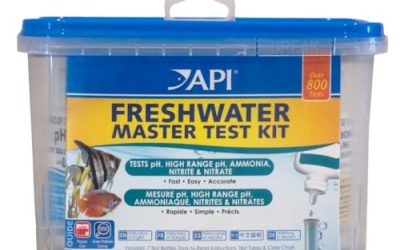
This is the kit most aquarists start with. It includes liquid reagents for pH, high-range pH, ammonia, nitrite and nitrate, plus test tubes and a color chart. It lasts for hundreds of tests, making it economical. Weaknesses include color matching, which can be subjective, and the nitrate test needs vigorous shaking to give a consistent result. It is still the benchmark for beginners.
API Freshwater Master Test Kit
2. Fritz Aquatics Freshwater Master Test Kit
Fritz offers a similar kit with its own reagents and color charts. Many hobbyists like the clear instructions and consistent results. As with other color-based kits, results are approximate, but they are fine for tracking changes. Consider it if you want an alternative to API or want to compare readings between two brands.
Fritz Aquatics Freshwater Master Test Kit
3. Seachem MultiTest Ammonia
If you use a conditioner that binds ammonia, standard tests may read the bound form as ammonia and confuse you. Seachem’s ammonia test is designed with that in mind, giving a more useful reading in treated water. It is a single-purpose test, so you will still need other kits for nitrite and nitrate. A good supplement during cycling or emergencies.
4. Tetra EasyStrips 6-in-1
Strips are quick: dip, wait, compare. Tetra’s 6-in-1 strips give a snapshot of several parameters, making them handy for a rapid check before a water change. Strips are less precise and can be affected by moisture in the container, so store them dry. Use them as a screening tool and confirm surprising results with liquid kits.
Tetra EasyStrips 6-in-1 test strips
5. JNW Direct 7-in-1 Test Strips
These budget strips cover more parameters including hardness and chlorine on some versions. They are convenient for people who want to check tap water quickly. Accuracy is limited, and reading the colors under different lighting can mislead, so read near a window or under white light. Good as a supplement, not a replacement for a liquid kit.
JNW Direct 7-in-1 aquarium test strips
6. Salifert Nitrate Test Kit
If you run planted tanks or shrimp tanks where small nitrate differences matter, a more precise kit helps. Salifert’s tests are respected for their finer resolution, though they take more care and time. They are overkill for most casual hobbyists but a good tool for people fine-tuning nutrients.
Salifert Nitrate Test Kit
How to Choose
- Start liquid. It is more cost effective per test and generally more reliable.
- Match parameters to your tank. Add GH and KH for shrimp or planted tanks.
- Check expiration dates. Reagents degrade; old kits give bad readings.
- Consider color vision. If color charts are hard to read, look for digital readers or titration-based tests.
- Keep a log. Trends matter more than a single result.
Testing Technique
Rinse test tubes with tap water, then tank water. Hold droppers vertically so drops are consistent. Shake nitrate bottle number two hard, as directed. Read the color against a white card in good light, and wait the full time. Test at similar times and conditions each week for comparability. Store reagents in a cool place, not on top of the tank where heat and light shorten their life.
Common Mistakes
People often rely on strips alone and treat a pale color as proof that everything is fine. Others never replace old kits and trust expired reagents. Some test immediately after dosing treatments that interfere with readings. And a classic one: ignoring a result that contradicts how the fish look. If the numbers and behavior do not agree, re-test and verify.
Reading the Numbers
Understanding results is just as important as running tests. In a cycled tank, ammonia and nitrite should read zero, and nitrate should stay below levels that your fish tolerate; many hobbyists aim to keep it under about 40 parts per million, and lower for sensitive species and shrimp. A rising nitrate trend means water changes are due. A sudden pH drop can indicate low buffering capacity, so check KH as well. Planted tanks sometimes show low nitrate because plants consume it, which may mean you need to fertilize.
When a result looks odd, repeat the test before reacting. Contaminated test tubes, old reagents and poor lighting cause most strange readings. Compare with a second kit if you have one, and write down the date, the result and what you did. After a few weeks, the log becomes a surprisingly powerful diagnostic tool, because patterns that were invisible in a single reading become obvious.
Building a Testing Routine
Pick one day each week for testing and tie it to your water change, so results are comparable. Test before the change to see what has built up, and after a big change if you are tracking the effect. Keep the kit away from heat and direct sunlight, and check expiry dates every few months. If you keep a planted or shrimp tank, add GH and KH tests, because small shifts in hardness affect molting and plant health. A simple notebook or phone note is enough for logging.
Frequently Asked Questions
Are test strips accurate?
They are useful for trends and quick checks, but liquid kits generally provide more dependable readings.
How often should I test?
Daily during cycling, weekly in established tanks, and any time fish behave oddly.
How long do test kits last?
Typically a couple of years if stored properly. Check the expiry date on the bottle.
Why does my ammonia read high after using a conditioner?
Some conditioners bind ammonia in a form that certain tests still detect. Use a test designed for that situation.
Conclusion
For reliable monitoring, a liquid master kit is the best foundation, with strips as a fast backup. Add specialized tests as your tank demands, replace expired reagents, and log results. Good data makes every water change smarter.
As an Amazon Associate we earn from qualifying purchases.
More from Amazon
Programs that pair well with the guide above. Offers and eligibility are set by Amazon and may change.
Set up recurring deliveries of everyday items on eligible products. Terms and savings are set by Amazon.
Explore Subscribe & SaveFree shipping on eligible items, Prime Video and more. Eligible new members can start with a free trial.
Start a Prime free trialAudiobooks and podcasts to listen to on the go. Eligible new members can start with a free trial.
Try Audible freeRead from a large library of eBooks and audiobooks on any device. Check Amazon for current plans.
Explore Kindle UnlimitedAs an Amazon Associate we earn from qualifying purchases.
Write Your Review
No reviews yet. Be the first to share your experience!