

Key takeaways
- Find the best aquarium fish food for discus, from soft sinking granules to protein-rich flakes. Compare five discus foods and pick the right staple.
Discus are slow, cautious feeders with a high appetite for protein, and the best aquarium fish food for discus is a discus-specific staple that sinks slowly, softens in the water, and holds together long enough for a shy fish to take it in, spit it out, and try again. The five foods below all name discus in their listing. They cover discs, pellets, granules, flakes, and micro granules.
As an Amazon Associate, we earn from qualifying purchases.
Table of Contents
- Quick Answer
- How to Choose Aquarium Fish Food for Discus
- 1. Hikari Discus Bio-Gold
- 2. Ultra Fresh Tropical Excellent Bits
- 3. Seachem NutriDiet Discus Flakes
- 4. Sera Discus Color Granules
- 5. Aquatic Foods Micro Granules for Discus
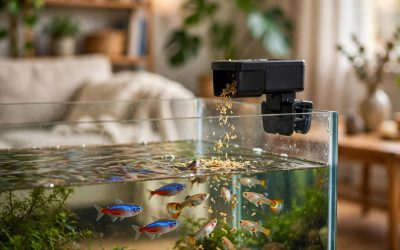
- How to Feed Discus Without Fouling the Water
- Frequently Asked Questions
- Conclusion
Quick Answer
For most discus keepers, Hikari Discus Bio-Gold is the best place to start, because it was developed around the discus habit of taking food in and spitting it out, and its porous pieces turn soft and sponge-like while holding their shape. Keepers who want a named protein source should look at Ultra Fresh Tropical Excellent Bits, built on wild sword prawn and paste shrimp. Seachem NutriDiet Discus Flakes is the flake, Sera Discus Color Granules is the color-focused granule, with astaxanthin from Haematococcus algae and spirulina, and Aquatic Foods Micro Granules is the fine 0.5 mm option for juveniles and smaller discus.
How to Choose Aquarium Fish Food for Discus
Discus need more protein than most community fish, and care guides for the species generally point to a diet built around high-protein prepared foods. A food that floats on the surface does not suit a fish that feeds in the middle and lower water column, so sinking or slow-sinking behavior is one of the first things to check on a label. Softness matters almost as much: discus mouth their food repeatedly, so a piece that softens without swelling, breaking apart, or clouding the water gives a hesitant fish more chances to eat it.
Piece size is the next decision. Adult discus can take a standard pellet or granule, while juveniles and smaller fish do better with a fine granule or a flake that can be crumbled. Read the ingredient list for named protein sources such as krill, prawn, shrimp, squid, fish meal, or beef heart. Container size matters too: discus eat small portions, so a small or mid-range container is often the better first buy for a single tank, with a larger pack making sense for a group or several tanks. Most experienced keepers also rotate more than one food, using a plain staple most days and a color food or a protein-rich flake as part of the rotation.
1. Hikari Discus Bio-Gold
Hikari Discus Bio-Gold is the most directly species-focused food in this guide. Hikari describes it as a diet specifically developed for discus, built to meet their need for higher protein levels and to suit their unusual eating behavior. The listing says the food was developed around the discus routine of repeatedly taking food in and spitting it out.
The form is what makes that design work in the tank. The food comes as sinking discs, described as porous granules that turn soft and sponge-like in water while holding their shape. A piece that softens but stays in one piece can be mouthed, spat out, and taken again, and it is easier to remove in one piece if the fish lose interest. Because the food sinks, it reaches discus that stay low rather than waiting at the surface. On nutrition, Hikari describes a blend of proteins, amino acids, vitamins, and minerals, along with natural color-enhancing ingredients, and the maker notes high levels of vitamin C. The listing does not name the protein sources, so keepers who want a specific ingredient list should check the packaging. The 2.82 oz container suits a small group and is small enough to finish while still fresh.
Specs
| Specification | Details |
|---|---|
| Brand | Hikari |
| Product | Discus Bio-Gold |
| Form | Sinking discs, porous granule |
| Texture | Turns soft and sponge-like, holds its shape |
| Color ingredients | Natural color-enhancing ingredients |
| Crude protein | Not stated |
| Pack size | 2.82 oz (80 g) |
| Best for | Slow, hesitant discus |
| ASIN | B00025JZBS |
2. Ultra Fresh Tropical Excellent Bits
Ultra Fresh Tropical Excellent Bits is the most transparent label in this guide about what the protein actually is. The Amazon listing names wild sword prawn as the leading ingredient, at up to 40 percent of the formula, with squid, spirulina, seaweed, garlic, and a range of vitamins also listed. The maker gives a 9:1 ratio of meat to vegetable protein, a figure none of the other foods in this guide publish, which makes it easy to compare this pellet with a plainer staple.
The form suits discus feeding habits. Ultra Fresh calls this a slow-sinking pellet and lists discus first in the title, followed by angelfish and medium-sized cichlids. A slow-sinking pellet stays in reach longer than one that drops straight to the bottom, giving a shy fish more time to notice and approach it. The listing does not give a pellet size, so check the pieces against the smallest fish in the tank when the container arrives. For color, the listing points to natural seaweed, spirulina, and the sword prawns, and it states that the food contains no artificial flavors or coloring, no additives, and no byproducts. It also lists a probiotic count of 3 million CFU per gram. The 4.6 oz container is a modest size that suits a first try or a single discus tank.
Specs
| Specification | Details |
|---|---|
| Brand | Ultra Fresh |
| Product | Tropical Excellent Bits |
| Form | Slow-sinking pellet |
| Main protein | Wild sword prawn, up to 40 percent; squid |
| Other ingredients | Spirulina, seaweed, garlic, vitamins |
| Meat-to-vegetable protein ratio | 9:1 |
| Probiotics | 3 million CFU per gram |
| Pellet size | Not stated |
| Pack size | 4.6 oz |
| Best for | Keepers who read ingredient lists |
| ASIN | B09B6RPZFH |
3. Seachem NutriDiet Discus Flakes
Seachem NutriDiet Discus Flakes is the flake in this guide, and it earns its place on the strength of its recipe. Seachem describes it as a premium and nutritionally balanced diet formulated to meet the requirements of all discus, and also as an appetite stimulant. The ingredient list names whole fish meal, squid, and earthworms, with wheat flour, wheat gluten, soy protein concentrate, brewers dried yeast, chlorella algae, garlic, and fish oil also listed. That combination of fish, squid, and earthworms is the most varied animal-protein list among the five foods here.
Flakes can be crumbled to suit smaller mouths, giving keepers a different texture to offer alongside a granule or pellet. The listing does not say how the flakes behave in the water, so watch where they settle and remove any that sit uneaten. Seachem also lists probiotics in this food, at 2,000,000 CFU per gram. The feeding directions are clear: feed one to three times daily, and offer only as much as the fish will consume in three minutes of feeding. The 500 g pack listed here is a large container, so it suits a larger group or several discus tanks rather than a single small tank.
Specs
| Specification | Details |
|---|---|
| Brand | Seachem |
| Product | NutriDiet Discus Flakes |
| Form | Flakes |
| Main protein | Whole fish meal, squid, earthworms |
| Other ingredients | Chlorella algae, garlic, fish oil |
| Probiotics | 2,000,000 CFU per gram |
| Feeding directions | One to three times daily, as much as fish consume in three minutes |
| Pack size | 500 g |
| Best for | Rotation feeding and larger groups |
| ASIN | B01CPR0YMO |
4. Sera Discus Color Granules
Sera Discus Color Granules is the color-focused food in this guide, and it is the pick that names its color ingredients most plainly. Sera describes these as sinking soft granules for discus with a high amount of color-optimizing ingredients, and the listing points to natural astaxanthin from Haematococcus algae and spirulina, with krill and gammarus also named. The guaranteed analysis published by a distributor lists minimum crude protein at 47 percent and astaxanthin at 175 mg per kg of food, with krill at 4 percent.
The behavior in the water is spelled out clearly. Sera describes sinking, non-expanding granules that quickly become soft without swelling or losing their shape, which is the combination a discus keeper wants from a granule: soft enough to mouth, but not a food that expands or falls apart and clouds the tank. Sera states that the food contains no artificial colors or preservatives, and that it suits all discus varieties. Treat this as one part of a rotation rather than a shortcut to color. The 250 ml container is a low-commitment way to try the formula on a shy fish, and leftovers should be removed promptly, because a soft granule left on the bottom does the water no favors.
Specs
| Specification | Details |
|---|---|
| Brand | Sera |
| Product | Discus Color Granules |
| Form | Sinking soft granules |
| Color ingredients | Natural astaxanthin from Haematococcus algae, spirulina |
| Other ingredients | Krill, gammarus, aquatic protein, minerals |
| Crude protein | Minimum 47 percent |
| Astaxanthin | 175 mg per kg of food |
| Additives | No artificial colors or preservatives |
| Pack size | 250 ml |
| Best for | Color support in rotation |
| ASIN | B0010RN3OW |
5. Aquatic Foods Micro Granules for Discus
Aquatic Foods Micro Granules is the fine food in this guide, and it fills a gap the other four do not: a 0.5 mm piece for juveniles and smaller discus. The Amazon listing titles this food for discus, cichlids, and all tropical fish, so it is not a discus-only formula, but discus is the first species named in the title, and the fine size is the reason to choose it. A standard pellet can be too large for a young fish, while a 0.5 mm granule is small enough to be taken in one bite.
The listing describes the granules as floating, slow-sinking, and sinking, which means pieces will be found at different levels of the tank rather than all dropping at once. The ingredient list is long and specific: fish meal, krill, plankton, shrimp meal, brine shrimp, and red shrimp, with astaxanthin, spirulina, and various vitamins and minerals. The 8 oz jar is a generous size for a micro granule, since only a small pinch is needed per feeding. Feed a little at a time, because fine food that is overfed can drift into the filter or settle where it is hard to see.
Specs
| Specification | Details |
|---|---|
| Brand | Aquatic Foods Inc. |
| Product | Micro Granules for Discus, Cichlids, and All Tropical Fish |
| Form | 0.5 mm micro granules |
| Sinking behavior | Floating, slow-sinking, and sinking |
| Main protein | Fish meal, krill, plankton, shrimp meal, brine shrimp |
| Color ingredients | Astaxanthin, spirulina |
| Pack size | 8 oz |
| Best for | Juveniles and smaller discus |
| ASIN | B0C5TMTW3D |
How to Feed Discus Without Fouling the Water
The best food still causes problems if it is overfed, and discus are especially sensitive to water quality. Feed small portions several times a day rather than one large helping, and use the three-minute guide that Seachem prints on its discus flakes: offer only as much as the fish will consume in three minutes of feeding, then remove what is left. Rotate at least two foods rather than feeding one tin every day, store every container sealed, cool, and dry, and keep up with regular water changes, since clean water matters as much as the brand on the tin.
Frequently Asked Questions
What is the best aquarium fish food for discus?
For most keepers, a discus-specific sinking staple such as Hikari Discus Bio-Gold is the best starting point, because it was developed around how discus eat and its pieces turn soft while holding their shape. Juveniles need a fine piece such as the Aquatic Foods micro granules, while keepers who want named color ingredients can rotate in Sera Discus Color Granules.
How often should discus be fed?
Discus are usually fed in small portions several times a day rather than in one large feeding, because they eat slowly and leftover food fouls the water quickly. Seachem gives a useful guide on its discus flakes: feed one to three times daily, offering only as much as the fish will consume in three minutes.
Can discus eat regular tropical fish food?
Discus can eat regular tropical food, but a general tropical formula is not the best staple for them, because discus need a higher-protein diet than most community fish and a form that suits their slow, mid-water feeding style. Discus-specific granules, pellets, and flakes are formulated with that in mind.
Do discus need color-enhancing food?
Discus do not need a color food to stay healthy, and no food can change a fish’s genetics or promise a particular color result. Color foods such as Sera Discus Color Granules, which name astaxanthin and spirulina as ingredients, are best used as part of a rotation alongside a plain staple. Water quality, lighting, and the strain of the fish also affect how color shows in the tank.
Conclusion
The best aquarium fish food for discus is a discus-specific food that sinks slowly, softens without falling apart, and names its protein and color ingredients on the label. Hikari Discus Bio-Gold is the strongest starting staple for hesitant fish, Ultra Fresh Tropical Excellent Bits is the clearest label for keepers who want to know the protein source, Seachem NutriDiet Discus Flakes adds a varied flake to the rotation, Sera Discus Color Granules covers color support, and Aquatic Foods Micro Granules gives juveniles a piece they can actually take. Choose the staple that fits the size of the fish, rotate a second food through the week, and feed small portions.
|—|—|
More from Amazon
Programs that pair well with the guide above. Offers and eligibility are set by Amazon and may change.
Set up recurring deliveries of everyday items on eligible products. Terms and savings are set by Amazon.
Explore Subscribe & SaveFree shipping on eligible items, Prime Video and more. Eligible new members can start with a free trial.
Start a Prime free trialAudiobooks and podcasts to listen to on the go. Eligible new members can start with a free trial.
Try Audible freeRead from a large library of eBooks and audiobooks on any device. Check Amazon for current plans.
Explore Kindle UnlimitedAs an Amazon Associate we earn from qualifying purchases.
Write Your Review
No reviews yet. Be the first to share your experience!