

Key takeaways
- Compare the best DC return pumps for aquarium sumps, with flow, head height and wattage specs for Jebao, hygger, Reef Octopus and more top picks.
- Top Pick: Jebao DCP-5000 Sine Wave DC Return Pump
- Runner-up: hygger 24V DC Aquarium Water Pump (DC3500)
- Also consider: JEREPET JDC-1850 DC Return Pump
The best DC return pump for most sump systems is the Jebao DCP-5000, a sine wave pump with an adjustable controller, a rated flow of 5,000 liters per hour and a maximum head of about 13 feet, which covers the typical cabinet-to-display lift on small and mid-size tanks. If your sump is small, the hygger DC3500 delivers controllable 24-volt flow in a compact body, while the Reef Octopus VarioS-4 is the premium pick for aquarists who want controller integration and extra safety inputs.
Every pump below is a DC model with electronic speed control, so you can dial in return flow after plumbing instead of throttling a valve. The picks span budget, mid-range and premium tiers, and each one is sized by the two numbers that matter for a return pump: maximum flow and maximum head height. As an Amazon Associate, we earn from qualifying purchases.
Table of Contents
- Quick Picks
- Jebao DCP-5000 Sine Wave DC Return Pump
- hygger 24V DC Aquarium Water Pump (DC3500)
- JEREPET JDC-1850 DC Return Pump
- Current USA eFlux DC Flow Pump 6009
- Reef Octopus VarioS-4 Controllable DC Pump
- How to Choose a DC Return Pump
- FAQ
- Conclusion
Quick Picks
- Best overall: Jebao DCP-5000 — sine wave drive, 5,000 L/h rated flow and about 13 feet of head for typical sump layouts.
- Best budget pick for small sumps: hygger DC3500 — 925 GPH and 11.5 feet of lift in a compact 35-watt package.
- Best high-flow value: JEREPET JDC-1850 — 1,850 GPH with 14.8 feet of lift, submersible or inline.
- Best compact pump: Current USA eFlux 6009 — adjustable 210 to 1,050 GPH in a body about 5 inches long.
- Best premium pick: Reef Octopus VarioS-4 — five speed settings, a float switch input and a 0-10V port for aquarium controllers.
Jebao DCP-5000 Sine Wave DC Return Pump

The DCP-5000 is the mid-range workhorse of the Jebao DCP line and the easiest recommendation for a first sump build. Its sine wave motor drive is designed for smooth, quiet running, and the included controller lets you raise or lower flow in steps and pause the pump for feeding instead of switching it off at the wall. That adjustability is the main reason to choose a DC pump over a fixed-speed AC model: you can buy headroom and turn the pump down.
On paper, the DCP-5000 is rated at 5,000 liters per hour with a maximum head of 4.0 meters, which suits displays in roughly the 75 to 120 gallon range once plumbing losses are counted. It runs on a 24-volt DC supply through the included adapter, draws up to 40 watts at full speed, and is rated for both freshwater and saltwater use. The package includes the pump, controller and power adapter, so nothing extra is needed to get it running in a sump.
Specs
- Max flow: 5,000 L/h (about 1,320 GPH)
- Max head: 4.0 m (about 13.1 ft)
- Power consumption: up to 40 W
- Voltage: 24 V DC (100-240 V adapter included)
- Drive: sine wave with electronic controller
- Control: adjustable flow steps and feed pause mode
- Use: submersible, freshwater and saltwater
- Included: pump, controller, power adapter
hygger 24V DC Aquarium Water Pump (DC3500)

The hygger DC3500 is the budget-friendly way to get controllable DC flow in a small sump or all-in-one return chamber. It is rated at 925 GPH with a maximum lift of 11.5 feet, which is more head than most nano and mid-size sumps need, and the external controller adjusts output so the return rate can be matched to the overflow without a ball valve. At 35 watts maximum, it also sips power compared with older AC pumps of similar output.
hygger sells this pump for aquarium, pond and fountain duty, and the listing includes three outlet nozzles to adapt to common tubing sizes. The 24-volt DC design keeps low-voltage wiring in the wet area, with the adapter and controller kept dry outside the sump. For a small reef or planted tank where the return run is short, this is the lowest-cost route into DC control from a known aquarium brand.
Specs
- Max flow: 925 GPH (3,500 L/h)
- Max lift: 11.5 ft (3.5 m)
- Power consumption: 35 W
- Voltage: 24 V DC
- Model: HG105 (DC3500 style)
- Control: external controller with adjustable flow
- Included: pump, controller, 3 outlet nozzles
- Use: submersible, freshwater and saltwater
JEREPET JDC-1850 DC Return Pump
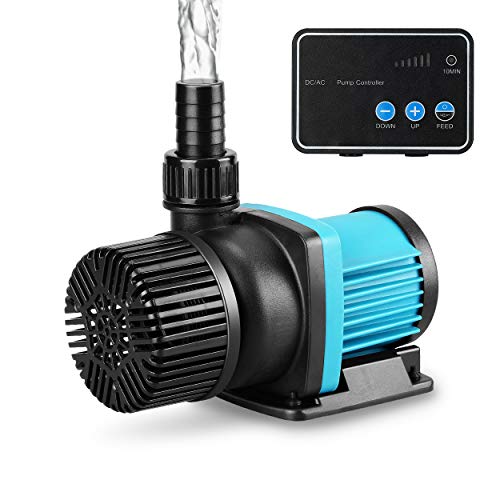
The JEREPET JDC-1850 is aimed at aquarists who need more flow and more lift than the small pumps offer, without moving into premium pricing. It is rated at 1,850 GPH with a maximum lift of 14.8 feet, so it keeps useful flow at the top of a standard stand-and-canopy return run, and it can be plumbed submersible in the sump or inline outside it. Sine wave drive and a 55-watt ceiling keep it quiet and efficient for its size class.
The controller adjusts flow electronically and includes a wave maker function alongside steady return duty, which gives some flexibility if the pump is ever reassigned to circulation work. For larger sumps, basement-adjacent layouts with extra lift, or displays in the 150 gallon class that need a strong turnover, the JDC-1850 covers the ground between the compact pumps and the premium brands.
Specs
- Max flow: 1,850 GPH
- Max lift: 14.8 ft
- Power consumption: 55 W
- Voltage: 24 V DC
- Model: JDC-1850
- Drive: sine wave with electronic controller
- Control: adjustable flow, feed pause and wave function
- Use: submersible or inline, freshwater and saltwater
Current USA eFlux DC Flow Pump 6009

The eFlux 6009 is the compact option in Current USA’s LOOP ecosystem. Its flow range of 210 to 1,050 GPH is unusually wide at the low end, which makes it easy to fine-tune a quiet overflow on smaller tanks, and it draws as little as 6 watts at low settings and no more than 30 watts at full speed. The pump body is about 5 by 3 by 4 inches, so it fits return chambers that rule out bigger pumps.
Because it belongs to the LOOP family, the 6009 can be tied into Current USA’s Bluetooth control system alongside compatible lights and wave pumps, with feed mode and flow adjustment handled from the controller. It can run submerged or plumbed externally, and Current USA publishes a one-year limited warranty for the line. Choose it for small and mid-size sumps where footprint and low-end flow control matter more than raw lift.
Specs
- Flow range: 210-1,050 GPH
- Power consumption: 6-30 W
- Voltage: 24 V DC
- Dimensions: about 5 x 3 x 4 in
- Control: LOOP-compatible controller with feed mode
- Fittings: 3/4 in and 1 in barb fittings included in the eFlux line
- Use: submersible or external, freshwater and saltwater
- Warranty: 1 year limited (manufacturer published)
Reef Octopus VarioS-4 Controllable DC Pump

The VarioS-4 is the premium pick, built around control and safety features the budget pumps skip. The detachable VarioS controller offers five speed settings, a slow startup that ramps the pump up over roughly ten seconds, and two pause modes that stop the pump for 15 or 60 minutes for feeding and maintenance. A float switch input can shut the pump down if the sump level drops, which protects both the pump and the display.
For automated systems, the controller also accepts a 0-10V input, so a third-party aquarium controller can take over speed control. The pump itself uses a ceramic shaft with a propeller bearing to reduce wear, and the volute can be rotated to change the output direction. Rated at 1,050 GPH on a 36-volt DC supply, it suits mid-size reef sumps where integration and safeguards justify the premium tier.
Specs
- Max flow: 1,050 GPH
- Voltage: 36 V DC
- Control: detachable controller with 5 speed settings
- Integration: 0-10V input for third-party controllers
- Safety: float switch input, slow startup ramp
- Feed modes: 15-minute and 60-minute pause
- Shaft: ceramic shaft with propeller bearing
- Use: submersible or inline, freshwater and saltwater
How to Choose a DC Return Pump
Match flow to your overflow, not the headline number
A return pump should turn over roughly three to five times the display volume per hour after plumbing losses, and it must never outrun what the overflow can drain. Maximum flow is measured at zero head, so the delivered flow in a real sump is always lower. If your layout needs a specific turnover, size up one model and use the controller to dial the pump back; running a DC pump below its maximum is quieter and leaves room for adjustment later.
Check head height against your plumbing
Head height is the vertical lift from the sump water surface to the return outlet, plus friction from elbows, valves and long pipe runs. A pump stops delivering flow at its maximum head, and output falls steadily as head rises. Add up your lift and fittings, then choose a pump whose maximum head clears that figure with room to spare. Tall stands, basement sumps and manifold branches feeding reactors all eat head quickly.
Decide which controls you will actually use
Every pump here includes a controller with flow steps and a feed pause, which is enough for most tanks. Step up to the premium tier if you want a float switch input to guard against a low sump, or a 0-10V port so an aquarium controller can manage the pump. App and Bluetooth control, as on the eFlux line, is a convenience for tanks already using that ecosystem rather than a requirement for a healthy return.
Plan for maintenance and failure
A return pump is the one device a sump system cannot run without, so favor models with available controllers and impellers, and keep the intake screen clean so flow does not fade between services. Because DC pumps depend on their controller and power supply, storing a spare pump or at least the controller details with your equipment notes is cheap insurance for a tank that depends on continuous circulation.
FAQ
How many GPH do I need from a return pump?
Aim for delivered flow of about three to five times the display tank volume per hour after head loss. Because flow drops as lift increases, choose a pump whose zero-head rating is comfortably above that target, then trim it with the controller. More return flow than the overflow can handle causes noise and microbubbles, so bigger is only better up to the overflow’s limit.
Can a DC return pump run outside the sump?
Some can. The JEREPET JDC-1850, Current USA eFlux 6009 and Reef Octopus VarioS-4 are all rated for inline external use as well as submerged use, provided the pump volute stays flooded and the plumbing is sealed. Pumps sold for submersible use only must stay underwater. Always confirm the rating for the exact model before drilling a sump.
Why choose a DC pump over an AC return pump?
A DC pump lets you adjust flow electronically instead of restricting the output with a valve, which saves power and reduces noise. DC models also add feed pause modes, slow startup and, on premium pumps, safety inputs and controller integration. The trade-off is more electronics: the controller and power supply are extra parts that an AC pump does not need.
How often should a return pump be cleaned?
Inspect the intake screen monthly and deep-clean the impeller and volute every three to six months, sooner in tanks with heavy calcium buildup. Vinegar or citric acid soaks dissolve the deposits that slow DC pumps down. A pump that has lost flow or grown louder is usually asking for a cleaning rather than a replacement.
Conclusion
For most sump systems, the Jebao DCP-5000 hits the sweet spot of flow, head height and controllable sine wave running at a mid-range tier. Small sumps are better served by the compact hygger DC3500 or the Current USA eFlux 6009, larger systems by the higher-lift JEREPET JDC-1850, and automated reef setups by the Reef Octopus VarioS-4 with its float switch input and 0-10V control. Whichever you choose, size by delivered flow at your real head height, and the return side of the tank will take care of itself.
More from Amazon
Programs that pair well with the guide above. Offers and eligibility are set by Amazon and may change.
Set up recurring deliveries of everyday items on eligible products. Terms and savings are set by Amazon.
Explore Subscribe & SaveFree shipping on eligible items, Prime Video and more. Eligible new members can start with a free trial.
Start a Prime free trialAudiobooks and podcasts to listen to on the go. Eligible new members can start with a free trial.
Try Audible freeRead from a large library of eBooks and audiobooks on any device. Check Amazon for current plans.
Explore Kindle UnlimitedAs an Amazon Associate we earn from qualifying purchases.


Write Your Review
No reviews yet. Be the first to share your experience!