

Key takeaways
- You cannot see ammonia, nitrite or a drifting pH, which is exactly why an aquarium test kit earns a permanent spot beside the fish food.
You cannot see ammonia, nitrite or a drifting pH, which is exactly why an aquarium test kit earns a permanent spot beside the fish food. The search for “best aquarium test kits” usually hides a more practical question: do you want a bottle-and-vial kit that checks one parameter at a time with careful drops, or a bundle of dip strips that read several values in seconds? Each approach has fans, and the right pick depends on how often you test, how many tanks you run, and whether you are cycling a brand-new setup or monitoring a mature one.
This 2026 guide compares seven options spanning single-parameter liquid kits, a multi-parameter master kit, and several strip-based bundles. Because the information comes from the listing titles, the comparisons stick to what is visible, such as test counts and the parameters named. Readings from any home kit are informational: treat them as a trend to watch, confirm surprising results with a second method, and ask an experienced local fish store or a vet when a reading worries you.
Quick Picks
Our top picks


As an Amazon Associate we earn from qualifying purchases at no extra cost to you.
| Product | Best for | Key spec taken from the product title |
|---|---|---|
| API Freshwater Master Test Kit | New tanks being cycled | 800-test freshwater aquarium water kit |
| AAwipes 8-in-1 Test Strips | Quick weekly checks | Tests pH, ammonia, alkalinity, hardness; for aquariums and ponds |
| 11-in-1 Aquarium Water Test Kit | Frequent testers | 150 strips, 950 tests, ebook, aquarium thermometer |
| EASYTEST 8-Way Strips | Small tanks and ponds | 50 strips including ammonia; for fish tank and pond |
| Pawfly 5-in-1 Master Test Kit | Nitrogen-cycle and phosphate tracking | pH, nitrite, nitrate, ammonia and phosphate |
| API GH & KH Test Kit | Hardness-sensitive setups | Freshwater GH and KH, 2.5 oz |
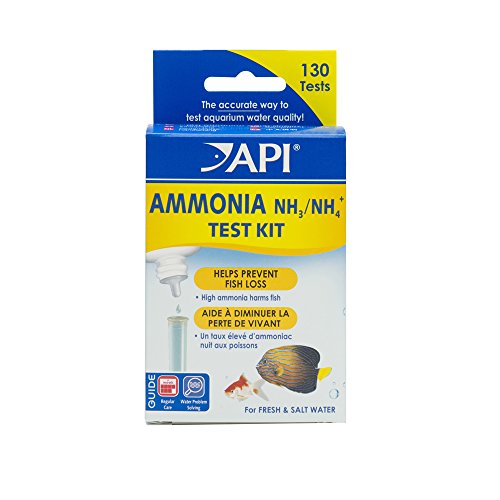
| API Ammonia Test Kit | Cycling and mixed freshwater or marine tanks | 130 tests, freshwater and saltwater |
How to Choose
Liquid kits versus test strips
Liquid kits mix reagent drops with a measured water sample in a vial and compare the color against a chart. Many hobbyists lean on them for ammonia, nitrite and nitrate because the color steps feel easier to judge, at the cost of more handling time. Strips are dipped, shaken and read against a bottle label within a set number of seconds. They are fast and tidy but depend on reading the color at exactly the right moment, and the pads can lose accuracy if the container is left open in humid air. Choose strips for convenience and a liquid kit when you want a second opinion on a critical parameter.
Which parameters actually matter
For a tank that is still cycling, ammonia and nitrite come first, with nitrate rising as the cycle matures. pH, general hardness (GH) and carbonate hardness (KH) matter when you keep species that prefer specific water, when you mix tap water with other sources, or when a planted tank needs steady chemistry. Phosphate becomes interesting if algae is a recurring headache. A kit that lists eight or eleven parameters sounds impressive, but only a few change your weekly decisions. Match the parameters to your livestock and plants, and ask a fish store about target ranges for your specific animals.
A practical way to combine the two styles is to keep a strip bundle for routine weekly checks and a dedicated liquid kit for the one value that matters most to your setup. A shrimp keeper might lean on hardness testing, while someone with a freshly started community tank cares most about ammonia. This split also protects you from a single-method blind spot: if a strip and a liquid test disagree, that disagreement is the signal to re-test rather than act.
Test count and shelf life
Compare how many tests you get per purchase. The master kit lists 800 tests, the ammonia kit 130 tests, and the strip bundles list counts like 50 strips or 150 strips with 950 tests across multiple parameters. A kit that seems cheap per box may cost more per useful reading if you only need one parameter. Reagents and strips also expire, so write the open date on the package, replace aged supplies, and keep everything out of heat and direct sun.
What to ignore, and where budget kits cut corners
Ignore extras that do not change your routine, such as bonus ebooks, unless the guide covers a topic you need. Be cautious of strips with many tiny pads that are hard to separate visually; compare the color chart on the listing photos with a good light source. Budget kits sometimes use smaller, harder-to-read charts and offer fewer replacement options. Whatever you buy, test at the same time of day and follow the timer on the instructions exactly, because rushed reads produce the most confusing numbers.
The 7 Best Options
API Freshwater Master Test Kit
The traditional starter kit for freshwater keepers who want an organized set of liquid tests in one box. The title puts the test count at 800, which makes it a long-term supply for regular checking during cycling and routine maintenance.
- Strength: an 800-test count stretches across months of weekly checks.
- Strength: a single freshwater kit covers the main parameters in one place.
- Trade-off: liquid testing takes more time and steady hands than dipping a strip.
Skip it if you keep a saltwater tank, since this listing says freshwater, or if you want results in seconds.
AAwipes 8-in-1 Aquarium Test Kit
A strip-based option that names pH, ammonia, alkalinity and hardness among the eight readings, and mentions both aquariums and ponds. It suits owners who want a quick look at the tank before work.
- Strength: several parameters from one dip.
- Strength: listed for ponds as well, helpful for mixed households.
- Trade-off: strip colors can be subjective, so re-test odd results.
Skip it if you need to follow a single value, such as ammonia, with fine detail.
11 in 1 Aquarium Water Test Kit, 150 Strips
The highest-volume strip bundle on this list, with 150 strips, 950 tests, an ebook and an aquarium thermometer named in the title. It fits the hobbyist who tests often or runs more than one tank.
- Strength: the 950-test total is the biggest count in this group.
- Strength: a thermometer and ebook are bundled in.
- Trade-off: eleven pads on one strip means more colors to compare at once.
Skip it if you only want to confirm one or two parameters and prefer a simple chart.
EASYTEST 8-Way Aquarium Test Strips
Fifty strips, with ammonia explicitly named, for fish tank and pond use. It is a compact choice for a small setup where an occasional full check is plenty.
- Strength: ammonia is included, an important value during cycling.
- Strength: a modest pack suits a single tank.
- Trade-off: with 50 strips, daily testing during a cycle uses them up fast.
Skip it if you plan to test daily or want a large reserve of tests.
Pawfly 5 in 1 Aquarium Water Master Test Kit
This listing names pH, nitrite, nitrate, ammonia and phosphate, which maps neatly onto the nitrogen cycle plus an algae-related value. It appeals to people tracking a cycle or chasing recurring algae.
- Strength: it covers the full nitrogen cycle in one product.
- Strength: phosphate is included, which many starter kits skip.
- Trade-off: it omits hardness values in the title, so GH and KH need a separate test.
Skip it if hardness tracking is your priority.
API GH & KH Test Kit
A focused freshwater kit dedicated to general and carbonate hardness. It makes sense for owners who adjust their water for specific plants or fish, or who see pH drift and want to understand buffering.
- Strength: dedicated hardness testing is more thorough than a strip pad.
- Strength: it pairs well with a master kit that skips these values.
- Trade-off: it only measures hardness, so it cannot be your only kit.
Skip it if you are only starting to cycle a tank and have not run into pH swings.
API Ammonia Test Kit
A single-parameter option for freshwater and saltwater, with 130 tests listed. Ammonia is the first value to watch in a new tank, so this kit is a sensible add-on or a minimalist start.
- Strength: works for both freshwater and saltwater according to the title.
- Strength: a dedicated liquid test for the most closely watched parameter in a new tank.
- Trade-off: one parameter only, so you need other kits for nitrite and nitrate.
Skip it if you want a single purchase that covers the whole cycle.
Which One Fits Your Situation
You are cycling your first freshwater tank
The API Freshwater Master Test Kit gives a long supply of liquid tests, and the Pawfly 5 in 1 is a compact alternative that names ammonia, nitrite and nitrate. Test on a schedule and write each result down.
You want fast checks on a busy schedule
The 11 in 1 strip bundle, with its 150 strips, handles frequent dips, while the AAwipes 8-in-1 is a good everyday strip option. Add a liquid ammonia kit when a reading looks odd.
You keep a small tank or a pond
The EASYTEST 8-Way strips are mentioned for fish tank and pond use, and the pack size fits a single small system. Because the title lists only 50 strips, ration them for weekly checks, and pair them with the API Ammonia Test Kit if you are in the middle of a cycle and need frequent readings.
You mix freshwater and saltwater, or adjust hardness
The API Ammonia Test Kit lists both freshwater and saltwater, and the API GH & KH Test Kit supports owners fine-tuning mineral content for plants and species that need it.
Common Mistakes
- Reading strips late: follow the timing on the label, because colors keep changing after the stated window.
- Using expired reagents or strips: write the open date on the box and replace old supplies.
- Testing only when something looks wrong: regular checks show trends before fish show stress.
- Trusting one result blindly: confirm unusual numbers with a second test or a local shop sample.
- Skipping the notebook: a log of dates and values makes it much easier to spot slow changes.
Related guides
- Canister Filter For 55 Gallon Freshwater Tank
- Aquarium Light For Low Tech Planted Tanks
- How Often To Clean An Aquarium Canister Filter
Frequently Asked Questions
How often should a new aquarium be checked?
During cycling, many hobbyists test every day or two for ammonia and nitrite. After the tank is established, weekly checks are common. Adjust the schedule to your livestock and ask a fish store for guidance.
Are strips accurate enough for home use?
They are convenient for trend watching, and many people use them alongside a liquid kit to double-check key values. Treat readings as informational rather than exact lab numbers.
Is a separate kit needed for saltwater?
Not always, but check each listing. The API Ammonia Test Kit names both freshwater and saltwater, while the master kit here is described as freshwater, so confirm compatibility before you buy.
What if a reading looks off?
Re-test with fresh reagents, then compare with a second kit or a shop sample. If animals look unwell, contact a vet or experienced aquarium specialist rather than relying on a home kit alone.
More from Amazon
Programs that pair well with the guide above. Offers and eligibility are set by Amazon and may change.
Set up recurring deliveries of everyday items on eligible products. Terms and savings are set by Amazon.
Explore Subscribe & SaveFree shipping on eligible items, Prime Video and more. Eligible new members can start with a free trial.
Start a Prime free trialAudiobooks and podcasts to listen to on the go. Eligible new members can start with a free trial.
Try Audible freeRead from a large library of eBooks and audiobooks on any device. Check Amazon for current plans.
Explore Kindle UnlimitedAs an Amazon Associate we earn from qualifying purchases.
Write Your Review
No reviews yet. Be the first to share your experience!