

The best aquarium gravel vacuum is one sized to your tank’s depth, with a tube wide enough to lift debris without sucking up gravel, and a start-up method you find easy. Manual siphons win on simplicity and reliability, while battery or faucet-driven systems win on convenience. These six options are common choices, with notes based on specifications and reviewer feedback.
Comparison Table
| Pick | Best for | Key feature |
|---|---|---|
| Python Pro-Clean Gravel Washer and Siphon Kit | Medium and large tanks | Long hose and strong flow |
| Python No Spill Clean and Fill | Water changes without buckets | Faucet-powered drain and refill |
| Laguna Python Gravel Cleaner | General maintenance | Classic siphon tube design |
| Fluval Edge Aquarium Gravel Vacuum | Small tanks and nano setups | Compact, easy to handle |
| Eheim Quick Vac Pro | Hands-free cleaning on small to mid tanks | Electric operation with filter basket |
| Hygger Electric Aquarium Cleaner | Multi-function cleaning | Battery-powered, multiple tools |
How a Gravel Vacuum Works
A siphon creates a flow of water from the tank to a bucket or drain. The wide tube lifts debris from the substrate, while the heavier gravel falls back. That removes waste, uneaten food and mulm that would otherwise feed algae, and it doubles as your water change. In a planted tank with sand or soil, you should hover above the substrate rather than plunge in, and focus on open areas. Battery-powered cleaners use a small motor to create the flow and often include a filter bag, which returns water to the tank, useful for quick cleanups between large water changes.
1. Python Pro-Clean Gravel Washer and Siphon Kit
The Pro-Clean kit pairs a clear, wide tube with a long hose and a quick-start siphon. It suits mid to large tanks where depth is a challenge. The flow is strong, which is helpful, but on fine sand you must control it by pinching the hose or lifting the tube. Owners like the long run to a drain or sink, though storage of a long hose is a minor annoyance.
Python Pro-Clean Gravel Washer and Siphon Kit
2. Python No Spill Clean and Fill
This system attaches to a faucet and uses water pressure to drain the tank through the hose, then switches to refill it. That means no buckets, which is a big deal for large tanks and bad backs. It requires a compatible faucet and some setup. Be careful with temperature on refill, and always treat water with conditioner before it reaches fish. A very convenient system for anyone with a big aquarium.
Python No Spill Clean and Fill
3. Laguna Python Gravel Cleaner
A conventional siphon tube with a built-in start-up bulb or priming method. Lighter and simpler than kits, it is a dependable tool to keep in the cabinet. Tube sizes vary, so choose one that matches your tank’s depth and substrate. The main downside is the lack of extras, so you will need a bucket, and you must watch the water level carefully.
4. Fluval Edge Aquarium Gravel Vacuum
For small tanks, a compact vacuum is easier to maneuver and does not over-drain the tank. Fluval’s mini design suits nano aquariums, bettas and shrimp tanks, and the short tube fits tight corners. The limitation is that it cannot clean large tanks quickly. A small-tank workhorse.
Fluval Edge Aquarium Gravel Vacuum
5. Eheim Quick Vac Pro
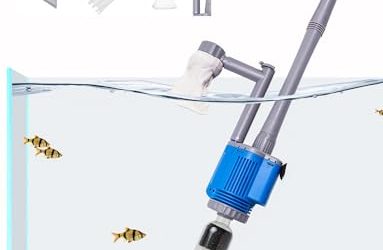
The Quick Vac Pro uses an electric motor to run its own flow, so you do not need to start a siphon. It includes a filter basket that catches debris and returns cleaned water, which helps with quick maintenance. It does not replace a water change, because it does not remove dissolved wastes. Check battery life and spare filter parts, and rinse it after use.
Eheim Quick Vac Pro
6. Hygger Electric Aquarium Cleaner
A multi-function battery-powered cleaner that can vacuum gravel, change water and sometimes wash sand or stir substrate. It is convenient and priced for small to mid-size tanks. Reviews point out that power varies by version and that batteries run down quickly on bigger jobs. Consider it as a supplement to a good manual siphon.
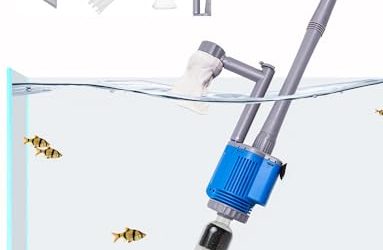
Hygger Electric Aquarium Cleaner
How to Choose
- Tank depth: the tube should be long enough to reach the bottom while the hose reaches your drain.
- Substrate: sand needs gentler flow; gravel tolerates stronger suction.
- Tank size: small tanks need small vacuums, big tanks benefit from faucet systems.
- Start method: bulb, shake or faucet options affect how fast you can start a siphon.
- Storage: a long hose is great until you have no place to coil it.
Technique Tips
Clean one section of the tank per week rather than the whole thing at once, so beneficial bacteria in the substrate are not disrupted. For sand, hold the tube a half inch above the surface and let debris rise rather than burying it. Do not disturb the roots of plants, and avoid vacuuming under heavy decor. Keep a bucket you only use for fishkeeping, never with soap or cleaners.
Common Mistakes
Overly aggressive vacuuming of sand, removing too much water in one go, and forgetting to turn off the heater before the water level drops are the three classic errors. Another is using a siphon too large for a small tank, which empties it quickly. And remember to use conditioner and match temperatures when refilling.
Choosing by Tank Type
A heavily stocked goldfish or cichlid tank produces a lot of waste and benefits from a strong siphon and frequent vacuuming. In that case, a wide tube and a hose long enough to reach a drain make water changes quick. A shrimp tank is the opposite: the vacuum should be gentle, ideally with a fine mesh or a small tube, so that you do not pull up the animals. Many keepers use a siphon with a sponge over the intake or an airline tube for spot cleaning.
Planted tanks need special attention. Dense roots hold waste, but vigorous vacuuming can uproot plants and cloud the water. Spot clean visible debris, and use the siphon mostly to remove water from above the substrate. If you keep sand, a narrower tube with a slow flow is easier to control than a wide one. And if you maintain several tanks, a long hose with a shutoff valve and a bucket on a cart can turn a chore into a ten-minute routine.
Keeping the Gear in Good Shape
Rinse the tube and hose after each use and hang them to dry, so algae and slime do not build up inside. Check the hose for kinks and cracks, and replace it if it stiffens with age. Keep a dedicated bucket and never use soap on any aquarium tool.
Frequently Asked Questions
How often should I vacuum the gravel?
Weekly or biweekly during routine water changes, depending on stocking and feeding.
Can I use a gravel vacuum on sand?
Yes, with a gentle approach. Hover above the surface and control flow.
Do I need to vacuum planted tanks?
Lightly, in open areas. Leave root zones alone to avoid uprooting plants.
Are battery cleaners as good as siphons?
They are convenient for small jobs. A siphon is still better for big water changes.
Conclusion
Pick a gravel vacuum that fits your tank depth, substrate and tolerance for hassle. A simple siphon is hard to beat, and faucet-powered systems save effort on large tanks. Clean a little at a time, treat refill water, and the aquarium will stay stable.
As an Amazon Associate we earn from qualifying purchases.
More from Amazon
Programs that pair well with the guide above. Offers and eligibility are set by Amazon and may change.
Set up recurring deliveries of everyday items on eligible products. Terms and savings are set by Amazon.
Explore Subscribe & SaveFree shipping on eligible items, Prime Video and more. Eligible new members can start with a free trial.
Start a Prime free trialAudiobooks and podcasts to listen to on the go. Eligible new members can start with a free trial.
Try Audible freeRead from a large library of eBooks and audiobooks on any device. Check Amazon for current plans.
Explore Kindle UnlimitedAs an Amazon Associate we earn from qualifying purchases.
Write Your Review
No reviews yet. Be the first to share your experience!