

Key takeaways
- The best car polishers for most beginners are dual-action (DA) machines with variable speed, a 5- or 6-inch backing plate, moderate throw, and low vibration; choose a rotary polisher only when maximum correction speed matters more than a forgiving learning…
The best car polishers for most beginners are dual-action (DA) machines with variable speed, a 5- or 6-inch backing plate, moderate throw, and low vibration; choose a rotary polisher only when maximum correction speed matters more than a forgiving learning curve.
Our top picks


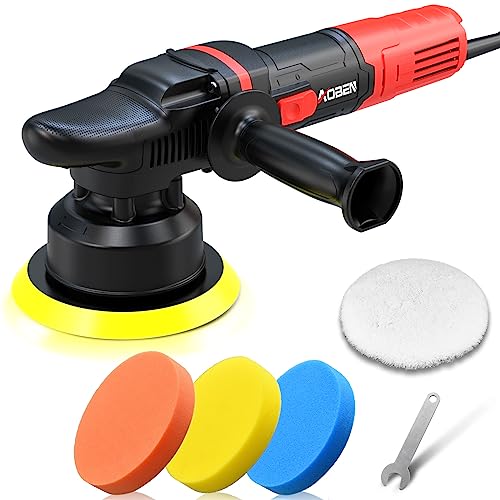
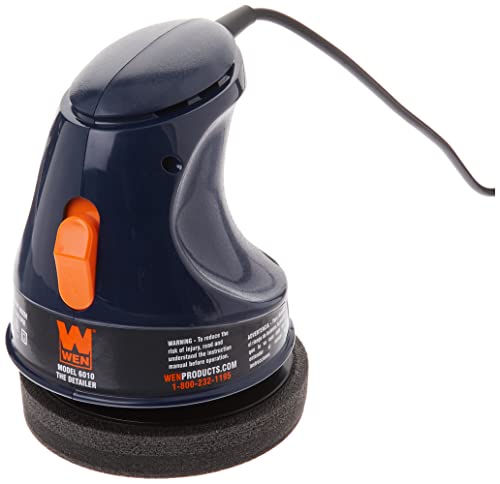
As an Amazon Associate we earn from qualifying purchases at no extra cost to you. Ratings are shown as listed on Amazon.
Best car polishers by situation
| Situation | Best type | Useful specification | Why it fits |
|---|---|---|---|
| First machine, occasional detailing | 8–12 mm random-orbit DA | 5-inch backing plate, 500–700 W | Forgiving, controllable, and suitable for most paint defects |
| Regular correction on several vehicles | 15 mm long-throw DA | 5- or 6-inch plate, 700–1,000 W | Covers panels quickly while remaining safer than a rotary |
| Severe defects or professional volume | Rotary | 900–1,250 W, approximately 600–3,500 rpm | Fastest cutting and strong performance on hard clear coat |
| Small panels, wheels, and tight spaces | Mini cordless DA or convertible polisher | 30–75 mm pads, 12 V or 18 V battery platform | More precise access than a full-size machine |
| Limited storage or shared workspace | Compact corded DA | 2–3 kg tool weight, 4- or 5-inch plate | Less charging equipment and easier storage |
Dual-action versus rotary polishers
A DA polisher combines rotation with an orbital movement. The pad continually changes its path, which spreads heat and reduces the likelihood of creating severe holograms or burning through thin paint. That makes it the better default for a new user. A random-orbit DA can still remove oxidation, swirls, water spots, and moderate scratches when paired with the right compound and pad.
A long-throw DA has a larger orbital movement, commonly 15 or 21 mm. It can correct paint faster over broad panels, but it may be less comfortable on curved bodywork and can stall more easily on sharp contours if excessive pressure is applied.
A rotary polisher spins the pad on one fixed axis. It delivers more direct cutting power and maintains pad movement under pressure, making it valuable for heavy defects and efficient professional work. The trade-off is concentrated heat and a greater risk of buffer trails, holograms, or paint damage. It rewards careful speed selection, constant movement, and experience.
Key specifications that matter more than headline power
Speed control
Look for a variable-speed trigger or dial rather than a single operating speed. Low settings around 2,500–3,500 orbits per minute are useful for spreading polish and finishing. Mid-range settings around 4,000–5,000 OPM usually provide a practical correction zone on a DA. Rotary machines should offer a controllable range near 600–3,500 rpm.
A trigger lock or constant-speed button reduces hand fatigue during large-panel work. Soft-start circuitry is also worthwhile: it prevents the pad from throwing polish across the vehicle when the tool starts.
Pad size and throw
A 5-inch backing plate is the most versatile choice because it accepts common 5.5-inch pads and handles curved panels better than a 6-inch setup. Six-inch pads cover more area but demand more clearance and can be harder to control near mirrors, trim, and body edges. Keep a 3- or 4-inch setup for narrow pillars, bumpers, wheels, and motorcycle parts.
For a rough coverage estimate, a 6-inch pad has about 44% more face area than a 5-inch pad, calculated as 6² ÷ 5² = 1.44. In practice, the larger pad will not finish 44% faster because curves, wiping, pad cleaning, and repositioning consume much of the time.
Ergonomics and vibration
Weight matters, but balance matters more. A machine that weighs 2.5 kg can feel easier to use than a poorly balanced 2.1 kg model. Check for a rubberized side handle, a comfortable top grip, and enough room to reposition your hands without touching the hot housing.
Long-throw DAs can transmit noticeable vibration, especially with an unbalanced pad or dried compound. If possible, favor a counterbalanced design, electronic load control, and a handle that can be mounted in more than one position. For occasional users, a smoother machine can be worth more than an extra 100 W.
Power and load handling
Wattage indicates electrical input, not guaranteed correction ability. A well-controlled 700 W DA may outperform a poorly designed higher-wattage tool because it maintains speed under pressure and transfers less vibration. Rotary polishers generally feel more powerful because the pad does not orbit and lose rotation as readily.
For cordless tools, compare usable runtime rather than battery voltage alone. A typical 18 V, 5 Ah battery stores approximately 90 Wh before losses. If a polisher averages 300 W while correcting, theoretical runtime is 90 ÷ 300 = 0.3 hours, or 18 minutes. Real use varies with load and trigger time, so two batteries and a fast charger are sensible for a full vehicle.
Models and configurations worth considering
Rupes BigFoot LHR15 Mark V
This 15 mm DA uses a 125 mm backing plate and is designed for efficient correction on ordinary vehicle panels. Its compact format is easier to control than a 21 mm machine around curves and smaller cars. It is a strong choice for frequent users who value refinement, balance, and low vibration over the lowest purchase price. Similar professional 15 mm DAs typically cost roughly $350–$550.
Rupes BigFoot LHR21 Mark V
The 21 mm orbit covers broad, relatively flat panels quickly and suits large vehicles, vans, and regular detailing work. It is less convenient around tight contours, raised body lines, and narrow sections, so it works best alongside a smaller machine rather than as a sole polisher. Expect a professional price range of approximately $400–$600.
FLEX PXE 80
The FLEX PXE 80 is a compact cordless polishing system intended for spot correction and difficult access. Its interchangeable heads and small pads make it useful for door handles, pillars, wheels, and localized defects where a full-size DA is awkward. It is not a replacement for a full-size machine when correcting an entire SUV. The tool and battery system commonly place it in the roughly $250–$450 range, depending on the kit.
Makita PO5000C
The Makita PO5000C is a corded 125 mm dual-action polisher with forced rotation. Its forced-rotation design helps the pad continue moving under pressure, offering more cutting authority than a free-spinning DA while retaining more control than a conventional rotary. It is a good middle ground for an experienced enthusiast who wants correction power without immediately moving to rotary technique. Typical pricing is approximately $250–$400.
DEWALT DWP849
The DEWALT DWP849 is a high-power rotary polisher with a 7- or 9-inch pad capacity and a variable speed range suitable for heavy correction and finishing. Its larger pad size can be productive on broad panels, but it is physically more demanding and less forgiving around edges. Choose it when you already understand paint thickness, pad angles, heat management, and rotary finishing. General market pricing is often around $180–$300.
Beginner-safe setup that prevents most mistakes
- Wash and chemically decontaminate the vehicle before polishing. Abrasive dirt trapped in a pad can create new scratches.
- Inspect the paint in strong, diffuse lighting and tape sensitive trim. Do not assume every mark is safely removable; deep scratches may extend through the clear coat.
- Start with a polishing pad and a moderate polish on a test section. Use the least aggressive combination that produces the desired improvement.
- Work an area of approximately 40 by 40 cm. Apply moderate downward pressure, keep the pad flat, and move slowly in overlapping passes.
- Use a low setting to spread product, then increase speed for correction. Stop if the panel becomes too hot to touch comfortably.
- Wipe residue with a clean microfiber towel and inspect before increasing compound strength or pressure.
A DA is safer, not risk-free. Avoid tilting the pad onto an edge, running a dry pad, or holding the machine stationary. On a rotary, keep the pad moving continuously and use lower speed near edges, ridges, and repainted areas.
Ownership costs and maintenance
The backing plate, pad, and cord or battery system usually determine long-term convenience. Foam pads wear first at the edges and around the center hole; replace any pad that has torn, delaminated, or become permanently compressed. Microfiber cutting pads need more frequent cleaning because loaded fibers reduce correction and increase heat.
After each section, brush or blow residue from the pad, but do not use excessive compressed air that can damage foam. Wash reusable pads according to their material and allow them to dry completely before storage. Keep spare pads available: a practical starting set is two cutting pads, two polishing pads, and one finishing pad for a full vehicle.
Corded machines avoid battery replacement costs and provide consistent power, but the cord can rub against paint. Use a shoulder or cable-management technique and keep the cord over your shoulder. Cordless machines improve mobility but add batteries, charging time, and eventual battery replacement to the ownership cost.
Final buying recommendation
For most enthusiasts, buy a variable-speed 8–12 mm DA with a 5-inch backing plate and a comfortable, low-vibration body. Choose a 15 mm DA when you correct several vehicles each year and want faster panel coverage. Choose a rotary only for heavy correction, professional throughput, or as a second machine after learning with a DA. The best car polishers are not necessarily the most powerful; they are the ones whose speed, pad size, balance, and safety margin match the paintwork and the operator.

Write Your Review
No reviews yet. Be the first to share your experience!