

Key takeaways
- 1.5 gallons per day × 365 days = 547.5 gallons per year
- 547.5 ÷ 120 = 4.6 filters per year
- 4.6 × $20 = approximately $92 per year
The best premium water pitcher filter for most households is a certified multi-contaminant model with a 7–10 cup capacity, a filter lasting roughly 100–150 gallons, and dimensions that leave room on a refrigerator shelf; the right pick depends on which contaminants you need reduced, how often you refill, and whether you prefer glass, plastic, or maximum filtration.
Our top picks

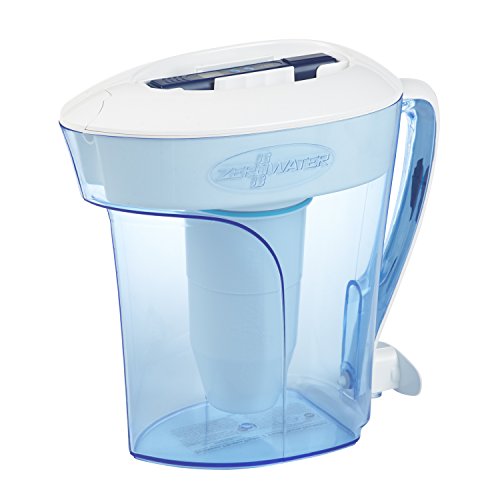


As an Amazon Associate we earn from qualifying purchases at no extra cost to you. Ratings are shown as listed on Amazon.
Quick picks by situation
| Household situation | Best fit | Why it makes sense | Main compromise |
|---|---|---|---|
| Broad certified contaminant reduction | Brita Elite pitcher | NSF/ANSI-certified reduction claims for a wide range of regulated and emerging contaminants, with a relatively long filter life | Plastic construction and a slower flow than basic carbon pitchers |
| Fluoride and dissolved-solids reduction | ZeroWater 5-stage pitcher | Ion-exchange and carbon filtration, plus a supplied TDS meter on many versions | Filters can become expensive when incoming water has high dissolved-solids levels |
| Glass and reduced plastic contact | LifeStraw Home glass pitcher | Borosilicate-glass body with a membrane and carbon filter system | Higher purchase price and a smaller practical batch than some large plastic pitchers |
| Maximum contaminant coverage without reverse osmosis | Clearly Filtered pitcher | Designed around a broad contaminant-reduction claim set, including substances that ordinary carbon filters often leave behind | Replacement filters are comparatively costly and filtration is slow |
Certification is more important than an impressive contaminant list. Look for the exact pitcher and filter model in the certifier’s current listing, not merely a statement that a brand uses “certified technology.” NSF/ANSI 42 generally concerns aesthetic contaminants such as chlorine and taste; NSF/ANSI 53 covers specified health-related contaminants; NSF/ANSI 401 covers certain emerging compounds. A certification does not mean the filter removes every contaminant in that category.
Head-to-head comparison of premium pitcher types
| Product or type | Typical capacity | Filter life | Construction | Flow and ownership notes |
|---|---|---|---|---|
| Brita Elite | About 10 cups, model dependent | Up to 120 gallons or about 6 months, depending on model and usage | BPA-free plastic pitcher | Moderate flow after priming; electronic indicators on some models; replacement filters commonly cost about $15–$25 each |
| ZeroWater 5-stage | About 10 cups for common pitcher sizes | Often 15–25 gallons, but highly dependent on source-water quality | BPA-free plastic; includes a TDS meter with many packages | Very slow near the end of filter life; replacement filters commonly cost about $15–$30 each |
| LifeStraw Home glass | Roughly 7 cups of filtered water, depending on version | Membrane commonly rated around 264 gallons; carbon stage around 40 gallons | Borosilicate glass with plastic lid and filter housing | Two-stage replacement schedule; commonly $25–$45 for replacement components |
| Clearly Filtered pitcher | About 10 cups, model dependent | Up to 100 gallons or approximately 4 months | BPA-free plastic | Slow fill rate is normal; replacement filters often cost about $35–$50 |
| Standard activated-carbon pitcher | 6–12 cups | About 20–40 gallons or 1–2 months | Usually plastic | Fastest and least expensive option, but typically narrower contaminant claims |
Capacity figures need careful interpretation. A “10-cup” pitcher may hold 10 cups in total while only producing 6–7 cups in the lower reservoir. A family that drinks eight cups of filtered water daily may therefore need two fills, even when the advertised capacity appears sufficient.
Which filter is best for your water?
For chlorine, taste, and odor
A conventional activated-carbon filter is usually adequate if your municipal water report shows no special concern and your goal is better taste. Premium construction does not automatically improve reduction performance. In this situation, pay more for a sturdier lid, a useful replacement indicator, or a glass body rather than for an unnecessarily complex filter.
For lead and other regulated contaminants
Choose a model with an explicit, current certification for the particular contaminant. Brita Elite is a practical choice for households wanting a widely available filter with long stated life. Do not infer lead reduction from chlorine certification, and do not use a pitcher as a substitute for correcting a known plumbing problem.
For fluoride, nitrate, or high dissolved solids
Ordinary carbon pitchers are not the right category. ZeroWater uses a five-stage design intended to reduce total dissolved solids, while reverse osmosis systems are often more economical for consistently high-volume use. ZeroWater’s TDS meter is useful as an indicator of dissolved solids, but a low TDS reading does not prove that every unwanted substance has been removed.
For a glass pitcher
LifeStraw Home is the clearest premium choice when a glass reservoir matters. Glass resists odor retention and surface scratching better than many plastics, but it is heavier and can break if placed against a sink or dropped. Check the handle and lid clearance before buying; the pitcher may fit a shelf while the handle or lid does not.
Refrigerator fit: measure the filled pitcher, not just the box
Before choosing a model, measure the shelf’s usable height, depth, and door opening. Allow at least 2–3 cm above the lid if you fill the pitcher in place, and remember that a full glass pitcher can weigh 4–6 kg. Door bins are convenient but often too shallow for wide premium pitchers. A narrow 7-cup model can be a better daily choice than a 12-cup model that must be stored on a crowded shelf.
Also check the pouring angle. Some lids require the pitcher to be tilted substantially before water exits, so a low shelf can make the final cups awkward to pour. For a refrigerator with a fixed interior shelf, a slim pitcher with a stated width near 10–11 cm is generally easier to accommodate than a wide, high-capacity design.
Filter cost: a worked ownership calculation
Suppose a Brita Elite replacement filter costs $20 and is rated for 120 gallons. That is about $0.17 per gallon before the pitcher’s purchase price. If the household filters 1.5 gallons per day, one filter lasts approximately 80 days based on volume, so annual filter spending is about:
- 1.5 gallons per day × 365 days = 547.5 gallons per year
- 547.5 ÷ 120 = 4.6 filters per year
- 4.6 × $20 = approximately $92 per year
Real replacement timing may be earlier because manufacturers also specify a calendar limit. By comparison, a $25 ZeroWater filter rated for 20 gallons would cost approximately $684 per year at the same usage if the source water actually shortens the filter to that capacity. That does not make ZeroWater a poor product; it shows why dissolved-solids level and drinking volume matter more than the initial pitcher price.
Maintenance and durability realities
- Wash the reservoir, lid, and handle regularly with mild dish soap. Do not assume the filter itself is dishwasher-safe.
- Keep filtered water refrigerated and use it within the period recommended by the manufacturer. A pitcher is not a sterile container.
- Replace filters by the earlier of the gallon rating, calendar interval, or a clear change in taste, flow, or odor.
- Do not let a filter sit unused and submerged for long periods. Follow the brand’s instructions for re-priming after storage.
- Replace cracked lids, loose seals, or damaged glass rather than relying on a pitcher that no longer closes securely.
- Do not pour hot water into a pitcher unless the manufacturer explicitly permits it; heat can damage plastic parts and filter media.
The parts that usually wear first are the lid hinge, pour flap, filter gasket, and electronic indicator battery. On multi-stage systems, the outer carbon stage may become exhausted while the membrane still has useful life, which is why some brands sell separate replacement cartridges. A filter that suddenly runs much more slowly may be clogged, improperly seated, or simply at the end of its service life.
Final buying recommendation
Choose Brita Elite when you want a balanced premium pitcher with useful certification coverage and manageable ongoing cost. Choose ZeroWater when dissolved-solids reduction is the priority and you accept variable filter expense. Choose LifeStraw Home glass when materials and a glass reservoir outweigh capacity and speed. Choose Clearly Filtered when broad contaminant claims are more important than low replacement cost or fast filling.
Before ordering, confirm three things in the current model documentation: the exact contaminant certification, the replacement-filter price and rated life, and the pitcher’s filled dimensions. Those details determine the real value far more reliably than the number of filtration stages or the size printed on the front of the package.

Write Your Review
No reviews yet. Be the first to share your experience!