
Our Short List of 3
All 4 Picks at a Glance
| Product | Specs | Action |
|---|---|---|
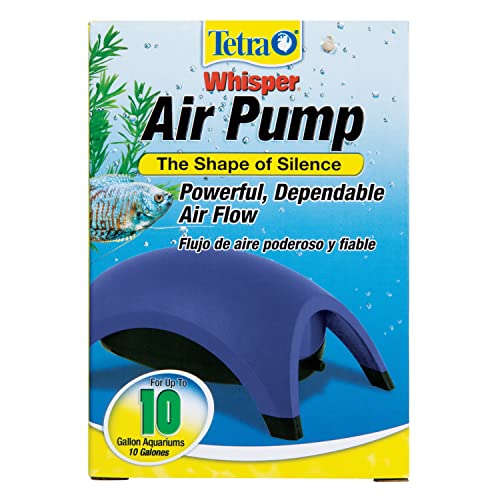 Tetra Whisper Air Pump Up To 10 Gallons (ASIN: B0009YJ4N6) | Check price on Amazon | |
 NICREW Nano Silent Aquarium Air Pump (ASIN: B0DNMRWWYL) | Check price on Amazon | |
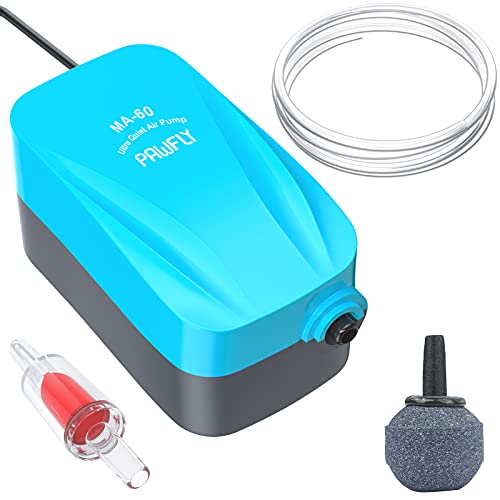 Pawfly MA-60 Aquarium Air Pump Kit (ASIN: B073DWVX5P) | Check price on Amazon | |
 Pawfly 50 GPH Dual Outlet Aquarium Air Pump (ASIN: B0DKW6CDTC) | Check price on Amazon |
Key takeaways
- The best air pumps for a 10 gallon aquarium compared by noise, airflow, outlets and included accessories, with quiet picks for bedrooms and desks alike.
Disclosure: As an Amazon Associate, we may earn from qualifying purchases made through links on this page, at no additional cost to you.
A 10 gallon tank usually sits close to where people live and sleep — on a desk, a dresser or a bedroom shelf — so the air pump that drives its sponge filter or air stone has to be judged on noise first and raw power second. A pump built for a 55 gallon tank will overwhelm a 10 gallon with bubbles, current and hum, while a pump that is too weak will barely push air through a sponge filter at the bottom of the tank. The right size sits in the middle: enough pressure to run one sponge filter or one air stone at full depth, with output you can trim down for bettas, shrimp and fry.
The four pumps below are all sized honestly for a 10 gallon aquarium or the small-tank range that contains it. They cover the main ways people run air on a small tank: a classic single-outlet diaphragm pump, a near-silent nano pump that mounts on the glass, a complete starter kit with tubing and a stone in the box, and an adjustable dual-outlet model for anyone running a sponge filter and a second air device at the same time. Every specification quoted here comes from the manufacturer’s own product page.
Quick Picks
- Best overall for a single device: Tetra Whisper Air Pump Up To 10 Gallons — purpose-built for this tank size, with a suspended motor and sound-dampening chambers.
- Quietest pick: NICREW Nano Silent Aquarium Air Pump — a tiny 1.5 W pump rated under 35 dB that mounts on the tank wall with a suction cup.
- Best complete kit: Pawfly MA-60 Aquarium Air Pump Kit — pump, air stone, 5 feet of tubing and a check valve in one box.
- Best for two air devices: Pawfly 50 GPH Dual Outlet Air Pump — two outlets and a flow dial, so a sponge filter and an air stone can run off one pump.
Tetra Whisper Air Pump Up To 10 Gallons (ASIN: B0009YJ4N6)
The Whisper 10 is the reference point for this tank size: Tetra rates it for aquariums up to 10 gallons, with a single air outlet and a 2.5 W motor. Tetra’s published airflow figure for this model is 0.5 L/min, which is the right order of magnitude for one sponge filter or one air stone in a 10 gallon tank — steady aeration and gentle circulation without turning the tank into a bubble column. The pump measures 3.9 x 2.8 x 5.5 inches and weighs about 0.75 pounds, so it tucks behind a small stand or into a corner of an equipment shelf.
Noise control is built into the housing rather than added underneath it. The patented dome shape works with a suspended motor and internal sound-dampening chambers to smooth the air pulses a diaphragm pump normally makes, and a wide footprint with rubber feet keeps vibration from reaching the shelf. Output is fixed at the pump — there is no dial — so trimming the flow for a betta or a fry tank means adding an inexpensive bleed valve on the airline. Note that Tetra sells this model as non-UL listed, and the box contains the pump only: airline tubing, an air stone and a check valve are sold separately.
Highlights
– Sized exactly for tanks up to 10 gallons — no oversizing guesswork
– Dome housing, suspended motor and dampening chambers target hum at the source
– Single outlet matches the one-filter, one-stone setups most 10 gallon tanks run
Considerations
– Fixed output with no airflow dial; trimming requires a separate bleed valve
– No tubing, air stone or check valve included
– Non-UL listed, which Tetra states plainly on the listing
NICREW Nano Silent Aquarium Air Pump (ASIN: B0DNMRWWYL)
The NICREW Nano Silent takes the opposite approach to size: at 1.8 x 1.9 x 0.8 inches it is closer to a matchbox than a pump, and it mounts directly on the outside of the tank with a strong suction cup instead of occupying shelf space. It draws 1.5 W and delivers 0.6 L/min (about 9.5 GPH) of air, and NICREW rates it for aquariums up to 20 gallons — so on a 10 gallon it runs well within its comfort zone. The maker rates noise below 35 dB, the lowest figure among the pumps in this guide, which is what makes it the natural pick for a bedroom or a desk you sit next to all day.
Because the output is gentle, this is a pump for one device: a nano sponge filter, a small air stone, or a shrimp tank bubbler. The included control valve lets you regulate the airflow down further for bettas and fry, and a check valve is included to stop water back-siphoning into the pump if the power fails. That gentle ceiling is also the limit — a large sponge filter or a deep tank that needs strong pressure will want one of the diaphragm pumps instead.
Highlights
– Rated below 35 dB — the quietest option here for bedrooms and desks
– Suction-cup mount on the glass keeps shelves and desktops clear
– Control valve and check valve included for fine, safe airflow trimming
Considerations
– Gentle 0.6 L/min output suits one small device, not a big sponge filter
– Suction cup needs a clean, flat glass surface to hold long term
– Rated up to 20 gallons, so very deep 10 gallon setups should check bubble strength at full depth
Pawfly MA-60 Aquarium Air Pump Kit (ASIN: B073DWVX5P)
The MA-60 is the pick for a first 10 gallon setup because everything needed to start bubbling is in the box: the pump, a 0.8-inch air stone ball, 5 feet of standard 3/16-inch airline tubing and a check valve. Pawfly rates the pump for 5 to 20 gallon fresh and marine tanks, so a 10 gallon sits in the middle of its range. It runs on 2 W with a maximum pressure of 0.012 MPa — enough pressure to drive a sponge filter at the bottom of a standard 10 gallon — and the included stone is rated at a jetting volume of about 1 L/min.
The body is compact at 3.3 x 1.8 x 1.6 inches, and four shockproof rubber feet hold it in place and cut the vibration that causes most small-pump noise; Pawfly rates the noise level below 45 dB. Output is not adjustable at the pump, and for its size this little unit pushes air enthusiastically, so a gang valve or bleed valve is a sensible add-on if the bubbles prove too strong for shrimp or a betta. Like most small diaphragm pumps, it stays quietest on a soft, level surface with nothing resting against the housing.
Highlights
– Complete starter kit: air stone, 5 ft of tubing and a check valve included
– 0.012 MPa pressure handles a sponge filter at full 10 gallon depth
– Compact body with four rubber feet to limit vibration noise
Considerations
– No built-in flow adjustment; strong output for its size may need a bleed valve
– Below 45 dB rating is higher than the NICREW’s figure
– Five feet of tubing can be short if the pump cannot sit near the tank
Pawfly 50 GPH Dual Outlet Aquarium Air Pump (ASIN: B0DKW6CDTC)
A 10 gallon tank that runs a sponge filter plus an air stone, a bubble ornament or a second small filter needs either two pumps or one dual-outlet pump — and this Pawfly (model CW2410) is the dual-outlet option. Its two ports can run two devices at once or be combined into a single stronger port. Maximum flow is 50 GPH with 0.013 MPa of pressure from a 1.25 W motor, and Pawfly rates the pump for 10 to 60 gallon tanks, which puts a 10 gallon at the bottom of its range.
The feature that makes an oversized-range pump workable on a small tank is the adjustment dial: output turns from “Low” to “High,” so the flow can be dialed down to a gentle stream instead of blasting a 10 gallon at full strength. Pawfly builds the pump with a double-layer shell and shockproof rubber feet and rates noise below 30 dB. The kit is generous — airline tubing, air stones, connectors, check valves and a nano bio sponge filter are included — and the pump carries a 1-year warranty. It is the largest unit in this guide, so check shelf space before choosing it for a nano setup.
Highlights
– Dual outlets run a sponge filter and a second device off one pump
– Flow dial makes a 10–60 gallon pump behave properly on a 10 gallon
– Full accessory kit including a nano bio sponge filter; 1-year warranty
Considerations
– Largest footprint here — overkill for a single small air stone
– Flow dial adjusts both outlets together rather than independently
– At full output it is far more air than a 10 gallon needs; keep it dialed down
How to Choose an Air Pump for a 10 Gallon Tank
Start with what the pump has to drive. One sponge filter or one air stone is the standard 10 gallon setup, and any single-outlet pump here will run it. Two devices — a sponge filter plus a stone, or filtration plus an air-driven ornament — justify the dual-outlet Pawfly or a T-connector and gang valve on a single-outlet pump.
Match pressure to depth, not just tank volume. Air has to overcome the water pressure at the bottom of the tank, and a standard 10 gallon is about 12 inches tall. Pumps in the 0.012–0.013 MPa range handle that depth through a sponge filter comfortably; very shallow nano pumps are happiest with small stones and nano sponge filters placed a little higher in the water column.
Decide how much trimming control you need. Bettas, shrimp and fry do best with a gentle bubble stream. A pump with a built-in dial or an included control valve makes that easy; a fixed-output pump needs a bleed valve on the line, which vents the excess air outside the tank instead of forcing it through the stone.
Finally, plan for noise where the tank actually sits. Decibel figures are maker ratings measured under their own conditions, but the ranking between designs is real: small piezo-style and nano pumps are the quietest class, suspended-motor diaphragm pumps come next, and any pump gets louder if it vibrates against a hard shelf or touches the tank stand. Placement and a soft pad matter as much as the pump itself.
Key Specifications Explained
Airflow (L/min or GPH). The volume of air the pump moves at zero back-pressure. A 10 gallon tank typically needs only about 0.5–1 L/min for one device; more is not better, because excess air becomes excess current and noise.
Pressure (MPa or kPa). How hard the pump can push against the resistance of water depth, tubing and a clogging air stone. Pressure, not airflow, decides whether bubbles still form at the bottom of the tank as the stone ages.
Outlets. The number of separate air lines the pump feeds. One outlet suits one device; two outlets run two devices without splitters, though a shared dial still balances them as a pair.
Noise rating (dB). The maker’s measured sound level, usually at a set distance. Figures below roughly 35 dB describe pumps most people can sleep near; the mid-40s are a refrigerator-like hum that placement can soften.
Tank rating. The maker’s suggested aquarium size range. Treat it as a guide to strength class: a pump rated “up to 10 gallons” is purpose-built for this tank, while one rated “10–60 gallons” needs its output turned down.
Setup and Use Tips
Place the pump above the waterline whenever the shelf allows it. If the pump must sit below the tank, install a check valve in the airline so a power cut cannot siphon water back into the pump — two of the kits here include one, and the Tetra needs one bought separately.
Leave a drip loop in the power cord: let the cord sag below the outlet before rising to it, so any water travelling down the cord drips off instead of reaching the socket.
Cut tubing to the length you actually need. Extra coils add resistance, and long runs cost pressure that a small pump cannot spare. Standard 3/16-inch airline fits every pump in this guide.
Rest the pump on a folded towel, a foam pad or its own rubber feet on a level surface, and keep the housing from touching the stand or other equipment — most “loud pump” complaints are vibration against furniture, not motor noise.
Start with the flow low and increase it over a few minutes while watching the fish. Shrimp and bettas should be able to swim through the bubble area without being pushed; a sponge filter only needs a steady, moderate stream to do its job.
Common Mistakes to Avoid
Buying a pump sized for a much larger tank. A 100-gallon-class pump on a 10 gallon tank means violent bubbling, splashing at the surface, stressed fish and more noise — with no filtration benefit.
Skipping the check valve. When a below-tank pump stops, water can siphon back through the airline and flood the pump and the floor. The valve costs almost nothing and two kits here include it.
Running two devices off one outlet without a gang valve. A plain T-splitter sends air down the path of least resistance, so one device bubbles hard while the other barely breathes. A gang valve lets you balance them.
Judging a pump in the first five minutes. Air stones clog gradually and diaphragms settle in; set the flow with the stone submerged at working depth, and re-check bubble output after the first week.
Putting the pump inside the tank cabinet unventilated. Diaphragm pumps draw in the air around them; a sealed, humid cabinet shortens diaphragm life and can make the hum resonate like a drum.
FAQ
How strong should an air pump be for a 10 gallon tank?
For one sponge filter or air stone, a pump in the 0.5–1 L/min class with around 0.012 MPa of pressure is plenty. What matters is steady bubbles at the bottom of a roughly 12-inch-deep tank, not a big gallon rating on the box.
Can one air pump run both a sponge filter and an air stone in a 10 gallon?
Yes — either choose a dual-outlet pump like the Pawfly 50 GPH, or split a single outlet with a gang valve so each device gets its own adjustable share of air. A plain T-connector without valves usually starves one of the two devices.
Where should I put the pump to keep it quiet?
On a level, soft surface — a foam pad or folded towel — with its rubber feet down and the body not touching the stand, wall or other equipment. Above the waterline is ideal for safety; below the tank is fine with a check valve fitted.
Do I need a check valve on a 10 gallon tank?
If the pump sits below the waterline, yes: it is the only thing stopping a back-siphon during a power cut. If the pump sits above the waterline it is optional, but it is cheap insurance either way.
Why did my pump get weaker after a few months?
The usual causes are a clogging air stone, a kinked or algae-lined airline, or a tired diaphragm. Swap the stone first, then check the tubing; many pumps also sell replacement diaphragm kits that restore full output.
Final Verdict
For most 10 gallon tanks, the Tetra Whisper 10 is the straightforward answer: it is built for exactly this size, runs one sponge filter or stone quietly, and asks nothing of you beyond adding tubing, a stone and a check valve. If the tank lives in a bedroom or on your desk and silence outranks everything, the NICREW Nano Silent is the quieter, smaller machine, provided one gentle device is all you run. The Pawfly MA-60 kit suits a first-time setup that needs every accessory in one box, and the Pawfly 50 GPH dual-outlet is the one to choose when a second air device is already planned — just keep its dial low and it behaves like a small-tank pump with headroom to spare.
More from Amazon
Programs that pair well with the guide above. Offers and eligibility are set by Amazon and may change.
Set up recurring deliveries of everyday items on eligible products. Terms and savings are set by Amazon.
Explore Subscribe & SaveFree shipping on eligible items, Prime Video and more. Eligible new members can start with a free trial.
Start a Prime free trialAudiobooks and podcasts to listen to on the go. Eligible new members can start with a free trial.
Try Audible freeRead from a large library of eBooks and audiobooks on any device. Check Amazon for current plans.
Explore Kindle UnlimitedAs an Amazon Associate we earn from qualifying purchases.



Write Your Review
No reviews yet. Be the first to share your experience!