

Key takeaways
- Compare the best aquarium cooling fans by fan heads, speed control, mounting fit and noise, with honest limits on evaporative cooling and evaporation.
Disclosure: As an Amazon Associate, I earn from qualifying purchases.
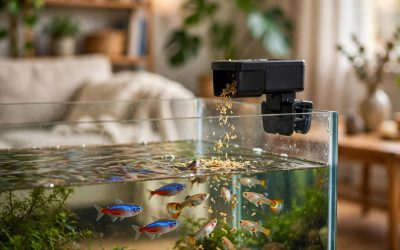
Summer heat is one of the fastest ways to stress an aquarium. Warm water holds less dissolved oxygen, speeds up fish metabolism, and can push cold-water species such as axolotls and fancy goldfish into genuine danger. A refrigeration chiller solves the problem, but it is expensive and needs plumbing. An aquarium cooling fan is the simpler tool: it blows air across the water surface, speeds up evaporation, and lets that evaporation carry heat out of the tank.
That simplicity comes with honest limits, and this guide states them plainly. A fan can only cool a few degrees, it works worse as room humidity rises, and every bit of cooling is paid for in evaporated water that you have to replace. Within those limits, the right fan is cheap to run, quiet enough for a bedroom, and easy to fit in minutes. The five models below cover the main control styles: automatic temperature control, multi-head arrays, USB-powered clips for thick rims, cross-flow airflow, and a compact single fan with a timer.
How to Choose an Aquarium Cooling Fan
Start with realistic expectations. Evaporative cooling typically lowers aquarium water by about 2 to 4°F. Brand claims of 6 or 7°F assume dry room air and a small tank; on a humid day the same fan may manage only 1 or 2°F. A fan also cannot push water far below room temperature, so if your room sits at 86°F and your axolotl needs 64°F, no fan will get you there and a chiller is the honest answer.
Next, match fan heads to tank length. One head is enough for a nano tank. Two or three heads spread across the surface cool a longer tank evenly instead of chilling one corner. More heads move more air, but they also evaporate more water, so size the array to the tank rather than defaulting to the biggest unit.
Mounting is where many purchases go wrong. Screw clamps grip glass well and suit rimless tanks and narrow rims, but the wide plastic trim on many rimmed aquariums blocks them. Clip designs with a wide jaw fit thicker walls, sometimes up to about an inch. Measure your rim or glass thickness before ordering, and remember that a fan needs open water to blow across, so a tight lid has to be lifted, vented, or replaced with mesh.
Controls decide how much attention the fan needs. Basic models offer two or three manual speeds. A timer model can shut off overnight, when room air cools and the fan might overcool a small tank. A temperature probe with automatic start and stop is the most hands-off option: it holds a set point and only runs when the water rises above it.
Finally, plan for evaporation and noise. Expect to top off noticeably more often, and in a saltwater tank always top off with fresh water, because the salt stays behind and salinity creeps upward. An auto top-off unit pairs well with a fan. On noise, small fans at full speed are audible across a quiet room; brushless motors and lower night speeds help, but no array is silent at maximum.
AQUASMITH Aquarium Chiller Fan with Temperature Control

The AQUASMITH is the set-and-forget pick. A ceramic temperature probe sits in the water, an LED controller shows the real temperature, and the fan starts automatically when the water climbs about a degree above your setting and stops when it falls back. The minimum setting of 59°F suits cold-water animals, and the dual brushless motors keep noise low for a fan of this output.
The clip grips glass from 0.2 to 0.94 inches thick, which covers most rimless tanks but not wide plastic rims. Treat the claimed 3 to 7°F cooling range as a best case: expect the lower half of it in normal room humidity.
Specs
- Fan heads: 2 built-in fans with brushless motors
- Speed control: 3 speed modes
- Control: temperature probe with LED display, auto start and stop, settings down to 59°F
- Power: 7W
- Mounting: clip fits glass 0.2 to 0.94 inches thick, airflow outlet tilts 30 degrees
- Size: 8.66 x 3.86 x 1.63 inches
Pros:
– True thermostat control holds a set temperature without daily adjustment
– Display shows actual water temperature at a glance
– Brushless motors are quiet on the lower speeds
Cons:
– Cooling claims are best-case figures for dry air
– Probe and controller add cables to manage
– Clip cannot fit rims wider than about an inch
Who it suits: Axolotl, shrimp, and reef nano keepers who need stable temperatures without babysitting a manual fan.
hygger Aquarium Chillers Fan, 3-Fan Head

The hygger 3-head array is built for longer tanks. Three independent fan heads sit along the rim, each one can be angled separately, and an external controller offers five wind levels so you can trade airflow against noise through the day. The ABS shells and copper-core motors are a step up in build from the cheapest single fans.
There is no thermostat here: the controller sets speed, and the fan runs until you switch it off or put it on a plug timer. Three heads also evaporate a lot of water, so daily top-offs become routine on an open-top tank.
Specs
- Fan heads: 3 independent heads, individually adjustable angles
- Speed control: 5 wind levels via external controller
- Power: AC adapter with inline controller
- Mounting: screw clamps on the tank rim
- Use: freshwater and saltwater tanks, brand guidance up to about 24 inches of tank length
- Build: ABS shell, copper-core motors, FDB bearings
Pros:
– Covers a long water surface evenly
– Each head can be aimed where heat builds up
– Five speed steps give fine control over noise and airflow
Cons:
– No temperature probe, so it cannot switch itself off at a set point
– High evaporation means frequent top-offs
– Clamps need a rim or glass edge they can grip
Who it suits: Planted and community tanks in the 20 to 40 gallon range sitting in warm rooms.
PAIZOO Aquarium Chiller Fan, 6.4W

The PAIZOO solves the mounting problem that defeats most cooling fans. Its extra-wide clip fits aquarium walls up to 26mm thick, about an inch, which includes many rimmed tanks with plastic trim. Two turbo fans offer three modes, from a soft setting for the evening to a high setting for heatwave afternoons, and the head tilts 45 degrees to aim airflow.
Power comes over USB at 5V, and a 5V/2A adapter is included in the box. That makes the PAIZOO easy to run from a power bank during an outage, though USB power also caps its peak airflow below the larger 12V arrays. The brand rates it for tanks up to about 20 gallons.
Specs
- Fan heads: 2 turbo fans
- Speed control: 3 modes (soft, standard, high)
- Power: USB 5V/2A, adapter included, 6.4W, 150 cm cable
- Mounting: wide clip fits walls under 26mm (about 1 inch) thick
- Angle: 45-degree adjustable tilt
- Motor: dual-drive pure copper motor
Pros:
– Clip fits thick rims that most screw clamps cannot
– USB power can run from a power bank in an outage
– Long cable makes placement flexible
Cons:
– Best limited to tanks up to about 20 gallons
– No timer or thermostat control
– USB power limits maximum airflow
Who it suits: Owners of rimmed tanks, axolotl setups, and renters who need cooling without modifying a lid.
JEREPOND Aquarium Cooling Fan, Cross-Flow, 4W

The JEREPOND takes a different approach to airflow. Instead of round fan heads, it uses a cross-flow (tangential) impeller that pushes a wide, even curtain of air across the whole water surface. That avoids the single cold spot a small round fan creates and keeps surface movement uniform.
A simple knob adjusts speed steplessly rather than in fixed steps, so you can dial in the quietest setting that still holds temperature. At 4W on DC 12V power, it sips electricity. The trade-off is punch: the gentle airflow has less force than a focused multi-head array, and the fixed-width body must match your tank length.
Specs
- Design: cross-flow (tangential) fan for broad, even airflow
- Speed control: stepless adjust knob
- Power: DC 12V, 4W
- Mounting: rim-mounted unit, check body width against tank length
- Use: freshwater and saltwater aquariums
- Control: manual knob, no display
Pros:
– Even airflow across the surface with no single cold spot
– Knob gives finer control than fixed speed steps
– Very low power draw
Cons:
– Gentle airflow has less cooling force on large tanks
– Fixed width must suit the tank length
– No probe, timer, or temperature display
Who it suits: Rimless planted tanks and aquascapes where even, gentle surface movement matters more than raw cooling power.
hygger Aquarium Chillers Fan, 1-Fan Head with Timer

This single-head hygger is the compact option for small tanks. One fan head clamps to the rim, the head angle adjusts to aim airflow across the surface, and the inline controller combines speed adjustment with timer settings, so the fan can shut itself off overnight instead of overcooling a small volume of water while you sleep.
A timer is a schedule, not a thermostat: it cannot react to a sudden hot afternoon. One head also only moves enough air for small aquariums, and even a nano tank will need more frequent top-offs with a fan running. For a desktop shrimp tank in a warm room, though, the simplicity is the point.
Specs
- Fan heads: 1 fan head with adjustable angle
- Speed control: adjustable via inline controller
- Control: built-in timer settings on the controller
- Power: AC adapter, low-voltage fan
- Mounting: screw clamp on the tank rim
- Use: freshwater and saltwater, small tanks
Pros:
– Timer prevents overnight overcooling of small tanks
– Compact footprint suits nano and desktop aquariums
– Simple setup with few parts
Cons:
– Single head only suits small tanks
– Timer cannot react to temperature changes
– Evaporation still increases on an open-top tank
Who it suits: Desktop nano and shrimp tanks that need light, scheduled cooling in a warm room.
Comparison Table
| Product | Fan heads | Control | Power | Mounting fit | Best for |
|---|---|---|---|---|---|
| AQUASMITH Temperature Control Fan | 2 | Probe, auto start/stop, display | 7W | Clip, glass 0.2 to 0.94 in | Set-and-forget cooling |
| hygger 3-Fan Head | 3 | 5 speeds, external controller | AC adapter | Screw clamps | Longer tanks |
| PAIZOO 6.4W | 2 | 3 manual modes | USB 5V/2A | Wide clip, walls under 1 in | Rimmed tanks |
| JEREPOND Cross-Flow | Cross-flow bar | Stepless knob | DC 12V, 4W | Rim-mounted | Even surface airflow |
| hygger 1-Fan Head with Timer | 1 | Speed plus timer | AC adapter | Screw clamp | Nano tanks |
FAQ
How much can an aquarium cooling fan lower the temperature?
Expect about 2 to 4°F in a typical room. Higher figures quoted by brands assume dry air and small tanks. Humidity is the ceiling: the drier the room air, the more evaporation the fan can drive, and the more cooling you get.
Do cooling fans make evaporation worse?
Yes, evaporation is the cooling mechanism, so faster water loss is unavoidable. Top off more often, and in a saltwater tank always top off with fresh water, because the salt stays behind and salinity creeps up as water evaporates.
Can a cooling fan replace a refrigeration chiller?
Only when the drop you need is small. If the tank must sit well below room temperature, hold a precise figure through a heatwave, or house cold-water species in a hot room, a chiller is the right tool. Fans handle the common case of a tank running a few degrees too warm.
Will a cooling fan fit a rimmed aquarium?
It depends on the clamp or clip range, so measure your trim first. Many screw clamps suit rimless glass and narrow rims only. Wide-clip models fit walls up to about an inch thick, which covers most rimmed tanks.
Conclusion
Match the fan to the job. Choose the AQUASMITH if you want a probe-driven fan that holds a set temperature on its own. Choose the hygger 3-head array for even coverage on a longer tank, the PAIZOO if a thick rim rules out screw clamps, the JEREPOND cross-flow for gentle, uniform surface movement, and the hygger 1-head with timer for a nano tank that only needs scheduled help. Whichever you pick, budget for extra top-off water: that evaporation is not a side effect, it is the cooling itself.
More from Amazon
Programs that pair well with the guide above. Offers and eligibility are set by Amazon and may change.
Set up recurring deliveries of everyday items on eligible products. Terms and savings are set by Amazon.
Explore Subscribe & SaveFree shipping on eligible items, Prime Video and more. Eligible new members can start with a free trial.
Start a Prime free trialAudiobooks and podcasts to listen to on the go. Eligible new members can start with a free trial.
Try Audible freeRead from a large library of eBooks and audiobooks on any device. Check Amazon for current plans.
Explore Kindle UnlimitedAs an Amazon Associate we earn from qualifying purchases.








Write Your Review
No reviews yet. Be the first to share your experience!