

Key takeaways
- First sprayer, occasional furniture: A compact handheld unit can be a practical, lower-cost entry point if the coating is within its limits and you can clean it immediately after use.
- Cabinet doors or several pieces of furniture: A three-stage turbine kit with a choice of nozzle sizes is a more flexible pick. It offers a dedicated air source and is easier to adapt between thin finishes and compatible heavier coatings.
- Frequent projects or larger work: Consider a higher-powered turbine kit with a long hose, replaceable parts and readily available service components. Extra power is useful only if the gun and nozzle are also suited to the material.
- Very thick wall paint: Check the paint and sprayer manuals before buying. Many turbine HVLP systems require thinning or are not intended for standard wall paint; an airless sprayer may be a better tool for that job.
- Small workspace: Favor a manageable hose, a stable turbine that can sit outside the immediate spray area, and a gun with a narrow fan setting. Plan ventilation and masking before spraying.
Best HVLP Paint Sprayers for Smooth Finishes
The best HVLP paint sprayers for smooth finishes are turbine models with adjustable material flow, replaceable nozzle sets and a fan pattern that can be narrowed for small work or widened for broad panels. For most homeowners, a three-stage turbine kit is the best balance of finish quality and capability; choose a two-stage model for thin coatings and occasional projects, or a four- to five-stage system if you regularly spray thicker coatings or larger surfaces.
HVLP means high volume, low pressure: the sprayer moves a relatively large volume of air at lower pressure than conventional spray equipment. That can make controlled application easier and reduce overspray, but it does not eliminate airborne paint or the need for suitable ventilation and protective equipment. Smooth results depend just as much on the right nozzle, paint preparation, distance and steady movement as on turbine power.
Our top picks
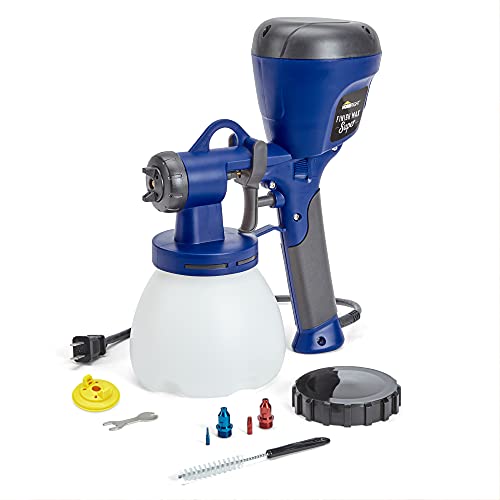


As an Amazon Associate we earn from qualifying purchases at no extra cost to you. Ratings are shown as listed on Amazon.
Quick comparison: choose by project, not just turbine stages
The figures below are typical ranges for common turbine classes, not specifications for every model. Always check the manufacturer’s exact setup: turbine stages alone do not guarantee a particular airflow, pressure or ability to spray a given coating.
| Sprayer type | Typical setup | Best suited to | What to watch |
|---|---|---|---|
| Two-stage turbine kit | About 1.0–1.5 mm nozzle; roughly 1 qt (0.95 L) cup | Thin stains, sealers, small furniture and occasional DIY | May need extra thinning or slower passes with heavier paint |
| Three-stage turbine kit | About 1.3–2.0 mm nozzle; roughly 1 qt (0.95 L) cup | Furniture, cabinets and mixed household projects | Match nozzle and thinning to the coating; thicker paint may still challenge it |
| Four- to five-stage turbine kit | About 1.8–2.5 mm nozzle; roughly 1 qt (0.95 L) cup | Frequent use, larger projects and coatings approved for that system | Higher purchase cost and turbine noise; follow coating limits |
| Compact handheld HVLP | Often a 0.8–2.0 mm nozzle; commonly 0.7–1.0 L cup | Small, occasional jobs where quick setup matters | Heavy paint, long sessions and cup weight can make control harder |
Nozzle ranges are illustrative, not interchangeable standards. A larger opening generally suits more viscous material, but the manufacturer’s recommended nozzle and coating instructions take priority.
Which type makes sense for your situation?
- First sprayer, occasional furniture: A compact handheld unit can be a practical, lower-cost entry point if the coating is within its limits and you can clean it immediately after use.
- Cabinet doors or several pieces of furniture: A three-stage turbine kit with a choice of nozzle sizes is a more flexible pick. It offers a dedicated air source and is easier to adapt between thin finishes and compatible heavier coatings.
- Frequent projects or larger work: Consider a higher-powered turbine kit with a long hose, replaceable parts and readily available service components. Extra power is useful only if the gun and nozzle are also suited to the material.
- Very thick wall paint: Check the paint and sprayer manuals before buying. Many turbine HVLP systems require thinning or are not intended for standard wall paint; an airless sprayer may be a better tool for that job.
- Small workspace: Favor a manageable hose, a stable turbine that can sit outside the immediate spray area, and a gun with a narrow fan setting. Plan ventilation and masking before spraying.
What separates a controllable sprayer from a frustrating one?
Pattern and flow adjustments
Look for a fan that can be switched or adjusted between vertical, horizontal and round patterns. A vertical fan is useful for moving across a cabinet door; a horizontal fan suits moving up a leg or narrow panel. A round pattern helps with trim and small details. Adjustable material flow lets you reduce output for edges and increase it for broad, flat surfaces. Airflow controls vary by design, so verify which settings the gun actually provides.
Too much flow for your travel speed produces runs; too little can leave a dry, pebbly finish. Make a test pass on cardboard or scrap with the same preparation and coating. Hold the gun square to the surface, keep a consistent distance, and overlap each pass by roughly half the fan width unless the manual recommends otherwise.
Nozzle size and paint thinning
Smaller nozzles are commonly used for thin stains and fine finishes; larger ones pass more viscous coatings. The right choice depends on both the material and the sprayer’s available air. Start with the coating maker’s spray instructions and the sprayer maker’s nozzle chart. If thinning is allowed, add only the recommended thinner in small measured amounts. Excess thinning can reduce coverage and change how a coating dries.
There is no universal “HVLP thinning ratio.” Some water-based products spray as supplied through a suitable setup, while others require adjustment. Strain paint when the product instructions allow it, and do not use a viscosity cup result as a substitute for the manufacturer’s compatibility guidance.
Turbine power and overspray
More turbine stages generally indicate greater pressure capability, but stage count is not a direct measure of finish quality. Check the sprayer’s stated materials, nozzle options, hose length and operating guidance. A system that is underpowered for a coating can sputter or produce a coarse pattern; excessive flow or poor technique can create overspray even with a capable turbine.
Reduce waste by using the narrowest pattern that covers the work, setting material flow only as high as needed, and testing before approaching the finished piece. Mask nearby surfaces and use appropriate ventilation. HVLP is not dust-free or fume-free.
Setup and cleanup: where finish quality is won or lost
- Prepare the coating and surface. Follow the paint instructions, strain if appropriate, and sand or clean the work as required. Dust and dried particles can spoil the finish or clog the fluid path.
- Fit the recommended nozzle. Confirm that the needle, nozzle and air cap are clean, correctly matched and seated. A poor seal can cause leaks or an uneven pattern.
- Set up a test area. Begin with modest flow and the recommended pattern. Adjust one setting at a time so you can tell what improved the spray.
- Clean immediately after spraying. Empty the cup and flush the system using the cleaner specified for the coating. Remove and clean the air cap, nozzle and needle as directed; avoid scratching precision openings with wire or hard tools.
- Inspect wear parts. Seals, needles and nozzles are consumables. Dried paint, abrasive cleaning and forcing parts during reassembly can shorten their life. Store the gun clean and dry.
Cleanup effort is a meaningful buying criterion. A removable cup and accessible fluid passages make frequent color changes less tedious. Turbine filters also need periodic inspection and cleaning or replacement according to the manual; a clogged filter can reduce performance. For a one-off small job, a handheld may be simpler to store. For repeated projects, a turbine system’s serviceable parts can be worth the extra setup.
Bottom line
For the broadest range of furniture and cabinet work, choose a three-stage turbine HVLP kit with adjustable flow, multiple fan patterns and at least two compatible nozzle sizes. Pick a compact handheld for small projects with thin coatings, and step up to a higher-powered turbine when frequent use or coating compatibility justifies it. Before purchase, confirm the exact paint limitations, included nozzle sizes, replacement-part availability and cleaning procedure—those details matter more to a smooth, repeatable finish than a headline power claim.

Write Your Review
No reviews yet. Be the first to share your experience!