

Key takeaways
- Buying by window size: the window opening does not tell you the cabinet dimensions.
- Using an indoor cover outside: indoor fabric generally lacks the UV resistance, water shedding, and wind attachment needed outdoors.
- Choosing the largest size: excess fabric flaps, holds water, and can pull on the mounting hardware.
- Covering a wet unit: moisture sealed inside can cause more damage than ordinary exposure.
- Blocking drainage: water must still leave the air conditioner and window assembly.
- Leaving the cover on during operation: this can obstruct airflow and overheat the appliance.
The best window air conditioner covers are insulated indoor covers for drafts and dust, or weather-resistant outdoor covers for units left installed through the off-season; the right choice depends on your unit’s exposed dimensions, climate, and whether the cover can be secured without blocking drainage.
Our top picks


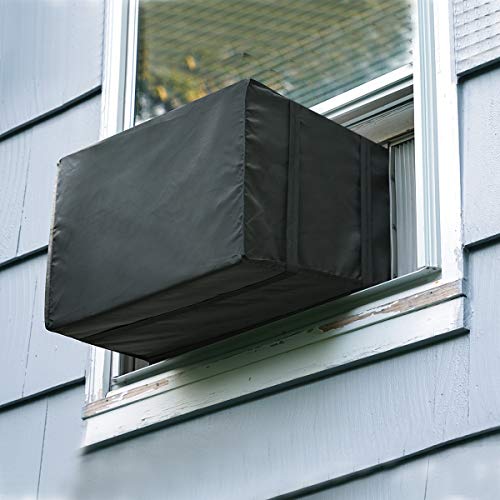

As an Amazon Associate we earn from qualifying purchases at no extra cost to you. Ratings are shown as listed on Amazon.
Indoor and outdoor window AC covers: the key difference
These two cover types solve different problems. An indoor cover fits over the room-side portion of the air conditioner and helps reduce cold-air infiltration, dust, and drafts when the unit is not running. It is usually made from quilted polyester, vinyl, or a fabric shell with foam insulation. It should be relatively easy to remove because you may take it off whenever the unit runs.
An outdoor cover fits over the exterior cabinet. It protects against rain, snow, leaves, insects, and ultraviolet exposure when the air conditioner remains mounted in the window. Outdoor covers are normally made from coated polyester, vinyl, or another water-resistant fabric, with elastic edges, straps, buckles, or drawcords to resist wind.
Neither type is a substitute for removing the air conditioner. In regions with freezing temperatures, removing and storing the unit indoors is usually the strongest protection against freeze-thaw damage, rust, and water entering the building. If removal is impractical, use a breathable, properly fitted exterior cover and keep the unit’s drainage path clear.
Head-to-head comparison
| Feature | Indoor cover | Outdoor cover |
|---|---|---|
| Primary job | Reduce drafts, dust, and room-side heat loss | Shield the exterior cabinet from weather and debris |
| Typical materials | Quilted polyester, vinyl, or foam-backed fabric | Coated polyester, vinyl, or laminated fabric |
| Useful insulation | About 3–10 mm of foam or quilted padding | Usually little insulation; weather resistance matters more |
| Attachment | Elastic hem, hook-and-loop panels, ties, or adhesive weatherstripping | Elastic hem, drawcord, buckle straps, or hook-and-loop straps |
| Best climate | Cold or windy rooms during the heating season | Wet, snowy, dusty, or high-wind conditions |
| Typical size range | Approximately 14–26 in. wide and 12–18 in. high | Approximately 16–28 in. wide and 12–20 in. high |
| Typical market range | About $10–$35 | About $15–$50 |
The dimensions above are common ranges, not universal standards. Window air conditioners vary substantially, so the printed size label is less important than the actual measurements and the cover’s adjustment range.
How to choose the best cover for your situation
| Your situation | Best choice | Why |
|---|---|---|
| Unit removed every winter | Indoor cover or no permanent exterior cover | The stored unit avoids weather exposure; an indoor cover limits dust and drafts while installed. |
| Unit stays installed in a mild, dry climate | Lightweight outdoor cover with elastic hem | Simple protection is sufficient when snow, ice, and strong wind are uncommon. |
| Cold winter and frequent drafts | Foam-backed indoor cover plus sealed side gaps | The indoor side is where uncomfortable drafts enter the room. |
| Heavy rain, snow, or coastal air | Coated outdoor cover with straps and corrosion-conscious maintenance | Straps resist wind, while a water-resistant shell limits precipitation and salt-laden debris. |
| Rented home or frequent removal | Elastic or hook-and-loop cover | It installs without permanent hardware and is quicker to remove. |
| Exposed high-rise or windy opening | Adjustable outdoor cover with two or more securing points | A loose elastic edge can flap, admit water, and wear rapidly in gusts. |
Fit matters more than insulation thickness
Measure the air conditioner itself, not the window opening. For an indoor cover, measure the room-side grille or cabinet width and height, including any projecting control panel. For an outdoor cover, measure the exterior cabinet width, height, and projection from the wall. Also note fixed brackets, side curtains, handles, drain fittings, and the direction in which the cover must open.
Choose a cover whose stated range includes your measurements without stretching the fabric to its limit. A useful target is roughly 1–2 inches of spare width and height for an indoor cover, provided the hem can still seal. Too small a cover leaves gaps; too large a cover billows, collects condensation, and places more load on straps and seams.
For example, if the exterior cabinet measures 23 inches wide by 15 inches high, a cover listed for 22–25 inches wide and 14–17 inches high is a better fit than a much larger 24–30-inch model. The smaller range should still accommodate the cabinet’s depth and any mounting hardware.
Attachment styles compared
Elastic hems
Elastic is fast and convenient, especially for indoor covers and sheltered windows. It works best when the cover closely matches the cabinet shape. Its weakness is long-term exposure to sunlight, heat, and cold: elastic gradually loses tension, allowing wind and dust underneath.
Drawcords
A drawcord allows more precise tightening around irregular cabinets. Look for a cord lock that can be operated while wearing gloves. Do not cinch it over sharp corners or drainage components, where concentrated pressure can damage the cover or the air conditioner.
Hook-and-loop panels
Hook-and-loop closures are useful when a cover must fit around brackets or cables. They are easy to adjust but can collect lint and lose grip when wet or clogged with debris. Wide panels generally hold better than narrow tabs.
Buckles and straps
Straps are the strongest option for windy outdoor installations because they transfer force across the cover instead of relying only on edge tension. Choose UV-resistant webbing and corrosion-resistant buckles. A strap should be snug, not so tight that it crushes the fabric or blocks the unit’s drain.
Weather resistance is not the same as waterproofing
For an outdoor cover, prioritize a coated fabric with sealed or well-finished seams, a secure lower edge, and resistance to ultraviolet light. “Water-resistant” fabric can shed rain while still allowing moisture through stitching or prolonged contact. A fully sealed cover may protect better in heavy rain but can trap condensation if it is placed over a damp unit.
Breathability is valuable when the unit remains outdoors for months. Trapped moisture promotes rust, mildew, and corrosion around electrical components. Before covering, switch off power, clean the filter and cabinet, let the unit dry completely, and inspect it after storms. Never operate the air conditioner while an exterior cover is installed.
Installation and maintenance that extend cover life
- Turn off and unplug the unit. If it is hard-wired or inaccessible, use the appropriate circuit disconnect rather than pulling on a cable.
- Clean the filter and accessible cabinet surfaces. Dust and organic debris left under a cover can retain moisture and create odors.
- Let the unit dry. Covering wet metal or fabric traps water against the cabinet.
- Check drainage and hardware. Keep the outdoor drain area open and make sure brackets, side panels, and window seals are sound.
- Fit the cover without forcing it. The hem should sit below the cabinet edges, while straps should avoid sharp corners, vents, and electrical connections.
- Inspect monthly in severe weather. Look for loose stitching, torn corners, standing water, mildew, and loosened straps.
- Remove, wash, and dry the cover at season’s end. Follow its care label; many coated fabrics should be wiped or hand-washed rather than machine-dried.
The parts most likely to wear first are elastic, hook-and-loop surfaces, strap stitching, and corners that rub against brackets. Replacing a cover when these areas fail is safer than patching a large opening with tape, which can trap moisture and leave adhesive residue on the cabinet.
Common buying mistakes
- Buying by window size: the window opening does not tell you the cabinet dimensions.
- Using an indoor cover outside: indoor fabric generally lacks the UV resistance, water shedding, and wind attachment needed outdoors.
- Choosing the largest size: excess fabric flaps, holds water, and can pull on the mounting hardware.
- Covering a wet unit: moisture sealed inside can cause more damage than ordinary exposure.
- Blocking drainage: water must still leave the air conditioner and window assembly.
- Leaving the cover on during operation: this can obstruct airflow and overheat the appliance.
Bottom line
Choose a padded indoor cover when your main concern is winter drafts, dust, and room comfort. Choose a fitted outdoor cover when the air conditioner remains in the window and must face rain, snow, debris, or wind. For the best result in a harsh climate, prioritize accurate cabinet measurements, adjustable attachment points, UV-resistant stitching, and moisture management over a thick but poorly fitting shell. If your climate brings prolonged freezing weather, removing and storing the air conditioner remains more protective than any cover.

Write Your Review
No reviews yet. Be the first to share your experience!