

Key takeaways
- For full sun: prioritize solution-dyed fabric, a ventilated mattress base, and a canopy that can be removed or repositioned.
- For frequent rain: choose zippered, removable covers and quick-dry foam rather than dense indoor-style foam.
- For poolside use: select chlorine-tolerant fabric and avoid leaving cushions on wet decking overnight.
- For a covered porch: standard outdoor polyester may be adequate if cushions are brought inside during storms.
Best Outdoor Daybeds for Relaxing in Style
The best outdoor daybeds are the ones whose frame, fabric, canopy, and dimensions match your patio’s weather exposure and how often you will actually use them: powder-coated aluminum suits low-maintenance everyday use, teak suits a warm natural look, and steel or woven designs can offer value when properly protected.
Outdoor daybeds are larger and more demanding than ordinary patio loungers. A good choice must support people safely, fit through access points, shed rain instead of trapping it, and remain comfortable after repeated exposure to sun, humidity, and wind. The comparison below focuses on the details that product listings often leave out.
Our top picks

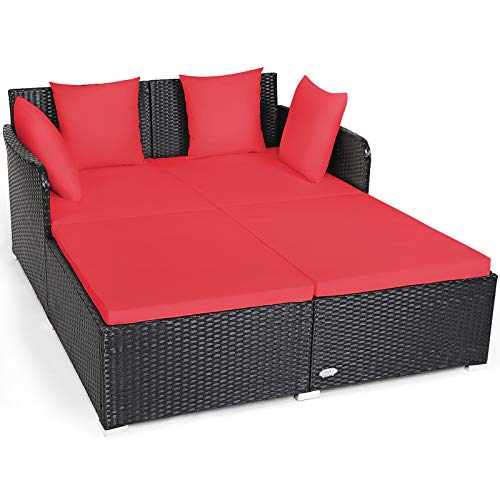


As an Amazon Associate we earn from qualifying purchases at no extra cost to you. Ratings are shown as listed on Amazon.
Quick comparison of outdoor daybed types
| Daybed type | Typical size | Frame material | Typical weight capacity | Best for | Main care issue |
|---|---|---|---|---|---|
| Aluminum canopy daybed | 78–84 in. wide × 72–84 in. deep | Powder-coated aluminum | 500–800 lb | Frequent use and humid climates | Protecting the finish from scratches and loose covers |
| Teak platform daybed | 76–82 in. wide × 76–86 in. deep | Solid teak | 500–700 lb | Natural-looking patios and covered terraces | Cleaning, staining, and gradual color change |
| Steel-framed daybed | 70–80 in. wide × 70–80 in. deep | Powder-coated or painted steel | 450–700 lb | Value-conscious buyers and sheltered patios | Chips can expose steel to rust |
| Woven-resin daybed | 72–82 in. wide × 72–84 in. deep | Aluminum core with synthetic wicker or resin weave | 450–650 lb | Decorative patios and pool areas | Dirt collecting in the weave and fading in strong sun |
| Compact single daybed | 35–45 in. wide × 75–82 in. deep | Aluminum, steel, or wood | 250–400 lb | Small balconies and narrow decks | Less stability in exposed wind |
These are useful planning ranges rather than specifications for a particular model. Always confirm the manufacturer’s stated capacity, whether that rating includes cushions, and whether the load must be distributed across the mattress platform.
Which frame material is right for your patio?
Powder-coated aluminum: the easiest all-rounder
Aluminum does not rust, is relatively light, and is usually the strongest choice for a patio that receives regular rain or salty coastal air. Powder coating adds color and surface protection, but it is not indestructible. Dragging the daybed, rubbing it against masonry, or tightening hardware against the finish can create chips that eventually allow corrosion of fittings and discoloration beneath the coating.
Choose aluminum when you want to move the daybed seasonally or clean it with minimal effort. A heavier, thicker-walled frame is preferable in windy locations because lightweight furniture can shift or overturn even when its advertised weight capacity is high.
Teak: attractive, heavy, and maintenance-sensitive
Teak is naturally suitable for outdoor furniture and develops a silver-gray surface when left untreated. It is also much heavier than aluminum, which improves stability but makes delivery, assembly, and relocation more difficult. Its natural oils do not make the cushions weatherproof; water can still sit between the mattress and wooden slats.
Use teak for a covered patio or a design-led space where the changing wood color is part of the appeal. Wash it with a soft brush and mild soapy water. If you want to preserve the honey-brown appearance, use a product specifically labeled for teak rather than household varnish, which can peel and trap moisture.
Steel: strong value, but inspect the coating
Steel can provide a rigid frame at a lower general market price, often about $400–$1,200 for a complete daybed depending on size, cushioning, and canopy design. Its weakness is corrosion: a small chip, poorly sealed tube end, or scratched fastener can become a rust point.
Steel works best under a roof or on a patio where you can use a breathable cover. Inspect the underside of the frame, welds, and drainage holes at least twice a year. Touch up small coating damage promptly with a compatible exterior metal product.
Cushion fabrics: water-resistant is not waterproof
Look for solution-dyed acrylic, polyester designed for outdoor use, or olefin covers with a removable zipper. Solution-dyed fibers generally retain color better than fabric dyed only on the surface, while olefin is often valued for quick drying and resistance to mildew growth. The precise performance depends on the weave, coating, seams, and filling.
- For full sun: prioritize solution-dyed fabric, a ventilated mattress base, and a canopy that can be removed or repositioned.
- For frequent rain: choose zippered, removable covers and quick-dry foam rather than dense indoor-style foam.
- For poolside use: select chlorine-tolerant fabric and avoid leaving cushions on wet decking overnight.
- For a covered porch: standard outdoor polyester may be adequate if cushions are brought inside during storms.
Most outdoor daybed cushions are water-resistant rather than waterproof. Rain may bead on the cover while entering through seams, zippers, or the underside. A canopy reduces direct exposure but does not create a sealed roof, especially when wind blows rain sideways.
Canopy coverage and wind safety
A canopy is valuable for reducing glare and surface temperature, but its coverage varies considerably. A fixed roof provides the most predictable shade, while a retractable fabric canopy lets you choose between sun and shade. A canopy that extends 12–24 inches beyond the mattress on each side gives better midday protection than one that merely matches the sleeping surface.
Do not treat a canopy as a windbreak. An extended fabric panel increases the furniture’s wind-catching area. On an exposed deck, retract the canopy before storms and use the manufacturer’s recommended anchoring method. If the daybed has no anchoring provision, position it against a stable wall while keeping drainage and access clear.
Choosing the right size: measure the whole footprint
Measure more than the mattress. Add room for the canopy frame, reclining or sliding parts, steps, and a path for walking around the bed. A practical minimum is 24 inches of clear passage on one accessible side; 30–36 inches is more comfortable where people regularly carry drinks or towels.
For example, suppose a daybed is 80 inches wide and 78 inches deep, with a recommended 30-inch circulation zone on three sides. The usable planning footprint is:
80 + 30 + 30 = 140 inches wide
78 + 30 = 108 inches deep
That is approximately 11 feet 8 inches by 9 feet, before allowing for a side table or grill. A product that technically fits on a 10-by-10-foot patio may therefore feel crowded in daily use.
Decision matrix: match the daybed to the situation
| Your situation | Best choice | Why | Compromise |
|---|---|---|---|
| Small balcony or narrow deck | Compact single daybed, about 35–45 in. wide | Leaves room for circulation and has less visual bulk | Usually supports one person and offers limited shade |
| Daily family use | Aluminum frame with quick-dry cushions | Light maintenance and better tolerance of repeated use | May look less warm than teak |
| Coastal or very humid location | Aluminum with stainless or corrosion-resistant hardware | Reduces rust risk and is easier to rinse clean | Salt still requires regular washing |
| Covered patio and design priority | Teak platform or woven-resin daybed | Strong visual appeal with less direct weather exposure | Wood and weave need more detailed cleaning |
| Occasional seasonal use | Steel or aluminum model with a breathable cover | Controls cost while protecting the frame between uses | Steel needs closer inspection for coating damage |
| Windy, exposed terrace | Heavy fixed-frame daybed with retractable canopy | Lower risk of movement when the canopy is closed | Heavy furniture is difficult to relocate |
Care realities that affect ownership
The fabric and foam usually show wear before the frame does. Common early problems include flattened seat edges, mildew odor from cushions stored damp, faded canopy fabric, and broken zipper pulls. Buy a daybed with replacement cushion covers or a replaceable mattress if possible; replacing an entire custom cushion set can cost roughly $150–$600 or more depending on dimensions and fabric.
- Brush off leaves and grit weekly so abrasive particles do not work into the fabric or weave.
- Blot spills promptly, then clean with mild soap, lukewarm water, and a soft brush.
- Rinse cleaning residue thoroughly; soap left in fabric can attract dirt.
- Stand cushions on their edge until completely dry before storing or covering them.
- Use a breathable cover rather than sealing damp furniture under plastic.
- Check bolts, canopy joints, feet, and drainage openings every few months.
Never pressure-wash cushions, use chlorine bleach unless the fabric maker permits it, or store wet foam in a closed deck box. For winter storage, clean and dry every component first, remove the canopy if practical, and keep cushions in a dry, ventilated area.
Final buying recommendation
For most uncovered patios, a powder-coated aluminum daybed with solution-dyed fabric, quick-dry cushions, a retractable canopy, and a capacity of at least 600 pounds offers the most balanced ownership experience. Choose teak when appearance and weight are advantages, steel when sheltered value matters, and a compact single design when preserving usable patio space is more important than accommodating two people.
Before ordering, verify the assembled dimensions, doorway clearance, frame weight, distributed weight capacity, replacement-cover availability, canopy removal instructions, and whether the warranty covers fading, rust, and fabric seams separately. Those details are more predictive of satisfaction than the daybed’s appearance in a product photograph.

Write Your Review
No reviews yet. Be the first to share your experience!