

Key takeaways
- Best Motorcycle GPS Devices for 2026 The best motorcycle GPS for most riders is the Garmin zūmo XT2 because it combines a large, bright screen, glove-friendly controls, IPX7 weather protection, strong route planning, and a broad range of motorcycle-specific navigation…
Best Motorcycle GPS Devices for 2026
The best motorcycle GPS for most riders is the Garmin zūmo XT2 because it combines a large, bright screen, glove-friendly controls, IPX7 weather protection, strong route planning, and a broad range of motorcycle-specific navigation features; however, the TomTom Rider 550 is a better value for frequent touring, while the Beeline Moto II is the better choice when compact size and simple turn guidance matter more than detailed mapping.
Quick comparison
| Device | Screen and visibility | Weather rating | Battery and power | Best for |
|---|---|---|---|---|
| Garmin zūmo XT2 | 6-inch, 1280 × 720 color touchscreen; high-brightness design | IPX7 | Up to about 6 hours; motorcycle cradle supports wired power | Long-distance touring and detailed route planning |
| TomTom Rider 550 | 4.3-inch capacitive touchscreen; glove-friendly operation | IPX7 | Up to about 6 hours; powered motorcycle mount available | Twisty-road planning at a lower market price |
| Beeline Moto II | Small circular display, about 47 mm across; minimal directional interface | IP67 | About 14 hours, depending on use; USB-C charging | Urban riding, smaller motorcycles, and uncluttered cockpits |
Prices vary by region and bundle, but a realistic 2026 market pattern is roughly $250–$600 for a dedicated motorcycle navigator, with compact connected devices generally at the lower end and large-screen touring units at the higher end. Include the cost of a powered cradle, security mount, case, and installation hardware when comparing packages.
Our top picks
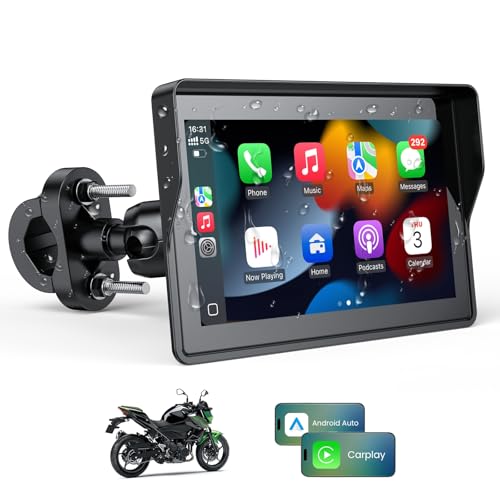

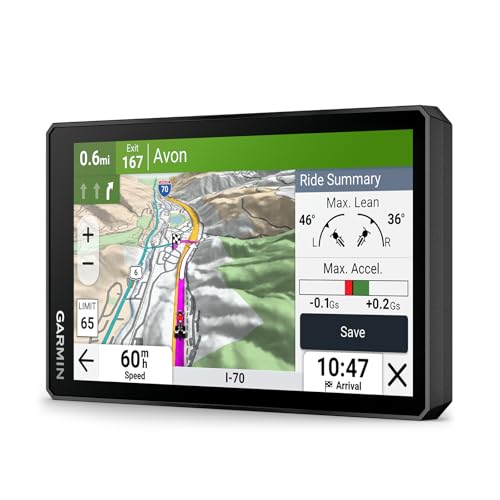
As an Amazon Associate we earn from qualifying purchases at no extra cost to you. Ratings are shown as listed on Amazon.
1. Garmin zūmo XT2: best overall motorcycle GPS
The zūmo XT2 is the strongest all-rounder for riders who regularly leave familiar roads. Its 6-inch display is much easier to read than a small phone in a tank bag, and the 1280 × 720 resolution leaves room for lane guidance, route information, and nearby fuel or accommodation without making the map feel crowded.
Its IPX7 rating means it is designed to withstand temporary water immersion, not merely light spray. The screen is intended for use in bright conditions, and the interface is practical with motorcycle gloves. Physical power and zoom controls are useful when rain makes touchscreen gestures unreliable, although most navigation interaction still takes place on the screen.
Garmin’s main advantage is route flexibility. The unit supports turn-by-turn navigation, elevation information, traffic and weather services through a connected phone, and motorcycle-oriented routing options. Riders can look for winding or adventurous roads rather than accepting the fastest motorway route. Route files can also be prepared in advance and transferred to the device.
The limitation is size. A 6-inch unit takes up more handlebar or dashboard space, and the complete mounting system adds noticeable weight. It also costs more than a basic phone mount. For riders who only need occasional directions across town, its extra mapping features may be unnecessary.
2. TomTom Rider 550: best for twisty-road planning and value
The TomTom Rider 550 remains a compelling option for riders who care more about route character than screen size. Its 4.3-inch display is smaller than the Garmin’s, but it is easier to fit behind a windscreen or above a compact instrument cluster. The IPX7 construction and motorcycle mount are suited to regular outdoor use.
TomTom’s winding roads and hilly routes options are particularly useful when the destination is less important than the journey. You can increase or reduce the intensity of the route, helping avoid a result that is either too tame or unnecessarily complicated. Turn-by-turn prompts are clear, and the device can connect to a phone for traffic information, weather data, and hands-free calling through a compatible headset.
The main compromise is aging hardware. The display is adequate rather than expansive, and route preparation is less flexible than on a large-screen modern phone or the zūmo XT2. Glove operation works best with deliberate taps rather than rapid swipes. Still, its dedicated powered mount and weather resistance make it more dependable on a long ride than relying on a phone exposed directly to vibration, heat, and rain.
3. Beeline Moto II: best compact GPS for simple guidance
The Beeline Moto II takes a different approach. Instead of showing a detailed moving map, its small circular display emphasizes direction, distance, and the next turn. The result is a clean cockpit and less visual distraction, which suits commuting, short day rides, and riders who already know the general area.
Navigation is planned through a smartphone app, while the device provides the riding guidance. Its compact form can be mounted without crowding existing gauges, and its long battery life reduces the need for permanent wiring. The IP67 rating provides protection against dust and temporary water immersion.
This is not the best choice for complex touring. You have less map context, fewer visible points of interest, and a greater dependence on the phone for route creation. If a road is closed or you want to improvise several stops, a full-screen navigator is faster to interpret. Choose the Beeline when minimalism, low weight, and long battery endurance matter more than rich cartography.
Which motorcycle GPS fits your riding situation?
| Riding situation | Recommended type | Why |
|---|---|---|
| First touring trip or limited navigation experience | Garmin zūmo XT2 | Large screen, visible prompts, broad route and point-of-interest information |
| Frequent weekend rides on winding roads | TomTom Rider 550 | Strong twisty-road planning without the cost or physical size of a 6-inch unit |
| Daily commuting on a small motorcycle | Beeline Moto II | Compact mount, simple guidance, and long battery life |
| Multi-day touring with luggage and many stops | Garmin zūmo XT2 | More map space, route detail, and visible fuel and accommodation options |
| Occasional use with a tight budget | Phone plus a weather-resistant motorcycle mount | Lowest initial cost, provided vibration isolation, power, and weather protection are handled properly |
What matters more than the headline screen size?
Glove-friendly controls
Capacitive screens can work with motorcycle gloves, but thick waterproof gloves reduce accuracy. Look for large touch targets, a simple menu structure, and physical controls for power or zoom. Test the gloves you actually ride in; a screen that works with thin summer gloves may be frustrating with insulated winter gloves.
Weatherproofing
IPX7 protects against water exposure but says little about dust. IP67 covers dust protection as well as temporary immersion. Neither rating guarantees that a USB port can remain open in heavy rain, so a permanently powered installation should use the supplied motorcycle cradle or a properly sealed charging connection.
Screen visibility
Brightness, anti-glare treatment, viewing angle, and mounting position matter as much as resolution. A screen mounted behind a tinted windscreen may be harder to read than one exposed to direct daylight. Position the unit so you can glance at it without moving your head far from the road, while keeping it clear of the instrument cluster.
Turn alerts and audio
Visual arrows are useful, but spoken instructions or headset alerts reduce the time spent looking down. Check whether the unit supports Bluetooth pairing with your helmet communicator. Phone-connected devices can lose alerts when the phone is in battery-saving mode, the navigation app is suspended, or Bluetooth reconnects poorly after a fuel stop.
Mounting and power: the overlooked ownership decision
A dedicated motorcycle GPS is only as reliable as its mount. A sturdy cradle should resist rotation on rough roads, use a locking or positive-retention mechanism, and leave access to the power connection. A vibration-damped handlebar mount is preferable on motorcycles known to transmit strong high-frequency vibration, particularly when a phone is used instead of a purpose-built navigator.
For occasional rides, internal battery capacity is convenient. For touring, wired power is safer because screen brightness, Bluetooth, route recalculation, and cold temperatures can reduce runtime. As a simple planning example, a six-hour-rated battery may provide less than a full riding day if the device is used at maximum brightness with frequent recalculation. A 10-hour ride should therefore be treated as a powered-mount job, not a battery-only trip.
Setup steps that prevent common failures
- Install the mount first. Turn the handlebars fully left and right to confirm that the device and cable do not interfere with controls, brake lines, or the windscreen.
- Connect power through a fused circuit. Use a switched source where possible, so the navigator cannot drain the motorcycle battery while parked.
- Pair the helmet communicator before leaving. Confirm that navigation prompts are audible at riding speed, not just while stationary.
- Download maps and routes in advance. This protects against weak mobile coverage and prevents a phone connection problem from becoming a navigation failure.
- Set route preferences deliberately. Verify whether toll roads, motorways, unpaved roads, and winding-road preferences are enabled.
- Clean after wet or dusty rides. Rinse grit with clean water, wipe the screen with a soft cloth, and never scrub dried mud across the display.
Durability and long-term ownership
The first parts to wear are usually not the navigation electronics. Mounting balls can loosen, locking tabs can become less positive, charging contacts can oxidize, and rubber covers can tear if repeatedly opened with dirty gloves. Inspect the cradle before every long trip and replace a loose or cracked mount rather than relying on friction alone.
Keep route files and map data backed up, and update firmware over Wi-Fi or a computer before a major trip rather than the morning you leave. Avoid leaving any navigator in direct sun on a parked motorcycle for hours; heat accelerates battery aging and can make screens temporarily difficult to read.
Final recommendation
Choose the Garmin zūmo XT2 if you want the most capable dedicated motorcycle GPS and regularly tour unfamiliar areas. Choose the TomTom Rider 550 for a smaller, often less expensive unit with excellent winding-road planning. Choose the Beeline Moto II when a compact, low-distraction pointer is enough. Whatever you buy, budget for a proper powered mount and spend time testing glove operation, Bluetooth audio, and route preferences before your first long ride.

Write Your Review
No reviews yet. Be the first to share your experience!