
Our Short List of 3


All 4 Picks at a Glance
| Product | Specs | Action |
|---|---|---|
| 1. HelloReef 15 Gallon Beginner Clownfish Saltwater Aquarium Kit — the most complete scaping bundle | Check price on Amazon | |
| 2. Coralife LED BioCube Aquarium Kit, 32 Gallon — the most room to build in | Check price on Amazon | |
| 3. Fluval Sea Evo XII Saltwater Aquarium Kit, 13.5 Gallon — compact desktop scaping | Check price on Amazon | |
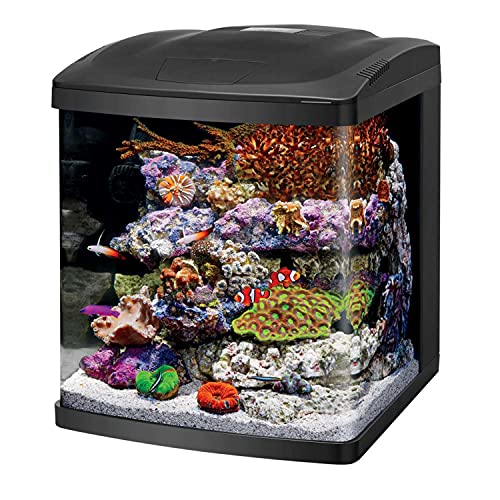 4. Coralife LED BioCube Aquarium Kit, 16 Gallon — a smaller enclosed cube | Check price on Amazon |
Key takeaways
- Compare the best marine aquarium kits for aquascaping projects, from compact nano reefs to larger all-in-one systems with room to build rockwork.
An aquascaping project in a marine tank is really a rockwork project. The layout you build from dry rock or live rock decides where corals can sit, how water moves through the structure, where fish can shelter, and how easy the tank will be to clean for years. That means the best marine aquarium kits for aquascaping projects are not simply the kits with the longest feature list. They are the kits that give you a usable display footprint, filtration that stays out of the display, lighting that can support the animals you plan to place on the scape, and enough access through the top of the tank to build, adjust, and maintain the structure.
This guide looks at genuine marine kits only: saltwater or reef-capable systems sold as a tank with included equipment. Freshwater-only kits are excluded, even when they look similar, because their lighting and filtration are not chosen for saltwater use. Bare glass boxes are also excluded as main picks, because a kit should save you from matching pumps, filters, and lights yourself. Where a kit still leaves gaps — and most do — those gaps are stated plainly below, so you know exactly what else an aquascaping project will require.
As an Amazon Associate we earn from qualifying purchases.
What Makes a Marine Kit Good for Aquascaping?
Display footprint matters more than headline volume
Two tanks with the same gallon rating can offer very different scaping options. A long, shallow footprint lets you build a spread-out rock structure with terraces and open sand channels. A cube gives you height and depth for a central island or a stacked wall, but less horizontal swimming and planting space. Before choosing a kit, picture the scape you want: a single island, two islands with a channel between them, an arch, or a low ridge along the back. Then match the tank shape to that idea instead of buying on volume alone.
Height matters too. A tall scape in a tall tank can shade its own lower levels, which affects where corals can go. A shallower tank spreads light more evenly across the rockwork, which is one reason lagoon-style layouts are popular for coral-focused projects.
Filtration should stay behind the scape, not in it
All-in-one kits hide filtration in a rear chamber. That design is well suited to aquascaping because pumps, filter media, and heaters sit behind a false wall instead of competing with your rockwork for space. It also keeps the display visually clean, which matters when the scape itself is the point of the project. Check how much room the rear chamber leaves for extras such as a small protein skimmer or additional media, because nano-sized chambers fill up quickly.
Lighting decides what the scape can support
Rock and sand do not need light, but the corals and other photosynthetic animals placed on them do. Kit lighting ranges from simple day-and-night LEDs suited to fish-focused displays and undemanding corals, through to app-controlled fixtures with more scope for coral placement. Be honest about your stocking plan. If the project is a fish-focused scape with rock and sand as the main event, basic kit lighting may be enough. If the plan involves corals at several heights, lighting becomes one of the main reasons to choose one kit over another — or to budget for an upgrade later.
Top access is an aquascaping feature
You will build the scape with your hands and arms inside the tank, often dry, before filling. A fully enclosed hood looks tidy but can restrict access while you position rock and apply epoxy. An open-top or mesh-lid design makes building and later maintenance easier, at the cost of more evaporation. Think about which trade-off suits the project before you buy.
The Picks
1. HelloReef 15 Gallon Beginner Clownfish Saltwater Aquarium Kit — the most complete scaping bundle
The HelloReef 15 Gallon Beginner Clownfish Saltwater Aquarium Kit is the closest thing in this guide to an aquascaping project in a single box. Alongside the 15-gallon all-in-one glass aquarium, the manufacturer’s listing of included items covers a filter sock, ceramic biological media, activated carbon, filter sponges, a Sicce Micra Plus return pump, a 12-inch AquaIllumination Blade LED light with app control, a Sicce Nano circulation pump, a 50W Sicce Scuba preset heater, CaribSea LifeRock, CaribSea live sand, underwater epoxy putty, a refractometer, nitrifying bacteria, and salt.
For an aquascaper, the rock, sand, and epoxy putty are the headline. Most kits make you source scaping materials separately; this one includes rock and the putty used to stabilise structures, so you can plan and build the layout as part of the initial setup rather than as a second shopping trip. The included circulation pump also matters for scaping, because flow through and around the rockwork helps prevent dead spots where detritus collects.
The honest limits are size and theme. Fifteen gallons suits a single well-planned structure rather than a complex multi-island layout, and the kit is built around a clownfish-focused starter plan, so experienced reef keepers with demanding corals may outgrow the included equipment. As a first marine aquascaping project, though, it removes more guesswork than any other kit here.
2. Coralife LED BioCube Aquarium Kit, 32 Gallon — the most room to build in
The Coralife LED BioCube Aquarium Kit, 32 Gallon offers the largest display in this guide, and for aquascaping that extra volume is its main argument. A 32-gallon cube gives you the depth and height to build a substantial central island, a stacked structure with caves, or two smaller formations with open sand between them — layouts that simply do not fit in a nano tank. The kit listing describes an integrated 24-hour timer and customisable LED lighting with bright white, sparkling blue, and colour-enhancing channels, plus a built-in filtration chamber at the back of the aquarium and a return pump rated at 264 GPH in the kit’s supporting information.
The enclosed hood keeps the presentation tidy and slows evaporation, and the timer’s sunrise, sunset, moonrise, and moonset ramps give the finished scape a natural day cycle without extra controllers. For a project where the scape is meant to be a room feature, that finished, furniture-like look counts.
The trade-offs are access and additions. Working inside a hooded cube while bonding rock takes more patience than working in an open-top tank, so many builders dry-scape on a tabletop template of the tank’s footprint first, then transfer the structure in sections. The kit does not include a heater, rock, or substrate, so those remain separate purchases, and demanding corals may eventually call for stronger lighting than the hood provides. Buy it for space and completeness of the core system, not for scaping materials.
3. Fluval Sea Evo XII Saltwater Aquarium Kit, 13.5 Gallon — compact desktop scaping
The Fluval Sea Evo XII Saltwater Aquarium Kit, 13.5 Gallon is a long-standing choice for a small marine scape on a desk or countertop. The listing gives dimensions of 22 x 11.5 x 15 inches for the 13.5-gallon glass aquarium, a length that suits a low, spread-out rock layout better than the cube shape of similarly sized rivals. Filtration is a three-stage system — mechanical, chemical, and biological media — housed in a rear compartment concealed by the tank’s honeycomb design, and the canopy includes an easy-feed door and a LED light with day and night illumination in an aluminium waterproof casing, rated at 16 watts and 1,383 lumens in the listing data.
That long, low footprint is the aquascaping story here. A single ridge of rock with a couple of arches, open sand at the front, and corals placed along the ridge reads well in this tank and leaves swimming room for small fish. The rear compartment keeps the display free of equipment, which helps a small scape look larger than it is.
The limits are the obvious ones for a nano kit. Thirteen and a half gallons restricts both the size of the structure and the stocking that can live in it, water parameters move faster than in a larger tank, and the included lighting is aimed at undemanding corals rather than light-hungry species. Rock, sand, and a heater are not part of the kit. Treat it as a focused small project, planned tightly, and it works well.
4. Coralife LED BioCube Aquarium Kit, 16 Gallon — a smaller enclosed cube
The Coralife LED BioCube Aquarium Kit, 16 Gallon scales the BioCube formula down to a 16-gallon nano tank. The Amazon listing’s included components cover the glass aquarium, LED canopy hood, integrated filtration, a built-in timer, a filter cartridge, an output discharge nozzle, flexible tubing, a media tray, a water pump, and a sponge filter, with product dimensions of 16.75 x 15 x 17.5 inches. Like its larger sibling, it uses three independent light channels on a 24-hour timer with gradual sunrise and sunset transitions, and Coralife describes the lighting as capable of sustaining healthy corals and live plants.
For aquascaping, this is the pick for a single compact structure: one island or a modest stacked wall, built with smaller rock pieces, in a space where the 32-gallon model will not fit. The enclosed hood and rear filtration keep the small display uncluttered, which matters when every visible object is part of the composition.
Be realistic about the chamber and the volume. The rear filtration space is small, so adding a protein skimmer later means choosing a compact nano model or going without. No heater, rock, or substrate is included. And at 16 gallons, the difference between total volume and actual display volume after rock and sand is noticeable, so stock conservatively.
How to Plan the Scape Around Your Kit
Start with the footprint, not the rock pile. Measure the display area of the kit you chose — remembering that rear filtration chambers reduce usable depth — and mark that outline on a table or a sheet of cardboard. Build the structure dry inside that outline. This lets you test stability, sight lines, and cleaning access before anything gets wet, and it is far easier to fix a wobble on a table than underwater.
Leave working room. Keep rock a few centimetres away from the glass so you can clean algae from every pane and so water can circulate behind the structure. Avoid leaning rock directly against the rear wall of an all-in-one tank; the gap behind the scape is where flow prevents detritus from settling unseen.
Build for the animals, in layers. Create caves and overhangs at the base for fish and invertebrates that want shelter, flat ledges at mid-height for corals that need moderate light and flow, and reserve the highest points for the most light-demanding pieces — or leave them empty if the project is fish-focused. Use epoxy putty or reef-safe cement at the main joints; a scape that survives setup can still shift months later when a burrowing animal undermines it.
Think about maintenance from day one. Every part of the sand bed should be reachable with a siphon, every glass pane reachable with a scraper, and no coral placement should block access to the filter intake or return nozzle. A beautiful scape that cannot be cleaned becomes an algae display within a year.
Finally, cycle the tank with the scape in place. The rockwork is where much of the biological filtration lives, so the structure should be built, filled, and cycled as a single system before livestock arrives. Adding and rearranging rock after stocking stresses animals and clouds the water, which defeats the purpose of planning the project properly.
What No Kit in This Guide Includes
Honesty about the category matters. Even the most complete kit here is a starting point, not a finished reef. Salt mix, a refractometer or other salinity checker (included only with the HelloReef kit above), test kits, an auto top-off or a disciplined manual top-off routine, and quarantine arrangements for new livestock are all part of a real marine project and are mostly bought separately. Stands are also separate for most of these systems, and a level, load-rated surface is non-negotiable for a filled glass tank.
It is also worth saying plainly that genuinely marine, reef-capable kits are a small category. Many products marketed as aquarium kits are freshwater systems with lighting that cannot support corals, and many excellent marine tanks are sold as bare aquariums rather than kits. The four systems above are the ones that met the brief — marine, sold as a kit with equipment included, and shaped in a way that suits building a deliberate rock aquascape. If your project grows beyond nano and small-tank sizes, expect to move from kits to a tank, sump, and separately chosen equipment.
Verdict
For a first aquascaping project with the fewest extra purchases, the HelloReef 15 Gallon kit is the standout because it includes the rock, sand, and epoxy that scaping actually requires. For the most building room in a complete enclosed system, choose the Coralife BioCube 32. For a compact desktop scape, the Fluval Sea Evo XII’s long footprint makes layouts easier than its size suggests, while the BioCube 16 suits a single small structure in a tight space.
Whichever kit you choose, plan the scape on paper and on a tabletop first, build it dry, keep it clear of the glass, and let the finished structure cycle as a whole. The kit provides the canvas and the life support; the aquascape itself is the part you design.
More from Amazon
Programs that pair well with the guide above. Offers and eligibility are set by Amazon and may change.
Set up recurring deliveries of everyday items on eligible products. Terms and savings are set by Amazon.
Explore Subscribe & SaveFree shipping on eligible items, Prime Video and more. Eligible new members can start with a free trial.
Start a Prime free trialAudiobooks and podcasts to listen to on the go. Eligible new members can start with a free trial.
Try Audible freeRead from a large library of eBooks and audiobooks on any device. Check Amazon for current plans.
Explore Kindle UnlimitedAs an Amazon Associate we earn from qualifying purchases.

Write Your Review
No reviews yet. Be the first to share your experience!