

Key takeaways
- Best Chicken Coops for Backyards The best chicken coops for backyards are those that give your flock enough usable floor and roosting space while combining secure predator protection, cross-ventilation, weather-resistant materials, accessible cleaning points, and an assembly time you can…
Best Chicken Coops for Backyards
The best chicken coops for backyards are those that give your flock enough usable floor and roosting space while combining secure predator protection, cross-ventilation, weather-resistant materials, accessible cleaning points, and an assembly time you can realistically manage.
For most small flocks, a raised, walk-in or large stationary coop is a better long-term choice than a tiny “starter” tractor. A compact portable coop can work for two or three bantams, but standard hens quickly outgrow the advertised capacity. As a practical buying rule, allow at least 4 square feet of enclosed coop floor per standard hen, 8 to 10 inches of roosting space per bird, and one nest box for every three to four hens.
Our top picks



As an Amazon Associate we earn from qualifying purchases at no extra cost to you. Ratings are shown as listed on Amazon.
Quick comparison: which coop design fits your flock?
| Coop type | Comfortable flock size | Typical footprint | Weather resistance | Cleaning access | Typical assembly time | Best for |
|---|---|---|---|---|---|---|
| Compact tractor | 2–3 standard hens | 12–20 sq. ft. including run | Fair; needs frequent relocation and roof checks | Limited lift-up access | 2–5 hours | Small yards and temporary grazing |
| Raised wooden coop with attached run | 3–6 standard hens | 25–50 sq. ft. | Good with exterior-grade wood and a sealed roof | Moderate; removable trays are valuable | 4–10 hours | Typical backyard flocks |
| Walk-in timber coop | 6–12 standard hens | 50–100 sq. ft. | Very good if elevated and properly sealed | Excellent; full-height access | 8–16 hours | Frequent keepers and easier maintenance |
| Insulated plastic modular coop | 3–10 standard hens, depending on model | 25–80 sq. ft. including run | Excellent against rot and rain | Excellent; smooth panels rinse easily | 1–4 hours | Low-maintenance ownership |
| Large shed conversion | 8–20 hens | 80–160 sq. ft. | Depends on the existing structure | Excellent if redesigned before use | 1–3 days | Large flocks and permanent setups |
These are planning figures rather than legal limits. Breed size, time spent in the run, climate, and local welfare rules can all change the required space. A coop’s marketing capacity often describes how many birds can physically fit, not how many can live comfortably through wet weather or winter confinement.
Best for most small backyards: a raised wooden coop with a secure run
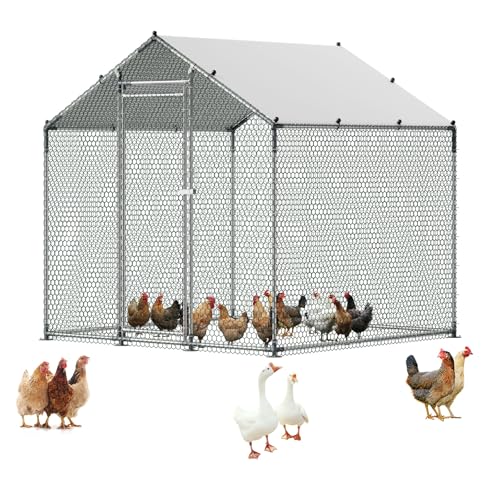
A raised wooden coop is the most balanced choice for three to six hens. Elevating the house 12 to 24 inches above the ground improves airflow underneath, keeps the floor drier, and makes it harder for some animals to reach the sleeping area. Look for exterior-grade plywood or properly treated timber, a sloped roof with a generous overhang, and a full-width access door rather than a small rear hatch.
The attached run should use welded hardware cloth rather than ordinary chicken wire. Chicken wire keeps chickens in but is not reliable against determined raccoons, foxes, dogs, or similar predators. A useful specification is 1/2-inch hardware cloth on the sides, doors, and ventilation openings, with the lower 18 to 24 inches buried or protected by an outward-facing apron. Use locking latches that cannot be opened by a paw; simple sliding bolts are often inadequate.
Wooden coops are usually affordable, with small-to-medium models commonly occupying the lower to middle portion of the backyard-coop market. Their weakness is maintenance: roof felt, hinges, floor edges, and untreated end grain usually wear before the main frame. Inspect them twice a year and reseal exposed wood when water begins to darken or swell it.
Best low-maintenance option: an insulated plastic modular coop
Plastic coops such as the Omlet Eglu range are appealing when cleaning time and rot resistance matter more than a traditional appearance. Their smooth internal surfaces do not absorb as much moisture or odor as unfinished timber, and many use removable panels or trays. Plastic also eliminates splinters, peeling paint, and several common wood-rot problems.
Choose the model by usable interior dimensions, not the manufacturer’s maximum bird count. For example, a flock of six standard hens should still have roughly 24 square feet of enclosed floor area if they may remain inside during bad weather. A modular run can add outdoor space, but it does not fully replace sufficient sleeping and feeding room.
Plastic has trade-offs. Dark colors can become hot in direct summer sun, lightweight panels may need anchoring in windy locations, and replacement parts can be more specialized than standard timber hardware. Position the coop in shade or partial shade, secure it to the ground, and verify that doors and panels remain rigid after assembly.
Best for larger flocks: a walk-in coop or converted shed
Once you reach eight or more hens, a walk-in structure usually becomes the better purchase. Full-height access lets you remove bedding, inspect birds, and repair fittings without crawling through a small hatch. It also makes ventilation easier: place high vents on at least two walls, protected by hardware cloth, so warm moist air can escape without creating a cold draft directly across the roost.
A shed conversion can provide the most space for the money, but it needs deliberate changes. Seal gaps larger than 1/2 inch, reinforce doors, cover windows with hardware cloth, and install a washable floor or a deep, dry bedding system. Do not rely on insulation alone. Poorly ventilated insulation can trap humidity and contribute to damp bedding and respiratory irritation.
For a flock of 10 hens, a reasonable starting calculation is 10 × 4 square feet, or 40 square feet of enclosed floor. Add at least 7 feet of total roost length and three nest boxes. If the birds will spend much of the day confined, provide a substantially larger run or plan supervised ranging.
Best portable choice: a chicken tractor for small flocks
A chicken tractor makes sense when you have a small flock, level ground, and time to move it regularly. Its advantages are fresh ground, simple manure distribution, and flexibility in a rented or landscaped yard. Its limitations are often underestimated: many light tractors can be lifted or shifted by predators, and the run may become muddy or bare within days.
For safer use, choose a tractor with a rigid welded-mesh frame, covered sleeping compartment, two independent door latches, and wheels that lock firmly. Move it before the ground becomes saturated. If you cannot inspect it at dusk and secure it overnight, a fixed predator-resistant coop is the safer design.
Decision matrix for common backyard situations
| Your situation | Recommended choice | Priority specifications | Avoid |
|---|---|---|---|
| 2–3 hens, limited budget | Small raised timber coop with expandable run | At least 12 sq. ft. enclosed floor, removable tray, hardware cloth | Tiny decorative coops with no service door |
| 4–6 hens, first-time keeper | Medium coop with walk-in run | 24 sq. ft. enclosed floor, full-size run door, simple roof access | Models rated for six birds but offering less than 16 sq. ft. |
| Frequent rain or humid climate | Plastic modular coop or sealed timber walk-in coop | Raised floor, cross-ventilation, washable surfaces, overhanging roof | Flat roofs and enclosed vents |
| Known fox or raccoon pressure | Fixed walk-in coop and covered run | 1/2-inch hardware cloth, buried apron, predator-proof latches | Chicken wire as the sole barrier |
| Little time for maintenance | Plastic coop with removable trays | Tool-free access, smooth panels, replaceable fittings | Complex hinged roofs and untreated wood |
Ventilation, cleaning, and weather details that matter
Ventilation is more important than making a coop airtight. Provide several openings high above the birds’ heads, cover them with predator-proof mesh, and keep lower openings adjustable for severe weather. Condensation on the roof or walls is a warning that airflow is insufficient. Drafts at roost level, however, should be corrected by redirecting openings rather than sealing every vent.
Cleaning access should include a door wide enough for a shovel, a removable dropping board or tray, and nest boxes that can be reached without disturbing the whole flock. Plan a routine: remove wet bedding as needed, scrape dropping areas at least weekly, and perform a deeper clean when surfaces become soiled or odors persist. Dry bedding is more valuable than heavily scented products.
Assembly time is part of the buying decision. A coop that takes a full day to build may still be worthwhile if its doors, roof, and run are stronger. Before ordering, check whether the package includes roof covering, floor panels, hardware cloth, latches, and anchoring hardware. Missing components can turn a claimed two-hour assembly into a weekend project.
Final buying recommendation
For most backyard owners, choose a coop sized for one or two more hens than you currently keep, with at least 4 square feet of enclosed floor per standard bird and a run that can be expanded. Select a plastic modular design when easy cleaning and rot resistance are the main priorities; choose a raised timber coop for value and appearance; and move to a walk-in structure when your flock reaches eight hens or maintenance becomes physically awkward. Whichever style you buy, spend more attention on hardware-cloth protection, ventilation, drainage, and access doors than on decorative features.

Write Your Review
No reviews yet. Be the first to share your experience!