

Key takeaways
- Wall thickness: roughly 1.5–2 mm is more substantial than decorative, very thin copper.
- Interior finish: bare copper is traditional, while a plated or lined interior changes care requirements.
- Shape consistency: closely matched molds brown more evenly as a batch.
- Storage: keep molds dry and separated so the fluted edges are not dented.
The best canel mold for Bordeaux pastries is usually a heavy copper mold for the darkest, crispest crust, but aluminum is the better all-round choice for most home bakers, silicone suits easy release and occasional baking, and tin-plated molds reward traditionalists who accept more maintenance.
Canelés depend on a sharp contrast: a deeply caramelized, almost lacquered exterior with a soft, custardy center. Mold material controls how quickly heat reaches the batter, how evenly the walls brown, and how much preparation is needed before each batch. Shape also matters: a classic Bordeaux canelé mold is fluted, typically 45–55 mm wide and 45–55 mm tall, holding roughly 55–75 ml of batter.
Our top picks


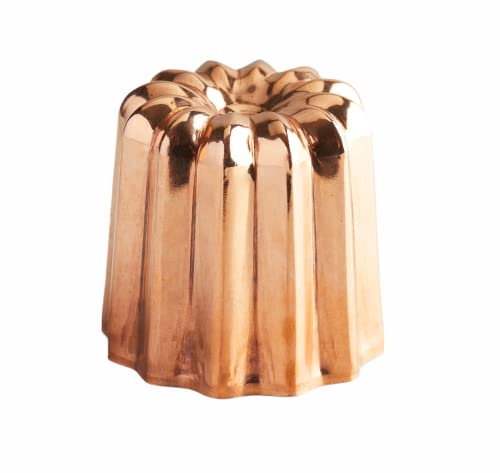
As an Amazon Associate we earn from qualifying purchases at no extra cost to you. Ratings are shown as listed on Amazon.
Quick comparison: which mold material fits your baking?
| Mold type | Typical heat behavior | Release performance | Seasoning and care | Likely crust | Typical market range |
|---|---|---|---|---|---|
| Heavy copper | Very fast, responsive conduction | Excellent after proper seasoning and coating | Needs beeswax or wax-butter coating; hand-wash and dry | Deep mahogany, crisp, highly defined | $15–$35 per mold; $100–$250 for a set |
| Aluminum | Fast and fairly even | Good with butter-wax or baking spray | Little seasoning; avoid harsh abrasion | Dark golden to brown, consistent | $4–$15 per mold; $25–$90 for a tray |
| Silicone | Slowest wall heating; flexible | Usually very easy | No seasoning; wash thoroughly and support when moving | Lighter and softer, sometimes less crisp | $15–$40 per tray |
| Tin-plated copper | Excellent copper conduction | Good when coating is even and intact | Requires gentle cleaning; inspect tin lining | Very crisp and traditional | $12–$30 per mold; $90–$220 for a set |
Heavy copper: the choice for maximum crust
Heavy copper transfers heat rapidly into the batter. That quick energy is especially useful for canelés because it sets and browns the outer layer before the center finishes cooking. The result can be a thin, brittle shell with clean fluting and a rich, dark color.
Copper is not automatically better, however. It is less forgiving of incorrect coating, excessive oven heat, and uneven preheating. A thin layer of beeswax blended with butter is traditional; too much coating can pool in the grooves and produce greasy patches, while too little can cause sticking. Copper molds also become hot quickly, so use thick oven gloves and place them on a rigid tray.
Choose heavy copper if you bake canelés frequently, care most about an authentic crust, and are willing to maintain individual molds. The cost per use improves with regular baking. For example, a $180 set of eight molds used twice a month for five years equals about 90 cents per mold-use before ingredients, assuming 1,200 total mold uses.
What to check before buying copper
- Wall thickness: roughly 1.5–2 mm is more substantial than decorative, very thin copper.
- Interior finish: bare copper is traditional, while a plated or lined interior changes care requirements.
- Shape consistency: closely matched molds brown more evenly as a batch.
- Storage: keep molds dry and separated so the fluted edges are not dented.
Aluminum: the strongest practical compromise
Aluminum molds heat quickly without the price, weight, or maintenance of copper. They are often the best choice for someone searching for the best canel mold for Bordeaux pastries but planning to bake only a few times each month. A rigid aluminum tray is easier to fill, transport, and store than a collection of loose copper molds.
Aluminum usually produces a convincingly browned crust, though it may not reach the same polished darkness as thick copper under identical conditions. It is more tolerant of ordinary baking routines: a light butter-wax coating or a suitable release spray is generally enough, and there is no copper patina to manage.
Look for a rigid tray rather than very thin sheet metal. A typical 8-cavity tray may weigh about 500–900 g and measure approximately 320–360 mm by 220–260 mm. Confirm that it fits your oven with enough clearance for air circulation. Dark-coated aluminum browns faster than bright aluminum, so the same recipe may need a modest temperature adjustment.
Silicone: easiest release, weakest crust
Silicone is attractive for beginners because baked canelés usually release with little effort. It also eliminates seasoning and is less vulnerable to staining or oxidation. Flexible cavities can be useful when storage space is limited: the tray can be rolled or stacked after it cools completely.
The trade-off is heat transfer. Silicone insulates the batter from the oven more than metal does, so the exterior generally develops a lighter, less brittle crust. A silicone tray should sit on a preheated, rigid baking sheet; otherwise it may flex while being moved, causing batter to slosh over the rim or the finished pastries to bake unevenly.
Silicone works best when your priorities are simple release, low maintenance, and occasional baking rather than the darkest possible shell. Choose a food-grade tray with sturdy rims and clearly stated temperature limits. Do not place a flexible mold directly on an oven rack while it is full.
Tin-plated copper: traditional performance with a vulnerable lining
Tin-plated copper combines copper’s excellent conduction with a tin interior that separates the batter from bare copper. It can produce a superb crust, but the lining requires more care than ordinary aluminum. Tin is relatively soft: metal utensils, abrasive cleaners, and aggressive scrubbing can scratch or remove it.
Use wooden, silicone, or nylon tools, and wash by hand with mild detergent. Do not heat an empty tin-lined mold aggressively, because overheated tin can discolor or deteriorate. If the lining develops exposed copper, deep scratches, blistering, or flaking, stop using that mold until it is professionally assessed or replaced.
This option suits experienced bakers who want copper performance but prefer a lined interior. It is not the best low-maintenance choice for a busy kitchen.
Decision matrix by budget, experience, and frequency
| Your situation | Best starting choice | Why |
|---|---|---|
| First batch, low budget, fewer than six batches per year | Aluminum tray | Affordable, predictable, and easier to handle than loose molds |
| Frequent baking or gifting, eight to twelve batches per year | Heavy aluminum or copper set | Rigid metal gives better browning and survives repeated use |
| Highest crust quality and traditional technique | Heavy copper | Fast conduction and excellent fluting definition |
| Limited storage or strong preference for easy release | Silicone tray | Flexible and does not need seasoning |
| Experienced baker comfortable with hand care | Tin-plated copper | Traditional heat response with a lined interior |
| Small oven or uncertain shelf space | Six-cavity aluminum tray or individual molds | Leaves more room for airflow and easier rotation |
How to prepare and maintain metal canelé molds
- Measure the cavity capacity. Fill one mold with water and weigh the water. Since 1 gram of water is approximately 1 ml, a 60 g result indicates a roughly 60 ml cavity. Fill batter to about 80–90% of that capacity to allow expansion.
- Preheat thoroughly. Give the oven at least 20–30 minutes after it reaches temperature. A cold mold absorbs part of the initial heat and can produce a pale lower crust.
- Apply a thin coating. For bare copper or aluminum, brush a fine butter-wax mixture into every flute and drain excess. Thick layers can make the pastry greasy and obscure the ridges.
- Chill the filled molds if your recipe calls for it. Cold, rested batter can help preserve the custardy center, but follow the recipe’s timing because excessive chilling lengthens the bake.
- Release after a short rest. Let the molds stand for several minutes, then invert and tap gently. Waiting too long can allow caramelized sugar to harden against the walls.
- Clean without stripping the surface. Wipe or wash with mild detergent, remove residue with a soft brush, and dry immediately. Avoid soaking copper or tin-plated molds for long periods.
Common buying and baking mistakes
- Choosing by cavity count alone: twelve tiny molds do not replace six full-size molds if you want a soft, custardy interior.
- Using the same temperature for every material: silicone often needs more time, while dark metal may brown the exterior faster.
- Overfilling: batter that spills over the rim forms a sugary collar and makes release difficult.
- Overcoating: release coating should be a film, not a visible pool in the bottom of each flute.
- Ignoring oven fit: measure the tray diagonally and allow room to remove it safely without touching the oven walls.
- Expecting silicone to imitate copper: easy release does not compensate for the insulation of flexible material when a brittle crust is the main goal.
Final recommendation
Buy heavy copper if crust and tradition outrank convenience. Choose rigid aluminum for the best balance of price, performance, storage, and learning curve. Select silicone for effortless release and occasional use, and tin-plated copper only if you are prepared to protect the lining. For most home kitchens, a six- or eight-cavity aluminum tray is the sensible first purchase; upgrade to individual heavy copper molds when you know that the canelé’s dark, crisp shell is worth the extra preparation and care.

Write Your Review
No reviews yet. Be the first to share your experience!