

Key takeaways
- Most aquariums do well with about 8 hours of light a day, and many keepers land between 6 and 10 depending on tank type.
Most aquariums do well with about 8 hours of light a day, and many keepers land between 6 and 10 depending on tank type. Fish-only tanks sit at the shorter end, planted tanks usually run a bit longer, and everything works better with a timer and a real period of darkness at night.
This guide explains why the number matters, how to set a schedule that suits your livestock, and how to adjust if algae appears. It is written for 2026 owners of freshwater community tanks, planted tanks and small reef setups who want a clear starting point rather than a rigid rule. Species differ, so treat every figure as a starting point to adjust against what you see in your own tank.
Starting Points by Tank Type
| Tank type | Typical daily light | Main concern |
|---|---|---|
| Fish-only freshwater | 6 to 8 hours | Algae on glass and decor |
| Low-tech planted | 6 to 8 hours | Algae outcompeting slow plants |
| High-tech planted | 7 to 9 hours | Balancing CO2, nutrients and light |
| Nano or betta tank | 6 to 8 hours | Small water volume swings quickly |
| Soft-coral reef | 8 to 10 hours | Slow ramp-up and ramp-down |
| Nocturnal species tank | 6 to 8 hours plus dim night light | Avoiding constant bright light |
Why Duration Matters
Light drives plants and algae alike. When the light runs too long, algae uses spare nutrients faster than plants can. When it runs too short, plants slow down and stop competing. Fish also need a day and night rhythm; constant light can leave them stressed or restless, and a sudden switch from dark to bright can startle them.
The right number is therefore a balance. A tank with few plants and lots of fish waste will tolerate less light than a heavily planted tank with strong filtration. Think of the schedule as one adjustment among several, along with feeding, water changes and flow.
Different algae respond to different problems. Green film on the glass often follows long days, brown dusty growth is common in young tanks, and hair-like strands tend to appear when nutrients and light are out of balance. Knowing which type you have helps you choose between shortening the schedule, cleaning more often or cutting back on feeding. When in doubt, change only one thing at a time so you can see the result.
Setting a Practical Schedule
Use a timer from day one
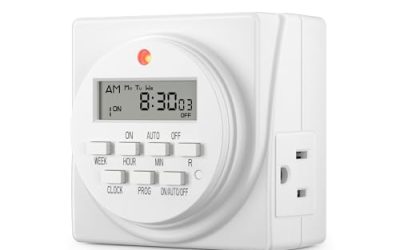
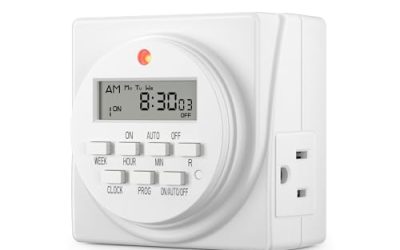
Manual switching leads to uneven days and missed evenings. A plug-in timer or a light with a built-in controller keeps the schedule steady, which fish and plants respond to well. Set it, then leave it alone for at least a couple of weeks before making changes.
Ramp up and ramp down
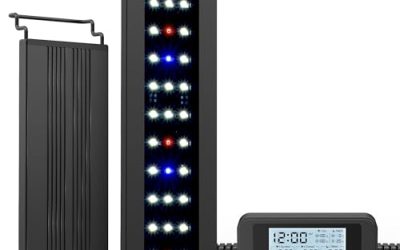
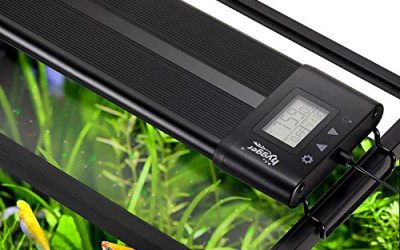
Fixtures with dimming or sunrise and sunset modes soften the transition. If yours lacks them, a lamp in the room can help, switched on before the tank light and off after it. A gentle change is easier on fish than an abrupt flash.
Consider a midday break
Some planted-tank keepers split the day into two blocks with a few hours off in the middle. The idea is to give plants steady exposure while reducing the total time algae gets the full spectrum. Results vary, so try it if your standard schedule produces algae.
Factor in window light and room lighting
Sunlight from a window adds hours of light you did not plan. Move the tank away from direct sun, or use curtains at peak hours. If the room is bright all evening, the tank is effectively on even when the fixture is off, so weigh that when choosing your timer window.
Intensity Matters as Much as Hours
Eight hours of a dim fixture and eight hours of a powerful one are very different days. A strong light over a shallow tank can drive algae even on a short schedule, while a weak light over a deep tank may need longer to support plants at all. If your fixture has dimming, lower the output before you shorten the schedule, and treat the two controls as a pair.
Tank depth, water clarity and plant density all change how much light actually reaches the bottom. Floating plants shade everything below them, so a tank with a surface cover may need a longer schedule than one with open water. Tinted water from driftwood tannins also filters light, which is another reason to observe your tank rather than copy a number from a chart.
Special Situations
Vacations call for automation. A timer can hold the schedule steady while you are away, and a slightly shorter day reduces algae when no one is there to clean. Avoid blacking the tank out for long periods, because plants decline and the sudden return of light can shock them.
Seasonal shifts matter too. A room that gets hot or bright in summer may push the tank toward algae even if the fixture schedule is unchanged. Likewise, a dim winter room might call for a slightly longer window. Check the tank weekly and adjust in small steps.
Finally, remember that new fish and new plants change the balance. Introducing a dozen plants can justify a bit more light, while adding several fish raises nutrient levels and may call for less. Keep the schedule steady for a couple of weeks after any major change so you can tell what caused what.
Before You Start Checklist
- Pick a baseline from the table that matches your tank type
- Set a plug-in timer or the built-in controller before adding livestock
- Check whether the tank receives window light and shade it if so
- Note the date and the schedule in a simple log
- Plan a dark period of at least eight hours a day
- Keep feeding and water-change routines steady while you adjust lighting
- Change the schedule by thirty minutes at a time, not several hours
Reading the Signs and Adjusting
Algae on the glass, green water or fuzzy film on decor often means the schedule is too long for the tank right now. Cut the schedule by an hour, clean the algae and watch for a couple of weeks. If plants look pale, stretch toward the light or stop growing, try adding a little time or improving nutrients instead.
Fish behavior also tells a story. Hiding for long stretches or dashing at the surface after lights on suggest the transition is too abrupt. Dimmer or shorter intervals and a ramp-up can help. For new tanks, start on the short end because filters and plants are still settling in, and extend later if growth is steady.
Keep a simple notebook or phone note with the date, schedule and what the glass looks like each week. After a month the pattern usually becomes clear, and you can stop guessing. A photo of the tank taken at the same time each week makes subtle changes in plant color or algae easier to spot, and it also helps if you later ask an experienced keeper for advice.
Common Mistakes
- Leaving the light on around the clock because the tank looks nice
- Making large schedule changes all at once
- Blaming light for an algae problem caused by overfeeding
- Putting the tank where sunlight hits it for hours
- Using blue night lights as if they were a full dark period
Related guides
- Canister Filter For 55 Gallon Freshwater Tank
- Programmable App Controlled Aquarium Lights
- Beneficial Bacteria Starters For Aquariums
Frequently Asked Questions
Can I leave aquarium lights on all night?
It is not a good idea. Most fish benefit from a regular dark period, and constant light tends to encourage algae. If you want to watch the tank in the evening, use a dim night mode for a short window and then switch fully off.
Do fish need the light off at night?
Generally yes. Like many animals, they rest during darkness. A consistent cycle supports natural behavior and reduces stress.
How long should lights be on in a new tank?
Start with a shorter schedule, around six hours, while the filter matures and plants settle. Lengthen it gradually if plants thrive and the glass stays clean. Many keepers add thirty minutes every week or two until they find the balance point.
Does the schedule change for planted tanks?
Slightly. Planted tanks often run a little longer than fish-only tanks, but the gains depend on nutrients and CO2. Adding hours without supporting plant growth just feeds algae. Improve nutrients, flow and CO2 before you extend the day.
More from Amazon
Programs that pair well with the guide above. Offers and eligibility are set by Amazon and may change.
Set up recurring deliveries of everyday items on eligible products. Terms and savings are set by Amazon.
Explore Subscribe & SaveFree shipping on eligible items, Prime Video and more. Eligible new members can start with a free trial.
Start a Prime free trialAudiobooks and podcasts to listen to on the go. Eligible new members can start with a free trial.
Try Audible freeRead from a large library of eBooks and audiobooks on any device. Check Amazon for current plans.
Explore Kindle UnlimitedAs an Amazon Associate we earn from qualifying purchases.
Write Your Review
No reviews yet. Be the first to share your experience!