

Key takeaways
- A planted tank asks more of its light than a fish-only aquarium ever does. Leaves need enough energy to photosynthesize.
A planted tank asks more of its light than a fish-only aquarium ever does. Leaves need enough energy to photosynthesize, roots and stems need a steady daily schedule, and algae stands ready to take advantage of any imbalance. Searching for “best LED lights for planted tanks” puts you face to face with a wide range of fixtures sold in size bands: twelve to eighteen inches for nano tanks, twenty-four to thirty-six for mid-size, and forty-eight inches and beyond for long tanks. The right choice depends on the length of your tank, the plants you keep, and how much automation you want.
This guide organizes the 2026 field by line rather than by single size. SEAOURA and hygger both sell the same fixture family in multiple length bands, so the reviews below describe the family and point out which sizes the titles mention. Output numbers are not stated in the visible titles, so treat claims such as “high PAR” as marketing language until you check the full listing. Always confirm that the fixture length matches your rim, and ask an experienced planted-tank hobbyist about lighting for the species you want to keep.
Quick Picks
Our top picks


As an Amazon Associate we earn from qualifying purchases at no extra cost to you.
| Product | Best for | Key spec taken from the product title |
|---|---|---|
| SEAOURA Planted LED Series | Plant growth in several sizes | High PAR LEDs, 3 timers plus memory, 15-minute fade; 12-18, 18-24 and 48-54 in |
| hygger Advanced LED with Timer | Mid-size automated planted tanks | 24/7 cycle and DIY mode, 30-36 in |
| hygger Auto On Off LED Series | Matching many tank lengths | Dimmable, 7 colors, built-in timer; 24-30, 30-36 and 48-55 in |
| hygger Clip On 24/7 LED | Nano and rimless planted tanks | Sunrise, daylight, moonlight and DIY modes; 7 colors |
| AQUANEAT Full Spectrum LED | Basic lighting for smaller tanks | Full spectrum, for 18 to 24 inch tanks |
| fishkeeper Smart LED | App-style sync and 24/7 cycles | One-key real-time sync, 12-18 in, 24/7 cycle |
How to Choose
Match the fixture length to the tank, not the gallon label
Plant lights are sold in size bands, so start by measuring your tank’s outside length. A fixture designed for twelve to eighteen inches will not reach across a two-foot tank, and one meant for forty-eight to fifty-four inches is overkill for a nano. The hygger and SEAOURA families both sell several bands, which is useful if you own more than one tank. Fixtures that are too short leave dark corners where plants stall; ones that are too long may not fit on the rim at all.
Light intensity and control
Plants differ in how much light they want. Low-demand species such as anubias and java fern can survive with modest output, while carpeting plants and red stems typically ask for stronger light and often supplemental nutrients or CO2. Because exact output numbers are not in the visible titles, rely on dimmability and a timer to find a comfortable level. SEAOURA lists 15-minute fades and multiple timer programs, while the hygger fixtures list dimming and built-in timers. Start moderate, extend the photoperiod gradually, and watch for algae.
A helpful way to frame it is by plant group. Hobbyists commonly sort plants into low-light, medium-light and high-light groups. Low-light species such as java fern, anubias and many mosses are forgiving and suit softer fixtures. Medium-light stem plants and swords want a stronger, longer-running lamp and some fertilizer. High-light carpets and red stems are the most demanding and the least forgiving of mistakes. Decide which group you actually plan to keep before choosing, and buy a fixture with dimming so you can move up or down as your plan changes.
Spectrum, color and timers
Full spectrum means the light covers the wavelengths plants and viewers both like, usually blending white, red and blue channels. More colors help with ambiance but are secondary to a balanced white. A timer is practically mandatory in a planted tank, because a consistent schedule matters more than perfect settings. A fade-in and fade-out, like the 15-minute ramp named by SEAOURA, softens transitions. Memory features keep your schedule after a power outage, and DIY modes let you create your own cycle rather than using presets.
Tank depth deserves its own check. In a shallow tank the plants sit close to the lamp and receive more intensity; in a deeper tank the same fixture delivers less at the substrate. That is why the same light can behave differently across two aquariums of equal length. If you keep a tall tank, favor fixtures with generous dimming range, a stronger rating and a bracket that lets you raise or lower the lamp. If your tank is shallow, you may need to dim the lamp or shorten the photoperiod to avoid pushing algae.
Mounting, heat and ignoring the hype
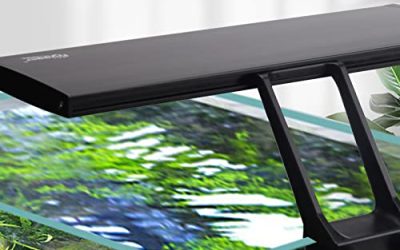
Check how the fixture attaches, whether by extendable brackets, a rim clamp or a clip. Open-top tanks can use bracket-mounted bars, while rimless nanos often pair better with clip-ons. LEDs run cooler than older bulbs but still need airflow, so leave space around the housing. Ignore broad claims such as “grows any plant.” Budget fixtures can fall short on build quality, such as brackets that flex or controllers that lose settings. Keep power adapters dry and use drip loops on cords as general electrical care.
The 6 Best Options
SEAOURA Planted LED Aquarium Light Series
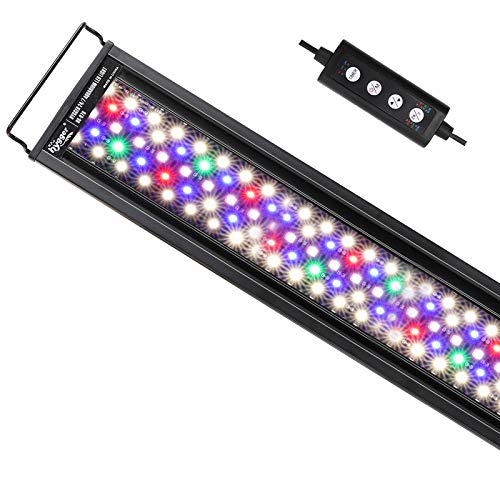
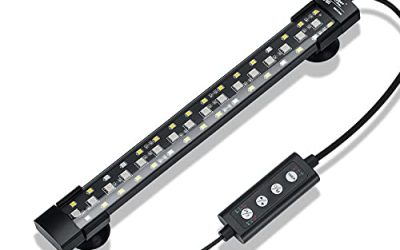
SEAOURA appears in three size bands in the titles: 12-18, 18-24 and 48-54 inches. Each mentions high PAR LEDs for plant growth, three timers with memory, twenty dimming levels and a 15-minute fade, making it the most plant-forward family here.
- Strength: several size bands mean one family can fit multiple tanks.
- Strength: timers with memory and a gradual fade help create a stable schedule.
- Trade-off: strong plant-oriented lighting can encourage algae if the photoperiod runs long.
Skip it if you only keep a few low-demand plants and prefer softer, simpler lighting.
hygger Advanced LED Aquarium Light with Timer, 30-36 In
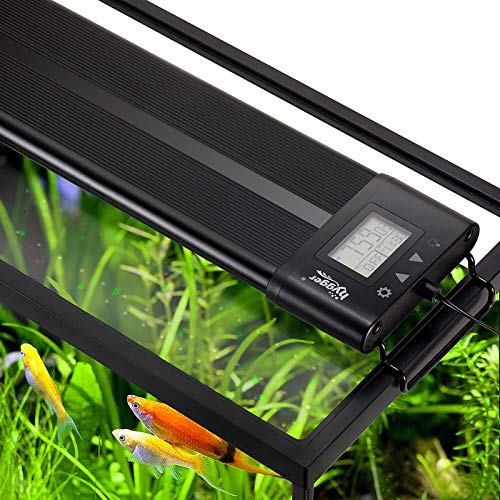
A full-spectrum fixture with a 24/7 lighting cycle, DIY mode and timer for thirty to thirty-six inch freshwater planted tanks. It suits owners of a standard three-foot tank who want automation.
- Strength: 24/7 cycle plus DIY mode offers presets and customization.
- Strength: it is specifically described for freshwater planted tanks.
- Trade-off: the 30-36 inch band excludes smaller and larger tanks.
Skip it if your tank is outside that band or you want a minimalist controller.
hygger Auto On Off LED Aquarium Light Series
The family appears at 24-30, 30-36 and 48-55 inches, with dimming, seven colors, full spectrum output and a built-in timer. It is the flexible pick for owners who want the same look across several tanks.
- Strength: three length bands cover a wide range of rims.
- Strength: dimmable with a built-in timer for automatic on and off.
- Trade-off: it lacks the specific high-PAR language used by SEAOURA.
Skip it if you want a dedicated plant-growth marketing focus or fade settings.
hygger Clip On 24/7 Lighting Aquarium LED Light
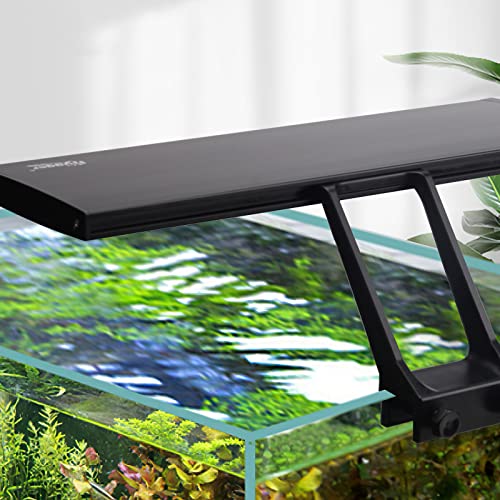
A clip-on with sunrise, daylight and moonlight modes, DIY mode, adjustable timer and brightness, and seven colors. It is useful for rimless or hood-less nano planted tanks.
- Strength: clip mounting suits tanks that cannot take a bracket bar.
- Strength: 24/7 modes and DIY control automate the day.
- Trade-off: the clip format is generally for small tanks, with limited spread.
Skip it if your tank is long and needs even coverage along its length.
AQUANEAT LED Aquarium Light, 18 to 24 Inch
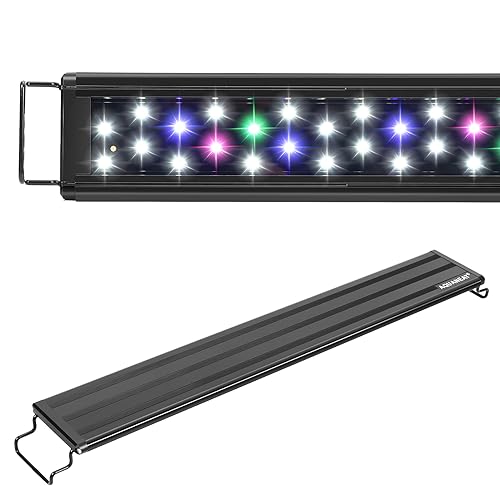
A full-spectrum fixture for 18 to 24 inch freshwater tanks. It is a no-frills option for smaller setups with undemanding plants.
- Strength: a clear size band and a full spectrum label.
- Strength: simple spec sheet makes comparison easy.
- Trade-off: no timer or fade features appear in the visible title.
Skip it if you want automated cycles and memory.
fishkeeper Smart LED Aquarium Light, 12-18 In
A smart-style fixture with one-key real-time sync and a 24/7 lighting cycle, full spectrum, for twelve to eighteen inch tanks. It appeals to people who want a quick setup that follows the clock.
- Strength: real-time sync means the schedule follows the time of day.
- Strength: full spectrum with a 24/7 cycle suits small planted tanks.
- Trade-off: it is only for the 12-to-18-inch range.
Skip it if your tank is longer than eighteen inches.
Which One Fits Your Situation
You have a three-foot tank and live plants
The hygger Advanced 30-36 inch model matches that length and adds a 24/7 cycle. The hygger Auto On Off 30-36 variant is the simpler alternative with a built-in timer.
You want the strongest plant focus
SEAOURA is the family built around high PAR wording and fading timers. Start at a moderate level and raise it only as plants show a need. Because the family covers 12-18, 18-24 and 48-54 inch bands in the titles, it also lets you keep a consistent look if you run a small quarantine or propagation tank beside a larger display.
You own a small nano or rimless tank
The hygger Clip On or the fishkeeper Smart 12-18 inch are right-sized. Choose the clip for flexible mounting and the fishkeeper for time-synced automation.
You keep low-demand plants in a small tank
The AQUANEAT 18 to 24 inch fixture is an uncomplicated choice. Pair it with anubias, java fern or moss and keep the photoperiod short. Since the listing mentions only the size band and full spectrum, treat it as a gentle, budget-friendly choice and upgrade later if you add more demanding plants.
Common Mistakes
- Over-lighting a young tank: too much light before plants establish invites algae.
- Ignoring tank depth: light weakens with depth, so deep tanks may need a stronger setting.
- Skipping a timer: inconsistent hours stress plants and fuel algae.
- Choosing the wrong size band: a fixture that does not span the rim leaves dim corners.
- Forgetting nutrients: strong light without fertilizer and balanced chemistry limits growth.
Related guides
- Canister Filter For 55 Gallon Freshwater Tank
- How Often To Clean An Aquarium Canister Filter
- Aquarium Light For Low Tech Planted Tanks
Frequently Asked Questions
How many hours of light does a planted tank need?
Many hobbyists start with around six to eight hours and adjust from there. A timer keeps the schedule steady. Watch for algae and plant response, and ask a local hobbyist for advice about your species.
What does PAR mean on a listing?
PAR describes light usable by plants. Titles that mention high PAR are marketing claims unless the full listing gives measured values, so check the details and compare with the plants you intend to keep.
Can one light family cover several tanks?
Yes, as long as you pick the right size band for each tank. SEAOURA and hygger both list multiple length bands in their titles. Double-check each tank’s rim length before ordering several fixtures at once, so every band lines up with the tank it is meant for.
Do planted tanks need CO2?
Not always. Low-demand plants can grow without it, while demanding carpets and stem plants often benefit from CO2. Match your light, nutrients and plant choice together, and change only one variable at a time so you can tell what helped. If a plant melts or algae spikes after an adjustment, return to the previous setting and give the tank a week before trying again.
More from Amazon
Programs that pair well with the guide above. Offers and eligibility are set by Amazon and may change.
Set up recurring deliveries of everyday items on eligible products. Terms and savings are set by Amazon.
Explore Subscribe & SaveFree shipping on eligible items, Prime Video and more. Eligible new members can start with a free trial.
Start a Prime free trialAudiobooks and podcasts to listen to on the go. Eligible new members can start with a free trial.
Try Audible freeRead from a large library of eBooks and audiobooks on any device. Check Amazon for current plans.
Explore Kindle UnlimitedAs an Amazon Associate we earn from qualifying purchases.

Write Your Review
No reviews yet. Be the first to share your experience!