

The best LED light for a planted aquarium is a full-spectrum fixture that is sized to your tank’s length, offers dimming and scheduling, and delivers light at a level your plants and CO2 setup can actually use. More light is not always better: too much without matching nutrients and carbon dioxide feeds algae faster than plants. These six fixtures are common choices, with notes based on specifications and reviewer feedback.
Quick Comparison
| Pick | Best for | Key feature |
|---|---|---|
| Fluval Plant 3.0 LED | Easy, app-controllable plant growth | Programmable spectrum and Bluetooth app |
| Finnex Planted+ 24/7 CC | Automatic day-night cycle | Built-in sunrise, midday and moonlight |
| Chihiros WRGB II | Serious planted tank hobbyists | Strong output with app dimming |
| Nicrew ClassicLED Plus | Budget starter tanks | Simple design with adjustable brackets |
| Kessil A80 Tuna Sun | Small tanks and nano scapes | Compact, high-quality light |
| Hygger Full Spectrum LED | Low-cost medium plant setups | Timer and multiple modes |
Understanding Light for Plants
Plants use a range of wavelengths, mostly in the red and blue regions, but a balanced full-spectrum light looks good and supports growth. Fixtures are often described in lumens or watts, which are poor guides. The more useful measure is PAR, the amount of light plants can use, and it varies with distance from the fixture and water depth. Most manufacturers do not publish PAR for every tank height, so reviews that mention growth in real tanks are helpful. Low-tech tanks with easy plants such as anubias, java fern and crypts do fine under modest light. Carpeting plants and red stem plants need more light and typically CO2 injection.
1. Fluval Plant 3.0 LED
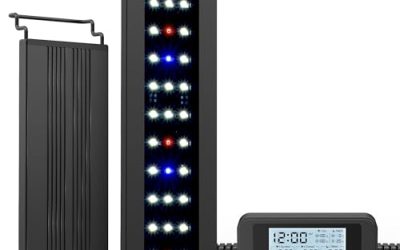
Fluval’s Plant 3.0 is a popular choice for hobbyists who want strong plant growth and a friendly interface. A Bluetooth app lets you adjust the spectrum and schedule, which helps tune the light as the tank matures. Reviewers often praise the look and the sunrise and sunset effects. It is not tiny, and the mounting brackets suit standard rimmed tanks better than odd designs, so check your tank’s dimensions. Compare it with Chihiros if you want a higher output tier.
Fluval Plant 3.0 LED aquarium light
2. Finnex Planted+ 24/7 CC
The Finnex Planted+ 24/7 is built around an automatic daily cycle: sunrise, bright midday, sunset and moonlight. That removes a lot of scheduling fuss, and the light is pleasant to look at. Some hobbyists want more customization than the preset cycle allows, and the controller adds complexity if it fails. For people who like a hands-off lighting routine, it is a reliable fit.
Finnex Planted+ 24/7 CC LED light
3. Chihiros WRGB II
The Chihiros WRGB II is a favorite in the planted tank community, especially for aquascapers who want vibrant growth and color. It is offered in sizes to fit various tank lengths and can be dimmed through an app. The output can be powerful enough to cause algae problems if you leave it at full intensity from day one, so start low and ramp up gradually. Check that the mounting arms fit your tank type and that you are comfortable with the control app.
Chihiros WRGB II aquarium light
4. Nicrew ClassicLED Plus
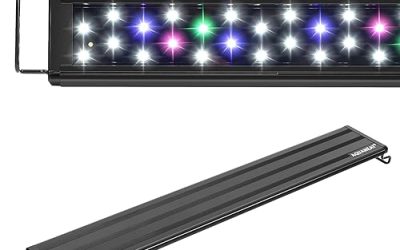
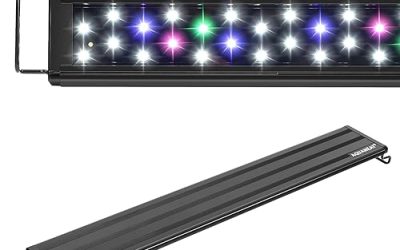
For beginners, the Nicrew ClassicLED Plus is a sensible way to light a first tank without much fuss. It sits on adjustable brackets and offers a simple spectrum that works with easy plants. Do not expect the control or output of premium fixtures. It is better suited to low-tech or moderate planted tanks, and you should keep an eye on light duration to avoid algae.
Nicrew ClassicLED Plus aquarium light
5. Kessil A80 Tuna Sun
Kessil lights are small, high-quality fixtures that suit nano tanks and small aquascapes. The A80 Tuna Sun offers a natural-looking spectrum and a compact form that can hang from a gooseneck. It is not designed to cover a long tank evenly, and gooseneck mounting requires careful placement. Consider it for small, shallow tanks where one point source is enough.
Kessil A80 Tuna Sun aquarium light
6. Hygger Full Spectrum LED
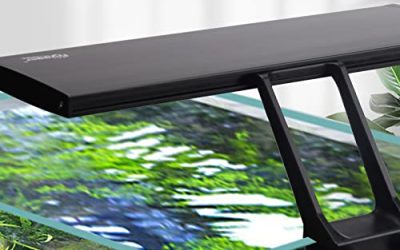
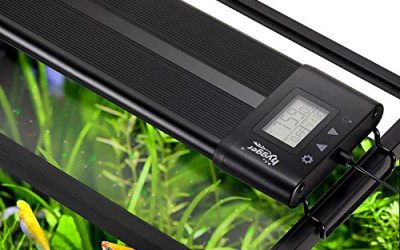
Hygger’s fixtures target hobbyists who want built-in timers and several modes without a big outlay. They suit moderate plant setups and fish-heavy planted tanks. Quality can feel less refined than higher-end lights, and controller features vary by model, so read the listing carefully. A budget-conscious option if you accept the tradeoffs.
Hygger Full Spectrum LED aquarium light
How to Choose
- Length: choose a fixture slightly shorter than the tank for rim mounting, or an adjustable one that spans it.
- Depth: deeper tanks need stronger light because intensity falls with distance.
- Controls: dimming and scheduling matter more than peak output, because they let you ramp up slowly.
- Plant type: choose lower output for slow growers and higher for carpeting or stem plants.
- CO2 plan: strong light should be paired with consistent carbon and nutrients.
Photoperiod and Algae
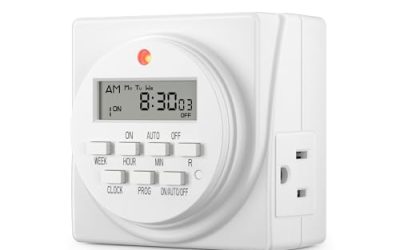
A common starting photoperiod is six to eight hours, with a short midday break if algae appears. Run the light at lower intensity for the first few weeks, and increase gradually as plants establish. A timer makes the schedule consistent, and a consistent schedule is the cheapest algae control there is. Also keep the tank out of direct sunlight, since windows add uncontrolled light.
Common Mistakes
The biggest mistake is chasing intensity. A bright fixture on a tank with weak nutrients invites green hair algae. Another is ignoring spectrum: very blue-heavy lights can look dramatic but may not support balanced growth. People also forget that fixtures run hot in poor ventilation, and that cheap controllers sometimes reset after outages. Finally, many buyers do not measure their tank before ordering and end up with brackets that do not fit the rim or the glass thickness.
Matching Light to Your Plant Goals
Start by deciding what the tank is meant to look like. A low-tech jungle of anubias, java fern, cryptocoryne and floating plants succeeds with modest light, a few hours of daily illumination and no CO2. A dense foreground carpet or colorful stem plants usually demands brighter light, injected CO2 and a regular fertilizer routine. If you try to grow the second type on the first type of setup, you will likely be disappointed, and if you light the first type like the second, algae will take over.
Mounting height also changes results. Raising a fixture a few inches reduces intensity at the substrate and spreads light more broadly, which is a free way to dial back a powerful light. Lowering it concentrates light and shortens the transition between bright and dim zones. Floating plants and tall stems cast shade, so a mixed tank often has areas that need different amounts of light; plan the hardscape so light-hungry plants sit in the brightest area, and shade lovers tuck beneath wood or tall plants.
Frequently Asked Questions
Do I need a special light for live plants?
Not for easy plants, but a decent full-spectrum LED helps. Demanding plants benefit from fixtures designed for planted tanks.
How long should the light stay on?
Six to eight hours is typical. Shorter periods can help control algae, especially in new setups.
Is more light better?
No. Light must be balanced with CO2 and nutrients. Excess light without balance leads to algae.
Can I use a regular household LED?
It can work for easy plants, but aquarium fixtures are sealed against splashes and designed with plant-friendly spectra.
Conclusion
Pick a fixture that matches your tank’s size and your plants’ demands, and prioritize dimming and scheduling over raw power. Start with lower intensity, build up slowly, and keep nutrients and carbon in balance. A well-chosen light is the foundation of a healthy planted tank.
As an Amazon Associate we earn from qualifying purchases.
More from Amazon
Programs that pair well with the guide above. Offers and eligibility are set by Amazon and may change.
Set up recurring deliveries of everyday items on eligible products. Terms and savings are set by Amazon.
Explore Subscribe & SaveFree shipping on eligible items, Prime Video and more. Eligible new members can start with a free trial.
Start a Prime free trialAudiobooks and podcasts to listen to on the go. Eligible new members can start with a free trial.
Try Audible freeRead from a large library of eBooks and audiobooks on any device. Check Amazon for current plans.
Explore Kindle UnlimitedAs an Amazon Associate we earn from qualifying purchases.
Write Your Review
No reviews yet. Be the first to share your experience!