

Key takeaways
- Best for a budget laminate update: a complete water-based countertop paint kit, such as the Giani Countertop Paint Kit, when the counter is sound and you want a faux-stone finish.
- Best for a more textured stone appearance: a mineral-based spreadable system, such as Daich Coatings SpreadStone, provided the substrate is firmly bonded and properly primed.
- Best for tiled counters: a kit specifically rated for tile, or a system that includes a high-adhesion primer and a durable clear topcoat. Ordinary countertop paint alone is a poor choice over grout lines.
- Best for solid-surface counters: a compatible refinishing system using abrasion, adhesion primer, color coat, and protective topcoat. If the counter is badly cracked, warped, or has loose seams, replacement or professional repair is usually wiser.
The best countertop resurfacing kit for a kitchen depends on the existing surface: choose a water-based decorative paint kit for laminate, a mineral or microcement-style kit for tile, and a manufacturer-approved refinishing system for solid-surface counters.
Our top picks

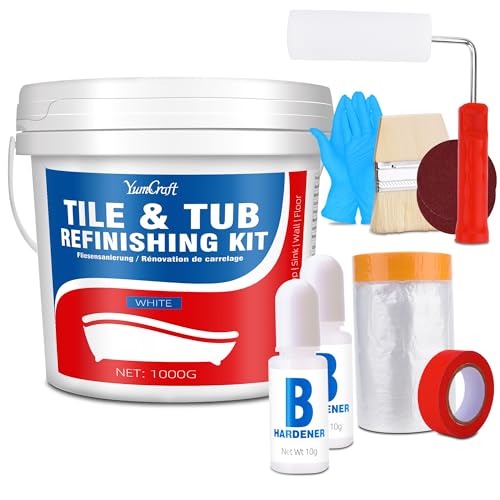


As an Amazon Associate we earn from qualifying purchases at no extra cost to you. Ratings are shown as listed on Amazon.
Quick picks by countertop situation
- Best for a budget laminate update: a complete water-based countertop paint kit, such as the Giani Countertop Paint Kit, when the counter is sound and you want a faux-stone finish.
- Best for a more textured stone appearance: a mineral-based spreadable system, such as Daich Coatings SpreadStone, provided the substrate is firmly bonded and properly primed.
- Best for tiled counters: a kit specifically rated for tile, or a system that includes a high-adhesion primer and a durable clear topcoat. Ordinary countertop paint alone is a poor choice over grout lines.
- Best for solid-surface counters: a compatible refinishing system using abrasion, adhesion primer, color coat, and protective topcoat. If the counter is badly cracked, warped, or has loose seams, replacement or professional repair is usually wiser.
Countertop resurfacing kits compared
| Kit type | Suitable surfaces | Typical coverage | Preparation | Usable cure time | Finish options |
|---|---|---|---|---|---|
| Water-based countertop paint kit | Laminate, sealed wood, some previously painted surfaces | 25–40 sq ft per kit | Degrease, dull-sand, repair chips, prime if specified | 24–72 hours before light use; 5–7 days for full hardness | Marble, granite, concrete, solid colors |
| Mineral or stone-coating kit | Laminate, tile, sealed solid surface, some masonry-like substrates | 40–60 sq ft per kit, depending on texture thickness | Deep cleaning, scuffing, bonding primer, grout repair | 24–48 hours between major stages; about 7 days before normal heavy use | Concrete, slate, stone, mottled matte finishes |
| Two-part epoxy system | Laminate, tile, and other approved rigid surfaces | 40–60 sq ft per gallon or kit, depending on coats | Extensive cleaning, sanding, masking, and moisture control | 12–24 hours between coats; 3–7 days before heavy use | Gloss, satin, metallic, solid colors, faux stone |
| Solid-surface refinishing system | Acrylic or polyester solid-surface counters | Varies by coating thickness and kit size | Repair, uniform abrasion, adhesion primer, careful dust removal | Usually 48 hours or more before normal use | Solid colors, satin, semi-gloss, stone-inspired effects |
Coverage figures are working ranges rather than guarantees. A porous, heavily textured, or dark counter consumes more material than a smooth, lightly colored one. Measuring the counter is essential: multiply length by width for each rectangular section, then add the areas together. Include the backsplash if the kit is intended for it.
Laminate: the easiest surface for a DIY kit
Laminate is usually the most forgiving substrate because it is flat and nonporous, but its glossy plastic surface gives coatings little to grip. The quality of the result depends less on the decorative technique than on preparation.
Giani Countertop Paint Kits are a practical example of the water-based decorative approach. They generally use a primer, several small color components, and a clear protective coat to create granite or marble effects. This format suits a first-time refinisher because the visual variation hides minor inconsistencies better than a single-color coating.
For a small kitchen, calculate the material requirement before buying. For example, a 22-square-foot counter plus a 6-square-foot backsplash equals 28 square feet. A kit rated for 35 square feet leaves approximately 7 square feet of reserve, or 25 percent. That reserve matters for second coats, touch-ups, and the extra absorbency of repaired areas.
Laminate ownership realities
- The front edge and area around the sink usually wear first because they receive repeated water exposure and contact.
- Do not cut directly on the refinished surface, even when the clear coat feels hard.
- Use trivets for hot pans; many decorative coatings tolerate ordinary kitchen heat but are not intended to replace a heatproof work surface.
- Clean with a soft cloth and mild dish soap. Abrasive powders, scouring pads, and strong solvent cleaners can dull the topcoat.
Tile: choose a system that deals with grout
Tile counters are more difficult than laminate because the coating must bridge different materials: glazed tile, cementitious grout, caulk, and sometimes exposed edges. A kit can make the surface look unified, but it cannot correct loose tiles, moving grout, or a flexible backsplash joint.
Before coating, remove failing caulk, replace loose or cracked grout, and fill deep chips. Glazed ceramic tile generally needs aggressive degreasing and mechanical scuffing, followed by a bonding primer rated for glossy surfaces. If the kit does not specify tile or glazed ceramic as an approved substrate, choose another system.
A mineral-style product can disguise grout lines more effectively than thin paint because its body creates a modestly textured surface. Epoxy can also work well, but it highlights dust, drips, and uneven tile edges. The smoother the desired finish, the more time must be spent leveling repairs before coating.
Solid-surface counters: repair and compatibility come first
Acrylic and polyester solid-surface counters are refinishing candidates, but the existing material may contain factory texture, repaired seams, or a protective finish that resists adhesion. A generic laminate paint kit may adhere poorly or produce an uneven sheen.
Look for a system that explicitly lists solid surface, Corian-type acrylic, or the exact substrate category in its instructions. A suitable process normally includes uniform abrasion, a compatible adhesion primer, thin color coats, and a protective clear coat. Sanding only the damaged area can create a visible halo; the whole exposed work area usually needs the same surface preparation.
Deep burns, swollen seams, and structural cracks are not cosmetic problems. Refinishing may conceal them temporarily while movement causes the new coating to split. In those cases, obtain a repair assessment before purchasing a kit.
Paint, mineral coating, or epoxy?
Water-based paint systems
These are normally the least expensive, simplest to clean up, and easiest to touch up. They are a good choice for a low-to-moderate-use kitchen where appearance matters more than maximum impact resistance. Their main weaknesses are longer vulnerability during curing and a tendency to show scratches if the clear coat is thin or poorly applied.
Mineral and spreadable stone systems
Mineral coatings produce more body and texture than ordinary paint, which helps hide minor visual defects and grout transitions. They often create a matte or low-sheen finish and can be recoated without the reflective “plastic” appearance of some epoxies. The trade-off is that coverage changes sharply with application thickness, so an inexperienced user can run short.
Two-part epoxy systems
Epoxy offers a hard, continuous surface and strong resistance to everyday spills when mixed and applied correctly. It is less forgiving: inaccurate mixing, cold temperatures, humidity, dust, or excessive thickness can cause soft spots, bubbles, amine blush, or uneven curing. It also tends to look glossy unless a compatible satin topcoat is used.
Decision matrix for choosing a kit
| Your priority | Most suitable option | Why | Watch out for |
|---|---|---|---|
| Lowest purchase cost | Water-based paint kit | Usually requires fewer specialized tools and has low cleanup cost | May need extra clear coat for a busy kitchen |
| First DIY refinishing project | Complete laminate kit with numbered stages | Instructions and decorative layers are easier to follow | Do not improvise the primer or topcoat |
| Tile with visible grout lines | Mineral coating or tile-rated epoxy system | More capable of unifying the surface | Repair movement and grout defects first |
| Heavy daily cooking | Durable epoxy or professionally specified solid-surface system | Better resistance to repeated cleaning and impact | Longer curing period and less forgiving application |
| Need a matte stone appearance | Mineral or microcement-style system | Produces texture without relying on high gloss | Texture can trap residue if poorly sealed |
Preparation and curing steps that determine the result
- Measure and inspect. Confirm that the surface is stable, dry, and free of swelling or movement. Calculate total square footage before selecting kit size.
- Remove contamination. Degrease around the cooktop, sink, and backsplash repeatedly. Silicone residue, wax, and cooking oil are common causes of fisheyes and peeling.
- Repair imperfections. Fill chips, smooth raised edges, replace failing grout, and allow repairs to dry completely.
- Scuff the surface uniformly. Follow the kit’s abrasive recommendation. The goal is a consistent dull surface, not deep gouges.
- Mask carefully. Protect sinks, walls, appliances, and cabinet faces. Remove masking tape at the time specified by the instructions so it does not tear the fresh coating.
- Apply thin coats. Several thin layers cure more reliably than one heavy layer. Keep the room within the temperature and humidity range on the label.
- Respect the full cure. “Dry to touch” does not mean ready for normal kitchen use. Keep water, appliances, food preparation, and cleaning chemicals away until the stated cure period ends.
For most homeowners, a complete kit rated for the actual surface and paired with a compatible protective topcoat is a better purchase than a cheaper coating sold without primer or sealer. Choose water-based paint for a straightforward laminate makeover, mineral coating for texture and grout concealment, and epoxy or specialist solid-surface products when durability is the priority. The finish lasts longest when preparation, thin application, and curing receive as much attention as color selection.

Write Your Review
No reviews yet. Be the first to share your experience!