

Key takeaways
- Best overall 120 mm: Noctua NF-A12x25 PWM. It combines excellent case airflow, useful static pressure, refined acoustics, and a premium build.
- Best for radiators and restrictive front panels: Phanteks T30-120. Its 30 mm thickness and high-pressure design give it more performance headroom than a conventional 25 mm fan.
- Best value: Arctic P12 Max. It offers high maximum speed and strong pressure for a comparatively low price, although it is less quiet at full speed.
- Best premium 140 mm option: Noctua NF-A14x25 G2 PWM. Its larger blades can move substantial air at lower RPM in cases that support 140 mm fans.
- Best for a quiet-focused build: be quiet! Silent Wings Pro 4, especially when its speed switch and mounting options are useful for your case layout.
The best PC case fans for quiet, cool builds are the Phanteks T30-120 for maximum cooling, the Noctua NF-A12x25 PWM for balanced performance and low noise, and the Arctic P12 Max for strong value—provided each fan is matched to the case opening, airflow job, and radiator or filter resistance.
Our top picks
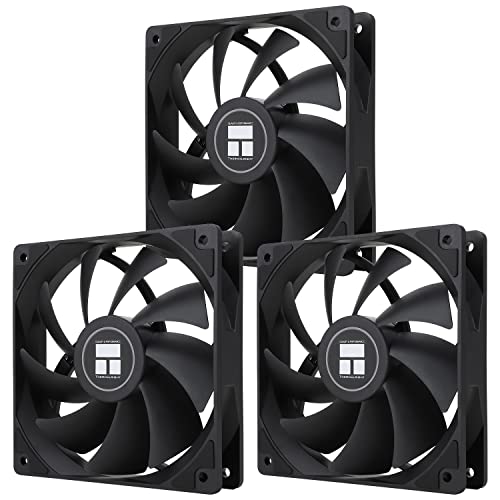

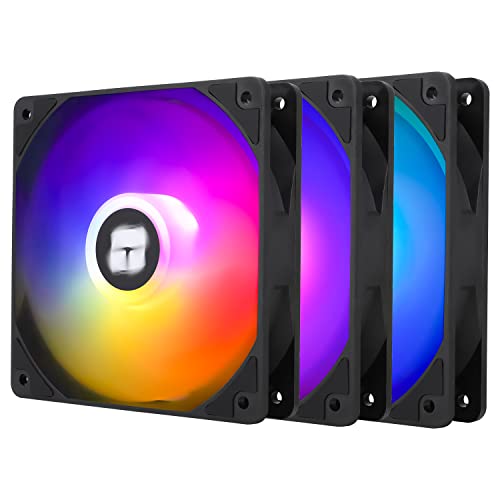

As an Amazon Associate we earn from qualifying purchases at no extra cost to you. Ratings are shown as listed on Amazon.
Quick picks by build type
- Best overall 120 mm: Noctua NF-A12x25 PWM. It combines excellent case airflow, useful static pressure, refined acoustics, and a premium build.
- Best for radiators and restrictive front panels: Phanteks T30-120. Its 30 mm thickness and high-pressure design give it more performance headroom than a conventional 25 mm fan.
- Best value: Arctic P12 Max. It offers high maximum speed and strong pressure for a comparatively low price, although it is less quiet at full speed.
- Best premium 140 mm option: Noctua NF-A14x25 G2 PWM. Its larger blades can move substantial air at lower RPM in cases that support 140 mm fans.
- Best for a quiet-focused build: be quiet! Silent Wings Pro 4, especially when its speed switch and mounting options are useful for your case layout.
What matters more than the headline airflow figure?
Fan specifications are easiest to compare when you separate four characteristics: airflow, static pressure, noise, and control range.
Airflow, usually listed in CFM or cubic metres per hour, describes how much air a fan can move in an open test. It is most relevant for an unobstructed exhaust position or a case with a relatively open mesh panel.
Static pressure, listed in mmH₂O, indicates how well the fan pushes against resistance. Radiators, dust filters, narrow vents, solid front panels, and dense drive cages all benefit from higher static pressure. A fan with a large CFM number is not automatically the better radiator fan.
Noise depends on more than the published dBA value. Motor tone, bearing sound, turbulence, mounting vibration, and the RPM at which the fan reaches its rated airflow all matter. A fan that is quiet at 1,000 RPM may become noticeably louder at 1,800 RPM.
Control range is particularly important. PWM fans can be controlled through a four-pin motherboard header. A broad range, such as roughly 300 to 2,000 RPM, lets you run quietly at idle while retaining cooling capacity during gaming or rendering.
Head-to-head comparison
| Fan | Size | Maximum speed | Maximum airflow | Static pressure | Published noise | Best use |
|---|---|---|---|---|---|---|
| Noctua NF-A12x25 PWM | 120 x 25 mm | 2,000 RPM | 60.1 CFM | 2.34 mmH₂O | 22.6 dBA | Quiet all-round case or radiator use |
| Phanteks T30-120 | 120 x 30 mm | 3,000 RPM | 67 CFM | 3.3 mmH₂O | 39.7 dBA | Radiators and restrictive intakes |
| Arctic P12 Max | 120 x 25 mm | 3,300 RPM | 81.04 CFM | 4.35 mmH₂O | 40.0 dBA | Budget pressure and high-performance cooling |
| be quiet! Silent Wings Pro 4 120 | 120 x 25 mm | 3,000 RPM | 83.9 CFM | 5.31 mmH₂O | 36.9 dBA | Premium radiator or case cooling |
| Noctua NF-A14x25 G2 PWM | 140 x 25 mm | 1,500 RPM | 91.5 CFM | 2.56 mmH₂O | 24.8 dBA | Large, quiet case intakes and exhausts |
These are manufacturer-rated maximum figures, not a guarantee of the same result inside a particular chassis. Fan curves, grille design, filter cleanliness, and the distance between the fan and the obstruction can change the outcome.
120 mm versus 140 mm: which size fits better?
A 140 mm fan is usually the better choice when the case supports it. Its larger swept area can move similar or greater air at a lower rotational speed, often reducing broadband noise. It also needs fewer fans to provide useful intake capacity.
However, compatibility is not universal. Check the case manual for the actual mounting pattern, not merely the maximum fan size printed on a product page. A 140 mm position may conflict with a radiator, graphics card, motherboard heatsink, drive cage, or top-mounted memory modules.
Use 120 mm fans when the case has only 120 mm mounts, when radiator compatibility is important, or when you need precise placement around components. Three 120 mm fans can also provide more evenly distributed airflow than two 140 mm fans in a long front panel.
Choosing by airflow position
Front intake
Front intakes usually need to overcome a dust filter and a front grille. Choose a pressure-oriented fan, especially if the panel is solid or heavily perforated. The Phanteks T30-120, Silent Wings Pro 4, Arctic P12 Max, and NF-A12x25 are all sensible candidates. For a 140 mm-compatible mesh case, the NF-A14x25 G2 is attractive when low noise is the priority.
Rear exhaust
Rear exhaust positions are often less restrictive. A balanced airflow fan is normally preferable to an extremely high-speed pressure fan. The NF-A12x25 or a lower-speed Silent Wings model can remove warm air without adding unnecessary motor and turbulence noise.
Top exhaust
Top exhaust fans help remove rising heat, but they can also draw cool air directly out of the case before it reaches the graphics card. Start with rear exhaust and front or bottom intake, then add top exhaust only if temperatures or internal pressure justify it. Keep top fans at a moderate speed unless the case has substantial heat buildup.
Radiators
Radiators need fans designed for pressure rather than open-air airflow. The T30-120 and Silent Wings Pro 4 are particularly suited to dense radiator fins. The NF-A12x25 is a quieter balanced option. Check thickness carefully: a 30 mm T30 can interfere with motherboard heatsinks, RAM, or a graphics card when installed in a tight top position.
Bearing types and long-term ownership
Most good modern fans use fluid-dynamic bearings, including variants marketed as hydraulic or self-stabilising fluid bearings. They are generally quiet and durable when operated in the orientation specified by the manufacturer.
Ball bearings can tolerate heat and unusual mounting positions well, but may develop a more noticeable hum as they age. Sleeve bearings are inexpensive and can be quiet when new, yet they are more sensitive to heat and orientation and are less appealing for a fan that must run continuously.
Dust is usually the first maintenance problem, not a dramatic bearing failure. A clogged filter forces the fan to work harder and can make a quiet build sound loud. Shut down the computer, hold the fan blades still, and use short bursts of compressed air or a manual air blower. Do not allow the blades to spin freely at very high speed during cleaning.
A practical decision matrix
| Your situation | Recommended type | Reason |
|---|---|---|
| Small case with one restrictive intake | High-pressure 120 mm PWM fan | Maintains intake flow through a filter and narrow grille |
| Large mesh case with 140 mm mounts | Quiet 140 mm fan at low RPM | Moves useful air without needing high rotational speed |
| 240 or 360 mm liquid-cooling radiator | Pressure-focused 120 mm PWM fans | Radiator fins create more resistance than open case mesh |
| Budget build with several fan positions | Arctic P12 Max or similar value PWM fan | Strong performance per fan, with speed limited through software |
| Noise-sensitive workstation | Premium balanced fan with a low minimum RPM | Low-speed operation matters more than maximum airflow |
How many fans do you need?
A sensible starting layout for a gaming PC is two front intakes and one rear exhaust. Add a top-rear exhaust if the processor or graphics card produces substantial heat. More fans do not automatically mean lower temperatures: poorly balanced layouts can increase turbulence, dust ingress, or noise.
For example, suppose a case supports three front 120 mm fans but your graphics card is already cool. Installing all three at 1,200 RPM may add little benefit while increasing noise. Running two fans at 800 to 1,000 RPM can produce a better acoustic result. Use temperature monitoring to compare the layouts rather than assuming that the largest fan count wins.
Set a gradual PWM curve instead of linking every fan directly to the hottest sensor. A rear exhaust fan reacting to CPU temperature may repeatedly ramp during brief processor boosts. A smoother curve, with a delayed response if your motherboard supports it, avoids unnecessary speed changes.
Final buying advice
Choose the largest fan your case genuinely supports, then prioritize the restriction in front of it. Select a pressure-focused model for radiators, filters, and tight grilles; choose a balanced low-noise model for open exhaust positions. For most 120 mm builds, the NF-A12x25 is the safest premium all-rounder, the T30-120 is the performance choice when its extra thickness fits, and the P12 Max offers the most cooling headroom for a lower general market price. Whatever you buy, PWM control, clean filters, and a sensible fan curve will contribute as much to a quiet, cool system as the fan label itself.

Write Your Review
No reviews yet. Be the first to share your experience!