

Key takeaways
- Measure the footprint: an 8-inch press often needs roughly 10 by 10 inches of usable counter space once the handle is open. A 10-inch model may need about 13 inches of clearance.
- Check vertical clearance: the raised handle can exceed 12 inches above the counter, making a deep cabinet or open shelf more practical than a low drawer.
- Protect the plates: store the press dry with parchment between the plates if the surfaces are rough or prone to rust.
- Inspect the hinge and handle: these usually wear before the plates. Looseness creates uneven pressure and can cause dough to become thicker on one side.
- Use liners: food-safe plastic cut from a storage bag or reusable tortilla-press liners prevents sticking. Do not press directly on an absorbent towel.
The best tortilla press for homemade tortillas is usually an 8-inch cast-iron press for regular corn tortillas, while an aluminum press is the lighter budget choice and a hardwood press is best when appearance, quiet operation, and careful thickness control matter most.
Our top picks


As an Amazon Associate we earn from qualifying purchases at no extra cost to you. Ratings are shown as listed on Amazon.
Quick picks by situation
| What matters most | Best construction | Recommended size | Why |
|---|---|---|---|
| Frequent corn-tortilla batches | Cast iron | 8 inches | Heavy plates deliver consistent pressure with little movement. |
| Lowest initial cost and easy carrying | Aluminum | 8 inches | Lightweight, inexpensive, and simple to store. |
| Quiet pressing and attractive countertop storage | Hardwood | 8 to 10 inches | Wood is comfortable to operate and often doubles as a kitchen display piece. |
| Large burritos or oversized flatbreads | Cast iron or reinforced aluminum | 10 to 12 inches | The larger plate accommodates wider dough, but needs more counter and storage space. |
| Very thin flour tortillas | Any sturdy press plus a rolling pin | 8 to 10 inches | A tortilla press is optimized for flattening; a rolling pin gives finer thickness control for stretchy flour dough. |
Cast iron, aluminum, or wood: the head-to-head comparison
Cast iron: the most stable choice
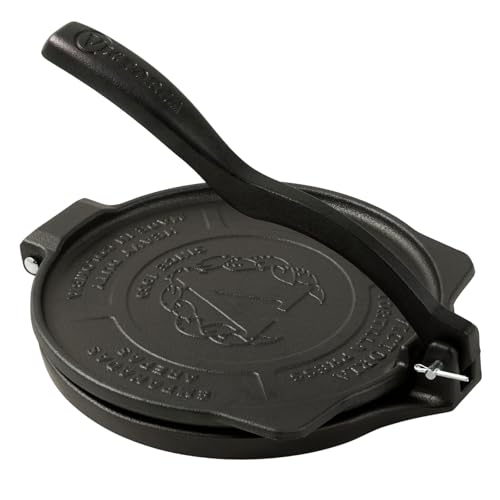
Cast iron is the safest recommendation for someone who makes tortillas weekly or in batches. Its mass keeps the lower plate planted, and the heavy upper plate applies pressure across the dough rather than relying entirely on the user’s arm strength. A well-known example is the Victoria cast-iron tortilla press, available in common 8-inch and larger formats.
The trade-off is weight. An 8-inch cast-iron press commonly weighs about 5 to 7 pounds, and a 10-inch model can approach or exceed 10 pounds depending on its design. That weight is useful during pressing but inconvenient if the press must be moved from a high shelf every time it is used.
Cast iron requires more care than aluminum. Dry it immediately after washing, apply a very thin coat of food-safe cooking oil when needed, and avoid leaving acidic moisture on the surface. Rust usually results from storage while damp rather than from normal tortilla dough.
Aluminum: light, affordable, and less forgiving
Aluminum presses, including common 8-inch models sold under the IMUSA name, are easy to lift and often cost less than cast-iron alternatives. They are a practical choice for occasional use, small kitchens, campers, or anyone who does not want a heavy appliance competing for cabinet space.
The lighter body can slide on the counter, particularly when pressing stiff dough. Put a damp kitchen towel or nonslip mat underneath the base. Aluminum also tends to flex more than cast iron. That does not make it unsuitable, but it can produce slightly uneven tortillas if the hinge, plates, or handle are thin.
Aluminum does not need seasoning and usually cleans up with a damp cloth. Avoid abrasive scouring pads, which can scratch the pressing surfaces and create more places for dough to stick. Many aluminum presses have uncoated surfaces, so parchment or plastic sheets remain useful.
Wood: comfortable and attractive, but finish matters
Hardwood tortilla presses offer a quieter, warmer-feeling alternative. They are commonly made from hardwoods such as maple, oak, or treated tropical hardwood, with thick plates and a long lever. A sturdy wooden press can flatten dough effectively, especially when its hinge and handle are tightly fitted.
Wood is more sensitive to moisture and temperature changes than metal. Do not soak it, put it in a dishwasher, or store it beside a steaming kettle. Wipe it clean, dry it promptly, and periodically refresh the surface with a food-safe mineral oil or the finish recommended by the maker. Avoid vegetable oils for long-term conditioning because they can become rancid.
Wooden presses vary more in construction quality. Look for plates that meet evenly, a handle that does not wobble, and a hinge attached with substantial hardware. A decorative, thin wooden press may be pleasant to display but frustrating for repeated batch cooking.
Size and thickness: the measurements that affect results
An 8-inch press is the versatile default. It makes tortillas roughly 6 to 8 inches across, depending on the dough ball and how far the plates close. A 10-inch or 12-inch press is useful for large tortillas, tostada shells, and other flatbreads, but it also demands larger dough portions and more counter clearance.
| Press diameter | Typical tortilla diameter | Approximate dough portion | Best use | Typical press weight |
|---|---|---|---|---|
| 6 inches | 4.5 to 6 inches | 20 to 30 g | Small tacos and children’s portions | 2 to 4 lb |
| 8 inches | 6 to 8 inches | 30 to 45 g | Everyday tacos and standard corn tortillas | 3 to 7 lb |
| 10 inches | 8 to 10 inches | 45 to 65 g | Large tacos, tostadas, and wider flatbreads | 6 to 12 lb |
| 12 inches | 10 to 12 inches | 60 to 90 g | Oversized tortillas and high-volume cooking | 10 to 18 lb |
These portions are starting points, not fixed rules. Dough hydration, masa type, and desired thickness change the result. A thicker tortilla needs a smaller dough ball or less pressure; a wider tortilla needs enough dough to reach the edges without becoming paper-thin.
Leverage and thickness control
Handle length is more important than it first appears. A longer handle increases leverage, reducing the force needed to flatten stiff masa. This is especially valuable with cast-iron presses, whose heavy upper plate already contributes useful pressure. A short handle can work well on a small press but becomes tiring during a 50-tortilla batch.
Most traditional presses do not provide a calibrated thickness dial. Thickness is controlled by the dough-ball weight, the amount of handle pressure, and whether the plates close fully. If precise repeatability matters, choose a press with a firm hinge and use a kitchen scale to portion each dough ball.
A simple worked example shows why portioning helps: if 1 kilogram of masa is divided into 30 equal pieces, each tortilla receives about 33 grams before cooking loss. If the pieces range from 25 to 42 grams, the same press can produce visibly different diameters and thicknesses even when the handle is operated identically.
Storage and ownership realities
- Measure the footprint: an 8-inch press often needs roughly 10 by 10 inches of usable counter space once the handle is open. A 10-inch model may need about 13 inches of clearance.
- Check vertical clearance: the raised handle can exceed 12 inches above the counter, making a deep cabinet or open shelf more practical than a low drawer.
- Protect the plates: store the press dry with parchment between the plates if the surfaces are rough or prone to rust.
- Inspect the hinge and handle: these usually wear before the plates. Looseness creates uneven pressure and can cause dough to become thicker on one side.
- Use liners: food-safe plastic cut from a storage bag or reusable tortilla-press liners prevents sticking. Do not press directly on an absorbent towel.
For a household making tortillas twice a month, a lightweight aluminum press may be the most sensible purchase. At two uses per month, a press used for five years handles about 120 sessions; portability and easy storage may matter more than maximum durability. For weekly cooking over the same period, the total is about 260 sessions, making cast iron’s stability and stronger hardware easier to justify.
How to choose your press
- Choose the largest tortilla you regularly make. An 8-inch press covers most taco needs; select 10 inches or more for unusually wide tortillas.
- Match the material to your storage habits. Choose aluminum if the press must be lifted frequently, cast iron if it can remain in one place, and wood if you are willing to keep it dry and conditioned.
- Prioritize a straight hinge. A perfectly heavy press still performs poorly if the plates do not close parallel.
- Check handle leverage. A long, rigid handle is more useful than decorative detailing, especially for dry or chilled dough.
- Plan for liners and cleanup. The press should be easy to wipe and dry without trapping masa in inaccessible joints.
Final recommendation
For most home cooks, an 8-inch cast-iron press is the best tortilla press for homemade tortillas because it combines stability, strong leverage, and long service life. Pick an aluminum model when low weight, low cost, or frequent carrying is the priority. Pick a well-built hardwood model when quiet operation, appearance, and hands-on control outweigh the extra care. Whichever material you choose, consistent dough portions and a good liner will improve uniformity more than a small difference in press weight.

Write Your Review
No reviews yet. Be the first to share your experience!