

Key takeaways
- Find the best fish food for pufferfish, from freeze-dried tubifex and canned bloodworms to krill-rich pellets and insect gel diets for picky puffers.
- Top Pick: Hikari Bio-Pure Freeze Dried Tubifex Worms
- Runner-up: Specs
- Also consider: Zoo Med Can O' Bloodworms
The best fish food for pufferfish is a rotating menu of meaty foods: freeze-dried tubifex worms, canned bloodworms, insect-based granules, a black soldier fly larvae gel, and krill-rich sinking pellets. No single food covers everything a puffer needs, so the strongest feeding plan mixes two or three of these across the week and adds snails for beak wear. Each food below suits the way puffers eat: meaty, sized for a puffer’s mouth, and sinking to mid-water or the bottom.
Pufferfish are not like community tetras or guppies. Most species are hunters that crush snails, crack crustacean shells, and pick at worms, and their beaks keep growing throughout their lives. A diet of flakes alone leaves a puffer underfed and lets the beak overgrow, which can stop the fish from eating at all. That is why keepers lean on frozen, freeze-dried, canned, and gel foods, plus pest snails, rather than a single staple flake or pellet.
As an Amazon Associate, we earn from qualifying purchases.
Table of Contents
- What Pufferfish Need From Their Food
- The 5 Best Fish Foods for Pufferfish
- How to Feed Pufferfish
- Frequently Asked Questions
- Conclusion
- Product and ASIN Reference
What Pufferfish Need From Their Food
Start with the beak. Pufferfish teeth fuse into a beak that grows constantly, and hard-shelled foods such as snails wear it down naturally. Ramshorn, bladder, and small Malaysian trumpet snails are the usual choices, offered whole so the puffer crushes the shell. Foods in this roundup do not replace snails, but they cover the daily nutrition around them.
Protein comes next. Puffers are carnivores or omnivores that lean heavily toward meat, and the foods below list animal ingredients first: tubifex worms, bloodworms, black soldier fly larvae, and Antarctic krill. A food built around one meaty ingredient is easier to judge than a blend padded with fillers, and the guaranteed analysis figures in the spec tables give a direct way to compare them.
Size and sinking behavior matter just as much. A pea puffer needs a small worm or a crumb of gel, while a larger puffer such as a figure eight or green spotted puffer can handle a whole bloodworm or a 2 mm pellet. Puffers tend to feed in mid-water or on the bottom, so slow-sinking granules, pellets, and gels reach them better than food that floats at the surface.
Variety is the last piece. Puffers are famous for going on hunger strike when the menu never changes, and a fish that refuses food for days is a real worry. Rotating two or three foods from this list keeps meals interesting and spreads the risk if one food is temporarily out of stock.
The 5 Best Fish Foods for Pufferfish
Each food below suits a different part of a puffer feeding plan. Together they cover worm-like treats, a soft canned staple, an insect-based granule, a gel for picky eaters, and a krill-first pellet.
1. Hikari Bio-Pure Freeze Dried Tubifex Worms

Freeze-dried tubifex worms are one of the closest matches to what a puffer hunts in the wild: long, soft, worm-shaped food that moves a little in the current. Hikari freeze-dries its Bio-Pure tubifex with pharmaceutical-grade techniques, which keeps the worms close to fresh in texture and taste while removing the parasites and harmful bacteria that live tubifex can carry. That matters for puffers, which suffer when uneaten live food fouls the water.
The guaranteed analysis is the strongest in this roundup for protein, with a minimum of 60 percent crude protein and a minimum of 6.5 percent crude fat. The worms come as pressed cubes, so a keeper can pinch off a small piece for a pea puffer or offer a larger piece to a bigger puffer. Pre-soaking the piece in a little tank water for a minute helps it sink, putting it where a puffer expects to find food. Hikari notes that the contents should be used within 90 days of purchase and kept tightly closed, so buy the smaller jar and use it steadily rather than stockpiling.
Specs
| Spec | Detail |
|---|---|
| Food form | Freeze-dried tubifex worms |
| Pack size | 0.78 oz (22 g) |
| Crude protein (minimum) | 60 percent |
| Crude fat (minimum) | 6.5 percent |
| Crude fiber (maximum) | 0.3 percent |
| Moisture (maximum) | 6 percent |
| Phosphorus (minimum) | 0.1 percent |
| Main ingredient | Tubifex worms |
| Artificial colors or preservatives | None |
| Best for | Small puffers and finicky eaters |
2. Zoo Med Can O’ Bloodworms

Bloodworms are the classic puffer treat, and Zoo Med Can O’ Bloodworms makes them as simple as opening a can. The bloodworms are cooked in the can to lock in flavor and freshness, which softens them and makes them easy for a puffer to tear apart. There is no thawing and no rinsing, so this is the fastest way to offer a meaty meal after a long day.
Each can holds 3.2 oz of bloodworms in water with guar gum, and the resealable lid means an opened can can be refrigerated for up to a week or frozen for longer use. That makes the three-pack practical for a keeper who feeds bloodworms two or three times a week. Bloodworms are rich and best used as part of a rotation rather than the only food, since a puffer fed on bloodworms alone misses the shell-crunching work and the nutritional range that snails, pellets, and gels provide. Offered alongside a granule or a pellet, canned bloodworms are one of the most reliable ways to get a shy or new puffer eating.
Specs
| Spec | Detail |
|---|---|
| Food form | Canned bloodworms |
| Pack size | 3.2 oz cans, pack of 3 |
| Ingredients | Bloodworms, water, guar gum |
| Preparation | Ready to serve, cooked in the can |
| Storage after opening | Refrigerate up to one week, or freeze |
| Resealable lid | Yes |
| Crude protein | Not stated |
| Best for | Puffers that need a soft, ready-to-eat meaty food |
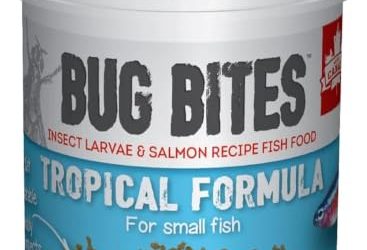
3. Fluval Bug Bites Cichlid Formula
Fluval Bug Bites Cichlid Formula is an insect-based granule that works well as the dry-food anchor of a puffer diet. Black soldier fly larvae are the first ingredient and make up to 40 percent of the formula, backed by salmon and other quality proteins. Insect larvae are a natural part of what many freshwater puffers eat, and the granule gives the fish something to chase and crunch.
The granules are slow sinking and measure 1.4 to 2.0 mm, which suits small to medium puffers and lets the food drift through the water column instead of sitting on the surface. The guaranteed analysis lists a minimum of 40 percent crude protein and a minimum of 12.5 percent crude fat, a solid profile for a daily granule. Fluval’s feeding guidance is to offer as much as the fish can eat in two minutes, two or three times daily, and to remove anything left over. This listing is a pack of two 1.59 oz jars, covering a long stretch of daily feeding for a single puffer tank.
Specs
| Spec | Detail |
|---|---|
| Food form | Slow-sinking granules |
| Pack size | 1.59 oz (45 g) jars, pack of 2 |
| Granule size | 1.4 to 2.0 mm |
| First ingredient | Black soldier fly larvae, up to 40 percent |
| Crude protein (minimum) | 40 percent |
| Crude fat (minimum) | 12.5 percent |
| Crude fiber (maximum) | 5 percent |
| Moisture (maximum) | 10 percent |
| Ash (maximum) | 9 percent |
| Feeding guidance | As much as fish can eat in two minutes, two or three times daily |
4. Repashy SuperFoods Grub Pie Reptile

Repashy Grub Pie is a gel premix built around black soldier fly larvae meal, and it is the best option in this roundup for a puffer that ignores dry food. The powder mixes with boiling water and sets into a soft gel that can be cut into pieces sized to the fish, so a pea puffer gets a crumb and a larger puffer gets a chunk. Gel food has a soft, meaty texture that many puffers accept when pellets do not interest them.
The formula is about 75 percent insect based, built on cold-pressed black soldier fly larvae meal, and the guaranteed analysis lists a minimum of 43 percent crude protein, a minimum of 10 percent crude fat, and a minimum of 1.4 percent calcium. Prepared gel keeps in the refrigerator for up to two weeks or can be frozen, so one jar covers many feedings. This Amazon listing is the reptile jar, and Repashy also sells a fish version of Grub Pie with the same insect-based approach for insect-eating tropical fish. Either way, the gel format earns its place for puffers that need a soft, customizable food.
Specs
| Spec | Detail |
|---|---|
| Food form | Gel premix powder |
| Pack size | 6 oz jar |
| Main ingredient | Black soldier fly larvae meal |
| Insect content | About 75 percent |
| Crude protein (minimum) | 43 percent |
| Crude fat (minimum) | 10 percent |
| Crude fiber (maximum) | 10 percent |
| Moisture (maximum) | 8 percent |
| Ash (maximum) | 12 percent |
| Calcium (minimum) | 1.4 percent |
| Preparation | Mix one part powder with two to three parts boiling water, allow to set |
| Storage of prepared gel | Refrigerate up to two weeks, or freeze |
5. NorthFin Cichlid Formula
NorthFin Cichlid Formula is a krill-first sinking pellet that gives a puffer a firm, meaty pellet to work on. Whole Antarctic krill meal is the key ingredient, followed by high omega-3 DHA herring meal, and the formula is filler-free and fortified with garlic. Krill is a natural color enhancer, and a krill-based pellet fits the crustacean-heavy diet puffers are built to eat.
The pellets are slow sinking and measure 2 mm, a size that suits medium puffers such as figure eight and green spotted puffers, and small puffers can manage a pellet broken in half. The 100 g bag suits a single tank, since pellets lose freshness once the bag has been open for months. This is the most premium-style pick in the roundup, best used as the pellet in a rotation that also includes a worm food and snails for beak wear.
Specs
| Spec | Detail |
|---|---|
| Food form | Slow-sinking pellets |
| Pellet size | 2 mm |
| Pack size | 100 g |
| Key ingredients | Whole Antarctic krill meal, high omega-3 DHA herring meal |
| Filler-free formula | Yes |
| Garlic fortified | Yes |
| Made in | Canada |
| Crude protein | Not stated |
How to Feed Pufferfish
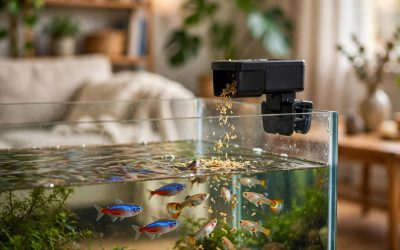
Feed small amounts once or twice a day, offering only what the puffer finishes in a few minutes, and remove anything left over so it does not foul the water. Rotate at least two or three foods from this roundup across the week rather than serving the same item every day, and offer snails once or twice a week so the beak stays worn down. Ramshorn and bladder snails from a pest-snail culture are the usual choice, and they can be bred in a separate small tank for a steady supply.
Watch the puffer’s belly and beak as the real feeding guide. A slightly rounded belly after a meal is normal, while a sunken belly points to underfeeding or an internal problem that food alone will not fix. If the beak starts to look overgrown, increase the hard-shelled foods and offer snails more often. New puffers sometimes refuse food for the first few days in a new tank, and a soft, strong-smelling food such as canned bloodworms or a piece of gel is usually the best way to tempt them into eating.
Frequently Asked Questions
Do pufferfish need snails?
Yes, snails matter for most puffers because crushing shells wears the beak down. Without hard-shelled food, the beak can overgrow until the puffer cannot eat. Offer small snails such as ramshorn or bladder snails once or twice a week alongside the foods in this roundup.
Can pufferfish eat freeze-dried food every day?
Freeze-dried foods such as tubifex worms can be fed often, but they work best as part of a rotation rather than the only food. Pre-soak freeze-dried pieces briefly so they sink, and pair them with a pellet, a gel, or canned food plus snails so the puffer gets a wider range of nutrients and textures.
What size food should I give a pea puffer?
Pea puffers need small food: a pinch of freeze-dried tubifex, a small piece of bloodworm, a crumb of gel, or a granule under 2 mm. Offer tiny portions and watch the fish eat, since food that is too large gets ignored and sinks to the bottom uneaten.
Why is my pufferfish refusing food?
A puffer may refuse food because it is new to the tank, stressed, bored with one food, or dealing with a health problem. Try a different food from this roundup, especially a soft option such as canned bloodworms or gel, check water quality, and offer snails. If refusal lasts more than a few days, test the water and ask an aquatic veterinarian.
Conclusion
The best fish food for pufferfish is not one product but a small rotation covering worms, bloodworms, insect granules, gel, and krill pellets, with snails on the side for beak wear. Start with the freeze-dried tubifex worms and canned bloodworms for reliable acceptance, add the Fluval granules or NorthFin pellets as a daily staple, and keep the Repashy gel ready for picky days. Feed small portions, rotate often, and let the puffer’s belly and beak tell you whether the plan is working.
More from Amazon
Programs that pair well with the guide above. Offers and eligibility are set by Amazon and may change.
Set up recurring deliveries of everyday items on eligible products. Terms and savings are set by Amazon.
Explore Subscribe & SaveFree shipping on eligible items, Prime Video and more. Eligible new members can start with a free trial.
Start a Prime free trialAudiobooks and podcasts to listen to on the go. Eligible new members can start with a free trial.
Try Audible freeRead from a large library of eBooks and audiobooks on any device. Check Amazon for current plans.
Explore Kindle UnlimitedAs an Amazon Associate we earn from qualifying purchases.
Write Your Review
No reviews yet. Be the first to share your experience!