

Key takeaways
- Choose a sponge sized for 1.5 to 2 times your tank’s volume if you keep messy fish.
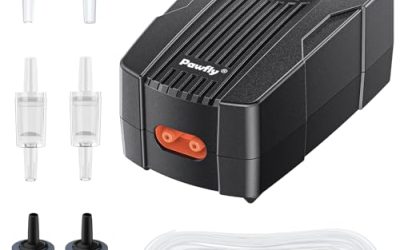
- Use an air pump rated for the depth of your tank; deeper water needs more pressure.
- Add a check valve so water never siphons back into the pump.
- Run airline tubing in a loop above the waterline for extra protection.
- Seed a new sponge by squeezing a mature filter into the tank water.
The best sponge filter for a small aquarium is an air-driven model sized to your tank, paired with a quiet air pump and a check valve. Sponge filters provide gentle flow, solid biological filtration and a safe surface that will not suck up shrimp or fry. They are not flashy, and they are very hard to beat for hospital tanks, breeding setups and nano aquariums. Here are the models that keep showing up in beginner and expert tanks alike.
Why Sponge Filters Work So Well
The filter is simply a foam body with an airlift tube. Air from a pump rises through the tube, pulling water through the sponge, where beneficial bacteria colonize the foam. Because the flow is mild, tiny creatures stay safe and bettas are not buffeted. They run without electricity near the water, are inexpensive to replace, and keep working in a power cut as long as the sponge stays wet and seeded. The tradeoff is that they offer mostly mechanical and biological filtration, with no chemical media and limited ability to polish very fine particles.
Quick Picks
| Pick | Best for | Key feature |
|---|---|---|
| Hikari Bacto-Surge Sponge Filter | Shrimp and fry tanks | Fine foam with gentle intake |
| Aquarium Co-Op Sponge Filter | Value-oriented multi-tank setups | Simple, rugged design with cleaning access |
| Xinyou XY-2822 Double Sponge Filter | Small to mid tanks needing extra media | Two sponge heads on one tube |
| Hydro Sponge Filter | Small, planted tanks | Replaceable foam and varied sizes |
| Penn-Plax Cylinder Sponge Filter | Breeding and quarantine tanks | Widely available, quick setup |
1. Hikari Bacto-Surge Sponge Filter
Hikari’s sponge filter is a common pick for shrimp keepers because the foam is fine and the water intake is gentle. It is also compact enough to tuck into corners of a nano tank. Weaknesses are straightforward: it is not ideal for large tanks, and heavily loaded tanks may need a second filter. Reviewers like that it is a straightforward design that keeps baby shrimp safe. Compare it with a larger sponge if you add more fish later.
Hikari Bacto-Surge Sponge Filter
2. Aquarium Co-Op Sponge Filter
Designed by hobbyists who run many tanks, this sponge filter emphasizes durability and easy cleaning. Larger sizes are marketed for tanks up to a few dozen gallons, and the foam is meant to be rinsed and reused. If you want several filters at a reasonable total cost, this is a favorite among fish keepers who like to buy a few at once. Keep in mind that availability varies, and a bigger sponge needs a stronger air pump to run properly.
3. Xinyou XY-2822 Double Sponge Filter
Two sponge heads on one lift tube provide extra biological surface area, and that is the appeal: you get better filtration while using a single air line. It suits tanks in the 20 to 40 gallon range, depending on stocking. The plastic is simple and parts can feel lightweight, and you may need weights to keep it from floating when the foam is fresh. A strong choice for budget breeding racks or quarantine tanks.
4. Hydro Sponge Filter
Hydro filters come in several sizes, which helps when you want to match the foam to the tank. The foam is reasonably coarse for decent water flow, and it can be a good match for planted tanks where biofilm and microfauna feed small fish. A small bummer is that the bubbles can be noisy if the air pump is oversized, so tune the pump and use a valve. A simple, dependable starting point for a first sponge filter.
Hydro Sponge Filter
5. Penn-Plax Cylinder Sponge Filter
This is the sponge filter you can usually find in a local pet store, which is a real advantage when you need one in a hurry. It sets up quickly and runs on a standard air pump. The foam is fine for fry, and the unit is inexpensive to replace. Some hobbyists find the foam wears out faster than premium options, so keep a spare seeded sponge in an established tank as backup.
Penn-Plax Cylinder Sponge Filter
Sizing and Air Pump Matching
- Choose a sponge sized for 1.5 to 2 times your tank’s volume if you keep messy fish.
- Use an air pump rated for the depth of your tank; deeper water needs more pressure.
- Add a check valve so water never siphons back into the pump.
- Run airline tubing in a loop above the waterline for extra protection.
- Seed a new sponge by squeezing a mature filter into the tank water.
Maintenance Without Crashing the Cycle
Squeeze the sponge in a bucket of old tank water, not under the tap. Chlorine can wipe out the bacteria you have worked to grow. Clean only part of the media at a time, every few weeks, and replace foam only when it is falling apart. If you run two sponges, alternate the cleaning schedule so one always remains fully seeded.
Which Tanks Suit a Sponge Filter Best?
Sponge filters are at their best in specific situations. Shrimp tanks benefit because the foam doubles as a grazing surface and cannot trap babies. Betta tanks of 5 to 10 gallons benefit from gentle, adjustable flow. Fry grow-out tanks and breeding setups suit them for the same reasons, and quarantine tanks love them because a seeded sponge moves from the main tank straight into a hospital tank with beneficial bacteria already attached. Larger community tanks can use them as a supplement, which also gives you a backup if the main filter fails. By contrast, tanks with big messy fish such as goldfish may overwhelm a single small sponge, so size up or add a second filter.
Think about aesthetics too. Black sponge bodies disappear against dark substrate, while white ones show up. If the bubbling bothers you, use a diffuser or an airstone with finer bubbles, and adjust flow with a valve.
Common Mistakes
People often choose a sponge that is too small for the tank, run an air pump with no valve, or place the filter where bubbles disturb a betta. Another mistake is treating the sponge as a complete solution in a heavily stocked tank. Sponge filters are excellent bio-filters, but they do not remove dissolved wastes, so water changes remain essential. Finally, do not let the foam clog with debris: reduced bubbling is the warning sign.
Cost and Value
One reason sponge filters remain popular is that the running cost is tiny. An air pump uses very little electricity, the sponge needs no cartridges, and a single filter can be used for years. For hobbyists who run several tanks, that adds up. A single pump with a gang valve can power sponge filters in a row of tanks, and spare foam sleeves are inexpensive. Compare that to cartridge-based hang-on-back filters, where ongoing refills become a quiet recurring expense.
There is also a safety angle. Because sponge filters rely on air, a fish that is startled and leaps into the corner will not get hurt by an intake. Fry and shrimp can graze on the foam and pick up biofilm. The only real downside is aesthetics: the filter body is visible in the tank, so choose a color that blends with your scape and tuck it behind rocks or plants.
Frequently Asked Questions
Are sponge filters good for bettas?
Yes. The flow is mild and can be reduced by turning down the air, which helps long-finned bettas.
Do sponge filters need an air pump?
Most do. Some models use powerheads, but the classic design relies on an air pump and airline tubing.
Can I use a sponge filter in a large tank?
You can as supplementary filtration, but a single small sponge will not carry a large, heavily stocked tank.
How often should I replace the sponge?
Only when it breaks down or stops flowing despite cleaning. Properly maintained foam can last a long time.
Conclusion
For small tanks, fry, shrimp and quarantine setups, a sponge filter is a practical and forgiving choice. Match its size to the tank, pair it with a quiet pump and a check valve, and clean it gently. It will keep your water stable without a lot of fuss.
As an Amazon Associate we earn from qualifying purchases.
More from Amazon
Programs that pair well with the guide above. Offers and eligibility are set by Amazon and may change.
Set up recurring deliveries of everyday items on eligible products. Terms and savings are set by Amazon.
Explore Subscribe & SaveFree shipping on eligible items, Prime Video and more. Eligible new members can start with a free trial.
Start a Prime free trialAudiobooks and podcasts to listen to on the go. Eligible new members can start with a free trial.
Try Audible freeRead from a large library of eBooks and audiobooks on any device. Check Amazon for current plans.
Explore Kindle UnlimitedAs an Amazon Associate we earn from qualifying purchases.
Write Your Review
No reviews yet. Be the first to share your experience!