

Key takeaways
- The best Android tablets in 2026 are the Samsung Galaxy Tab S10 Ultra for a large, premium work-and-streaming setup, the OnePlus Pad 2 for high-performance gaming, the Google Pixel Tablet for simple household use, and the Samsung Galaxy Tab A9+…
The best Android tablets in 2026 are the Samsung Galaxy Tab S10 Ultra for a large, premium work-and-streaming setup, the OnePlus Pad 2 for high-performance gaming, the Google Pixel Tablet for simple household use, and the Samsung Galaxy Tab A9+ for the lowest sensible budget.
Your main decision is not simply screen quality: it is whether you need a portable 11-inch tablet, a laptop-sized 12- to 14-inch workspace, or the fastest processor available for demanding games. Battery capacity, weight, software support, and resistance to everyday grime also matter—especially if the tablet will sit beside an aquarium.
Our top picks


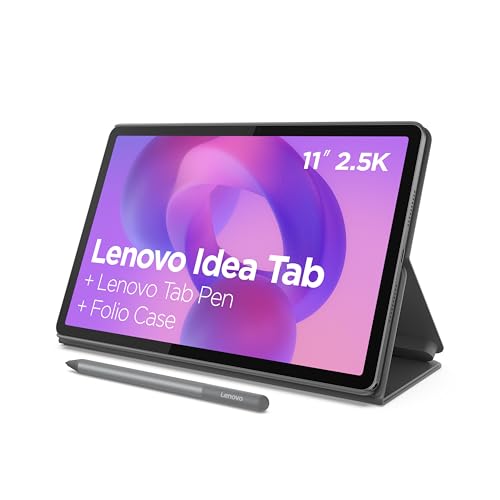

As an Amazon Associate we earn from qualifying purchases at no extra cost to you. Ratings are shown as listed on Amazon.
Quick picks by situation
| Best for | Recommended tablet | Why it fits | Typical market range |
|---|---|---|---|
| Lowest-cost streaming and browsing | Samsung Galaxy Tab A9+ | Large 11-inch display, microSD expansion, adequate everyday performance | About $150–$250 |
| Balanced family and home use | Google Pixel Tablet | Clean software, good speakers, useful smart-home features | About $300–$500 |
| Gaming and demanding multitasking | OnePlus Pad 2 | Snapdragon 8 Gen 3 performance and a smooth 144Hz display | About $400–$600 |
| Large-screen work and video | Samsung Galaxy Tab S10 Ultra | 14.6-inch AMOLED panel, powerful hardware, excellent multitasking space | About $1,000–$1,400 |
| Portable premium productivity | Xiaomi Pad 7 | Compact 11.2-inch 3.2K display and strong midrange performance | About $350–$500 |
Best Android tablets compared
Samsung Galaxy Tab S10 Ultra: best for a large work-and-streaming screen
The Galaxy Tab S10 Ultra is the closest Android tablet alternative to carrying a portable monitor and a lightweight laptop. Its 14.6-inch Dynamic AMOLED 2X display has a 2,960 × 1,848 resolution and a 120Hz refresh rate. Movies, split-screen documents, remote desktop sessions, and aquarium-management dashboards are all easier to view than on an 11-inch tablet.
It uses a MediaTek Dimensity 9300+ processor, includes an S Pen, and has an 11,200mAh battery. The trade-off is size: at roughly 718 grams before adding a case, it is better on a desk or stand than held in one hand. The AMOLED panel also makes it a premium purchase, generally around $1,000 to $1,400 depending on storage and connectivity.
Choose it if you regularly replace a laptop for email, spreadsheets, video calls, or creative work. Do not choose it merely to watch occasional videos; the extra size and cost will be wasted.
OnePlus Pad 2: best performance per dollar
The OnePlus Pad 2 is the strongest choice for Android gaming without moving to the most expensive tablet tier. Its Snapdragon 8 Gen 3 processor handles demanding 3D games, emulation, fast app switching, and high-resolution video editing better than budget tablets. The 12.1-inch LCD has a sharp 3,000 × 2,120 resolution and up to a 144Hz refresh rate.
Its 9,510mAh battery and approximately 584-gram body provide a good compromise between endurance and portability. An LCD cannot produce the same deep blacks as Samsung’s AMOLED display, but it avoids the premium price and can be easier to justify for long gaming sessions.
Look for at least 256GB of storage if games are a priority. Large modern games can consume tens of gigabytes each, and this tablet does not offer the same microSD flexibility as some Samsung models.
Google Pixel Tablet: best for simple home use
The Google Pixel Tablet has an 11-inch LCD with a 2,560 × 1,600 resolution, an 8,000mAh battery, and Google’s Tensor G2 processor. It is not the fastest gaming tablet in this group, but it is responsive for streaming, reading, video calls, smart-home controls, and general browsing.
Its optional charging speaker dock gives it a useful second role on a kitchen counter, office shelf, or aquarium station. The dock is particularly convenient for displaying a timer, lighting schedule, maintenance checklist, or monitoring app when the tablet is not being carried around.
The Pixel Tablet weighs about 493 grams. That is comfortable for handheld use, although its 60Hz display and less powerful gaming performance make it a weaker choice for competitive games. It is best for someone who values uncomplicated software and shared household use over maximum specifications.
Samsung Galaxy Tab A9+: best budget Android tablet
The Galaxy Tab A9+ is the sensible low-cost pick for YouTube, streaming services, web browsing, recipes, aquarium logs, and light school or office work. It has an 11-inch LCD with a 1,920 × 1,200 resolution, a 90Hz refresh rate, and a 7,040mAh battery. The Snapdragon 695 processor is adequate for everyday tasks but not ideal for demanding games or heavy video editing.
At roughly 480 grams, it is easy to move from a stand to a sofa. Models with microSD expansion are useful if you keep downloaded videos, manuals, or photographs on the tablet. Expect a typical market range of about $150 to $250, depending on memory, storage, and cellular support.
Its main limitation is longevity under heavy multitasking. If you routinely keep many browser tabs open, edit documents, and play graphics-intensive games, spending more on the OnePlus Pad 2 will feel worthwhile.
Xiaomi Pad 7: best compact premium alternative
The Xiaomi Pad 7 combines a relatively portable 11.2-inch size with a sharp 3,200 × 2,136 display, a 144Hz refresh rate, and an 8,850mAh battery. Its Snapdragon 7+ Gen 3 processor sits below flagship gaming chips but comfortably handles streaming, office apps, note-taking, and most games.
At about 500 grams, it is easier to carry than a 12.9- or 14-inch tablet while offering more workspace than many basic 10-inch models. Availability, software features, and accessory support vary by country, so check local warranty coverage before buying.
Screen size, battery, and performance tiers
| Tablet | Screen | Weight | Battery capacity | Performance tier | Storage flexibility |
|---|---|---|---|---|---|
| Galaxy Tab S10 Ultra | 14.6-inch AMOLED, 120Hz | About 718g | 11,200mAh | Flagship | microSD supported |
| OnePlus Pad 2 | 12.1-inch LCD, 144Hz | About 584g | 9,510mAh | Flagship-class | Choose internal storage carefully |
| Xiaomi Pad 7 | 11.2-inch LCD, 144Hz | About 500g | 8,850mAh | Upper midrange | Usually no microSD |
| Google Pixel Tablet | 11-inch LCD, 60Hz | About 493g | 8,000mAh | Midrange | No microSD |
| Galaxy Tab A9+ | 11-inch LCD, 90Hz | About 480g | 7,040mAh | Entry-level | microSD supported |
Battery capacity is not the same as runtime. A large bright AMOLED screen, high refresh rate, cellular modem, and demanding game can consume power much faster than reading a downloaded article at moderate brightness. As a practical planning estimate, a 9,000mAh-class tablet might provide roughly 7 to 12 hours of mixed active use, while intensive gaming can reduce that considerably. Treat manufacturer runtime figures as best-case guidance rather than a guarantee.
Decision matrix: match the tablet to your use
| Your situation | Best fit | Reason |
|---|---|---|
| Under $250, mostly video and browsing | Galaxy Tab A9+ | It covers basic tasks without paying for unused flagship performance. |
| Several hours of gaming each week | OnePlus Pad 2 | The processor and high-refresh display leave more performance headroom. |
| Shared family tablet with occasional smart-home use | Google Pixel Tablet | The dock and simple interface suit a stationary household role. |
| Frequent documents, multitasking, and video calls | Galaxy Tab S10 Ultra | The larger display makes split-screen work more practical. |
| Daily commuting or handheld reading | Xiaomi Pad 7 or Pixel Tablet | Both are easier to carry than an ultra-large tablet. |
Ownership realities near an aquarium
No tablet in this list should be treated as waterproof. Water droplets, salt spray, mineral residue, and wet fingers are more serious risks than ordinary household dust. Keep the tablet outside the splash zone, use a stable stand, and clean the screen with a dry or barely damp microfiber cloth. Never spray cleaner directly onto the device, and do not use glass cleaner, abrasive pads, or paper towels that can leave grit behind.
The first parts likely to show wear are the charging port, screen coating, case corners, and battery—not the processor. Repeatedly charging while the tablet is hot from gaming can accelerate battery aging, so allow it to cool and avoid covering ventilation areas. A case with a raised bezel helps with drops, but it also traps salt and dust; remove it periodically and wipe both the case and tablet.
For a fixed aquarium setup, calculate value by actual use. A $400 tablet used four times per week for three years provides about 624 sessions: $400 ÷ 624 is approximately $0.64 per use. If the tablet is used only for occasional maintenance notes, a $200 model may be the better purchase; if it replaces a laptop every day, the larger investment is easier to justify.
Final recommendation
Buy the Galaxy Tab A9+ for inexpensive streaming and aquarium-related tasks, the Google Pixel Tablet for a shared home station, the OnePlus Pad 2 for gaming, the Xiaomi Pad 7 for a lighter premium setup, and the Galaxy Tab S10 Ultra when screen area and serious multitasking matter most. Prioritize storage and comfortable size over headline processor performance unless gaming or desktop-style work is your regular use case.

Write Your Review
No reviews yet. Be the first to share your experience!