

Key takeaways
- Windows and macOS: Wacom, XP-Pen, and Huion devices commonly support Photoshop, Krita, Clip Studio Paint, Illustrator, and other major applications.
- iPadOS: Procreate, Adobe Fresco, Clip Studio Paint, and Affinity apps are strong choices, but plug-ins and desktop-only features may be unavailable.
- ChromeOS: compatibility is more model-dependent. Confirm both driver support and whether pressure sensitivity works in your preferred browser application.
- Android: standalone Samsung Galaxy Tab models with an S Pen can be useful, but app quality and file workflows vary more than on iPadOS.
The best tablets for drawing depend on whether you want a low-cost pen tablet, a screen-based workstation, or a portable standalone device: the Wacom Intuos Pro is the safest desktop choice, the Wacom One 13 Touch is a strong entry-level display tablet, and the iPad Pro with Apple Pencil Pro is the most capable portable option.
Our top picks
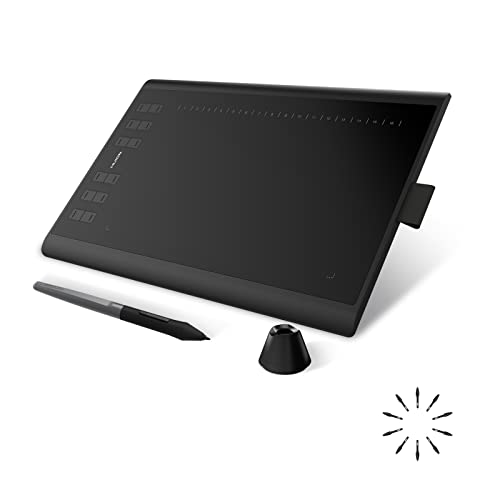

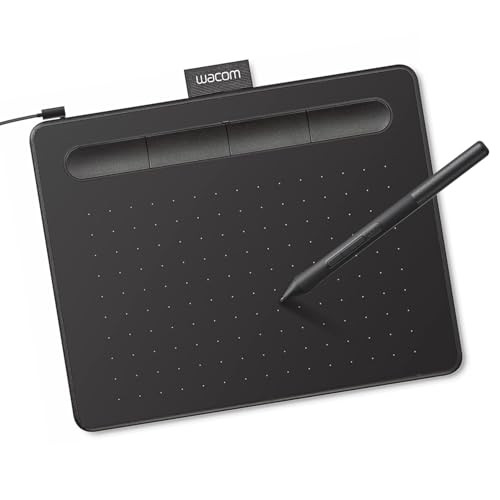

As an Amazon Associate we earn from qualifying purchases at no extra cost to you. Ratings are shown as listed on Amazon.
Quick recommendations by situation
| Situation | Best fit | Why it suits that use | Typical market range |
|---|---|---|---|
| First drawing tablet, limited budget | Wacom Intuos Small | Reliable drivers, compact footprint, pressure-sensitive pen | About $70–$100 |
| Learning digital art at a desk | Wacom One 13 Touch | Direct-on-screen drawing and a manageable 13.3-inch size | About $400–$500 |
| Frequent illustration or design work | Wacom Intuos Pro Medium | Excellent pen control, generous active area, no screen glare | About $350–$500 |
| Large display for a home studio | XP-Pen Artist Pro 16 Gen 2 | High-resolution display, laminated surface, shortcut controls | About $500–$700 |
| Drawing away from a computer | iPad Air with Apple Pencil Pro | Portable, long battery life, strong app ecosystem | About $700–$1,000 including the pen |
| Professional portable setup | iPad Pro with Apple Pencil Pro | Excellent screen, low latency, powerful creative apps | About $1,100–$1,700 including the pen |
What matters most when choosing a drawing tablet?
Pen accuracy and pressure sensitivity
Pen accuracy determines whether a line appears where you expect it. Wacom remains a reference point for consistent tracking, particularly when making slow curves, tiny details, or repeated strokes. Huion and XP-Pen also offer very good accuracy in current mid-range models, although driver setup and cursor calibration can vary more between computers.
Pressure sensitivity is useful, but the headline number is not everything. Most modern tablets provide at least 8,192 pressure levels, which is already more than enough for normal illustration. The pen’s initial activation force, pressure curve, tilt response, and how smoothly the software interprets light strokes matter more than moving from 8,192 to a larger number.
For comic inking, calligraphy, and textured brushes, choose a pen with a controllable pressure curve and tilt support. For photo editing or occasional annotation, even a basic battery-free pen is usually sufficient.
Screen quality and parallax
A pen display is easier to understand because you draw directly on the image, but it costs more and introduces screen-related compromises. Look for at least Full HD resolution on a 13-inch display and 2.5K or 4K resolution on larger screens if you work with fine line art.
Color coverage matters if you prepare work for print or professional delivery. A display covering close to 100% of sRGB is suitable for general digital art. Wider-gamut screens can show more saturated colors, but they require a color-managed workflow; otherwise, the same artwork may look different on another device.
Laminated screens reduce the gap between the pen tip and the image. This lowers perceived parallax, especially near the edges. Matte coatings reduce reflections but can create surface texture and may wear down pen nibs faster than smooth glass.
Latency and drawing feel
Latency is the delay between moving the pen and seeing the stroke. It comes from the tablet, display refresh rate, connection, operating system, and art application. A 120Hz display can make fast strokes look smoother than a 60Hz display, but software optimization is just as important.
Standalone tablets such as the iPad Pro generally feel immediate because the hardware and operating system are designed together. Pen displays connected through USB-C can also be highly responsive, but use the supplied cable and connect directly to the computer when possible. Hubs and low-quality adapters can cause intermittent disconnects or reduced display performance.
Head-to-head: pen tablets, pen displays, and standalone tablets
| Category | Typical active or screen size | Pressure sensitivity | Battery requirement | Best advantage | Main compromise |
|---|---|---|---|---|---|
| Wacom Intuos Small | 6.0 × 3.7 inches | 8,192 levels | None for pen or tablet | Low cost and dependable desktop use | Requires looking at a separate monitor |
| Wacom Intuos Pro Medium | 8.7 × 5.8 inches | 8,192 levels | None for pen; tablet supports wired or wireless use | Precise control and useful workspace | Not a standalone device |
| Wacom One 13 Touch | 13.3-inch display, 1920 × 1080 | 8,192 levels | None; powered through its connection | Direct drawing with touch gestures | Needs a computer and desk cables |
| XP-Pen Artist Pro 16 Gen 2 | 16-inch display, 2560 × 1600 | 16,384 levels | None; powered through its connection | Large, sharp canvas for detailed work | Less convenient to transport |
| iPad Air with Apple Pencil Pro | 11-inch or 13-inch display | Pressure-sensitive pen; Apple does not present a simple level count | Up to about 10 hours of mixed use | Portable drawing and strong app selection | Pen is an additional purchase |
| iPad Pro with Apple Pencil Pro | 11-inch or 13-inch display, up to 120Hz | Pressure-sensitive pen with tilt and hover features | Up to about 10 hours of mixed use | Lowest-feeling latency and excellent display | High total cost and limited desktop software |
Dimensions and battery figures are manufacturer-rated or commonly published specifications; actual runtime varies with brightness, applications, wireless use, and workload.
Best tablets for drawing by type
Best for a desktop setup: Wacom Intuos Pro Medium
The Intuos Pro Medium is the balanced choice for people who already own a good monitor and want a serious drawing surface without paying for a second screen. Its medium active area gives enough room for arm movement while remaining practical on a normal desk. The battery-free Pro Pen 3 avoids charging interruptions, and customizable buttons can reduce trips to the keyboard.
Choose the Small version if your desk is narrow or you draw mostly with wrist movements. Choose Medium if you make long sweeping strokes, use a large monitor, or expect to work for several hours at a time.
Best entry-level display: Wacom One 13 Touch
The Wacom One 13 Touch is easier for beginners because the cursor stays under the pen. Its 13.3-inch Full HD screen is sufficient for illustration, note-taking, and design practice, while touch support allows gestures such as zooming and rotating in compatible applications.
It is not as spacious as a 16-inch display and is not a self-contained computer. Before buying, check that your computer has the required USB-C or HDMI connections and enough desk space for the stand and cables.
Best larger-screen value: XP-Pen Artist Pro 16 Gen 2
The Artist Pro 16 Gen 2 is attractive for detailed line work because its 16-inch, 2560 × 1600 display provides more room and sharper detail than a typical 13-inch Full HD model. Its laminated surface and shortcut controls can make long illustration sessions more comfortable.
XP-Pen’s software compatibility covers major Windows and macOS applications, including Photoshop, Illustrator, Clip Studio Paint, Krita, and similar programs. Driver configuration deserves attention: map the display correctly, set the active area, and calibrate the pen after installation.
Best portable option: iPad Air with Apple Pencil Pro
The iPad Air offers the strongest balance for students, travelers, and artists who want to draw on a sofa, at a café, or away from a permanent workstation. Procreate, Fresco, Clip Studio Paint, and Affinity applications make it useful for illustration and layout work.
Its limitations are just as important. Some desktop applications have no full iPad equivalent, file management can be less flexible than on Windows or macOS, and storage cannot be upgraded later. Buy enough storage for layered files, reference images, and exported video rather than choosing solely by the entry price.
Software compatibility: check before buying
- Windows and macOS: Wacom, XP-Pen, and Huion devices commonly support Photoshop, Krita, Clip Studio Paint, Illustrator, and other major applications.
- iPadOS: Procreate, Adobe Fresco, Clip Studio Paint, and Affinity apps are strong choices, but plug-ins and desktop-only features may be unavailable.
- ChromeOS: compatibility is more model-dependent. Confirm both driver support and whether pressure sensitivity works in your preferred browser application.
- Android: standalone Samsung Galaxy Tab models with an S Pen can be useful, but app quality and file workflows vary more than on iPadOS.
Ownership costs and durability
The first consumable to wear is usually the pen nib. A rough estimate helps compare long-term value: if a $10 pack of ten nibs lasts two years, the consumable cost is about $5 per year. Heavy users working on a textured surface may use nibs much faster.
Replace nibs when the tip becomes visibly angled, rough, or short. A worn nib can scratch a screen protector and change the feel of pressure strokes. Keep the tablet covered when not in use, wipe it with a dry or slightly damp microfiber cloth, and avoid household glass cleaner, abrasive cloths, and liquid around buttons or ports.
Do not rest heavy objects on a pen display, bend USB-C cables sharply, or transport a glass display without a sleeve. The most common setup mistake is using a display tablet at an awkward angle; a stable stand that keeps the wrist neutral is often more valuable than a higher pressure-sensitivity rating.
How to make the final choice
- Decide whether you need a standalone device. If yes, compare iPadOS or Android tablets; if no, a pen tablet offers better value.
- Measure your available desk depth and monitor size. A large active area is helpful, but only if your arm and keyboard have room.
- Choose screen resolution and color coverage based on your work, not marketing numbers. Full HD suits a 13-inch display; larger screens benefit from higher resolution.
- Confirm application, operating-system, port, and driver compatibility before purchase.
- Budget for a stand, replacement nibs, a screen protector if appropriate, and the pen when it is sold separately.
For the lowest-risk recommendation, select the Wacom Intuos Pro Medium for a permanent computer desk, the Wacom One 13 Touch for direct-on-screen learning, or the iPad Air with Apple Pencil Pro when portability matters more than desktop software.

Write Your Review
No reviews yet. Be the first to share your experience!