

Key takeaways
- Slate: Has a natural appearance and can be durable, but its weight and texture vary. A rough surface may wear chalk quickly and take more effort to erase.
- Painted or coated board: Usually lighter and available in many sizes. Surface quality varies, so look for a smooth, chalk-compatible finish and follow any preparation or curing instructions.
- Coated steel: A useful option when you want a magnetic surface. Confirm that the writing side accepts regular chalk or chalk markers as intended; not every “magnetic board” has a chalkboard finish.
Best Kitchen Chalkboard for Wall Organization: Choose by Size, Surface, and Use
The best kitchen chalkboard for wall organization is a framed, wall-mounted board with a writing area sized for your routine, a smooth low-porosity surface, and mounting hardware suited to your wall—not simply the largest board you can fit. For most kitchens, a board around 16 × 20 inches is a practical starting point; choose a larger 24 × 36-inch format if you want to keep a meal plan and several lists visible at once.
Quick picks by kitchen and routine
| Your situation | Good format to look for | Why it fits |
|---|---|---|
| Small kitchen, one short list | 12 × 16 in, framed, vertical | Fits beside a pantry or doorway without taking much wall space. |
| Typical household, lists and weekly meals | 16 × 20 in, framed, horizontal | Offers room for distinct sections while remaining easy to reach and clean. |
| Family meal planning and shared reminders | 24 × 36 in, framed, horizontal | Can accommodate a weekly grid, grocery list, and notes without tiny writing. |
| Rental or frequent layout changes | Lightweight board, roughly 12 × 16 or 16 × 20 in | Lower weight can simplify mounting, though the fasteners still need to suit the wall. |
| Notes plus frequently used magnets | Magnetic chalkboard with a stated steel backing | Supports magnets as well as chalk, but may weigh more than a nonmagnetic board. |
These are useful size categories, not guarantees of usable writing space. Frame width, grid lines, and decorative trim all reduce the area available for notes. Check the listed writing-surface dimensions as well as the outer dimensions.
Our top picks

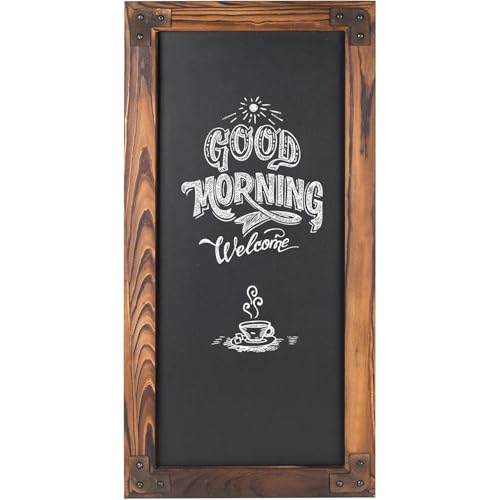
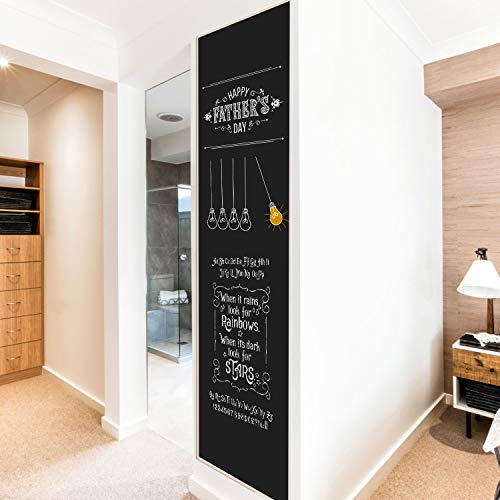

As an Amazon Associate we earn from qualifying purchases at no extra cost to you. Ratings are shown as listed on Amazon.
What to compare before you buy
Board size and layout
Measure the wall area, then leave room for a hand to write and for the frame to be visible. A 16 × 20-inch board has 320 square inches of total face area before the frame; a 24 × 36-inch board has 864. The larger face provides 2.7 times the area, but it also takes more wall space and is harder to mount securely.
For a weekly plan, a horizontal layout is often easier to divide into days. A vertical board can make better use of a narrow wall and suit a top-to-bottom grocery list. Preprinted grids save setup time but are less flexible; a plain board lets you change sections as your routine changes.
Writing surface: slate, painted board, or coated metal
- Slate: Has a natural appearance and can be durable, but its weight and texture vary. A rough surface may wear chalk quickly and take more effort to erase.
- Painted or coated board: Usually lighter and available in many sizes. Surface quality varies, so look for a smooth, chalk-compatible finish and follow any preparation or curing instructions.
- Coated steel: A useful option when you want a magnetic surface. Confirm that the writing side accepts regular chalk or chalk markers as intended; not every “magnetic board” has a chalkboard finish.
Traditional chalk is forgiving and easy to refresh, but makes dust. Chalk markers can produce cleaner, bolder lines, yet some surfaces are harder to clean after marker ink sits for a long time. Check the manufacturer’s cleaning guidance and test a marker in a small corner before using it across the board.
Frame, weight, and mounting hardware
Wood frames suit many kitchen styles, while metal frames can have a slimmer profile. Neither material alone tells you how well the board will hold up: inspect the joints, corner finish, backing, and whether the frame is securely attached. In a busy kitchen, a sturdy frame also helps protect edges from routine bumps.
Mounting hardware should match both the board’s weight and the wall. A screw in a wall stud or suitable masonry anchor is generally more dependable than a small nail or an adhesive strip, especially for a large board. Drywall anchors are not interchangeable: use the type and load rating appropriate to the board and installation. If the board has keyhole slots, note their spacing before drilling. Avoid placing it where a swinging cabinet door or appliance handle can strike it.
Weight is often missing from product descriptions, but it matters. Slate and steel-backed boards can be substantially heavier than lightweight composite boards of the same size. If the weight is not listed, ask the seller or choose a product with clear mounting instructions rather than assuming the included hardware is adequate.
Size, weight, and layout comparison
| Nominal size | Face area | Typical layout capacity | Mounting consideration |
|---|---|---|---|
| 12 × 16 in | 192 sq in | One main list or a compact menu | Often manageable on a narrow wall; verify actual weight. |
| 16 × 20 in | 320 sq in | Meal plan plus a short shopping list | Check whether the hanging slots allow level, stable mounting. |
| 18 × 24 in | 432 sq in | Weekly plan with a notes column | Use hardware rated for the board and wall, not just the nominal size. |
| 24 × 36 in | 864 sq in | Multi-person schedule, menu, and lists | Plan for two secure mounting points and confirm clearance around it. |
The areas above are calculated from nominal dimensions and do not subtract the frame. They are useful for comparing formats, not a promise of exact writing capacity.
Cleaning and long-term ownership
Chalk dust and residue are the main upkeep issues. Erasing a board while it is heavily covered can leave a gray haze, sometimes called ghosting. Wipe it with a clean, dry microfiber cloth first; if residue remains, use a slightly damp cloth and let the surface dry fully before writing again. Follow the product’s instructions, particularly for slate, coated surfaces, and chalk markers.
For a new board, check whether it needs “seasoning”—covering the surface with the side of a chalk stick and wiping it off. Some chalkboard finishes recommend this to reduce uneven marks; others do not. Don’t assume the same preparation applies to every material.
What tends to wear first is usually the finish, not the frame: frequent scrubbing, abrasive cleaners, and leaving marker ink on too long can dull or stain a surface. Use soft cloths, avoid scouring pads, and keep wet cleaning modest. Chalk itself is a recurring consumable; if dust is unwelcome, consider low-dust chalk or a compatible marker, while accepting that marker cleanup may require more care.
Magnetic features: useful, with a trade-off
A magnetic chalkboard can hold a recipe card, appointment slip, or lightweight note without using up writing space. Check that the product specifically states the board is magnetic and whether magnets are included. A decorative chalkboard over a nonmagnetic backing will not hold them. Also check whether the magnetic backing adds enough weight to change your mounting plan. Avoid using magnets to attach heavy objects unless the manufacturer gives a suitable capacity.
Final choice
For a compact kitchen or a simple reminder list, choose a 12 × 16-inch board with a smooth, easy-clean surface. For the best balance of writing room and wall footprint, a 16 × 20-inch framed board is a sensible default. Choose 18 × 24 or 24 × 36 inches when multiple people need to read the board or you want a recurring weekly layout. Prioritize clear surface-care instructions, stated weight, and appropriate mounting hardware over decorative extras.

Write Your Review
No reviews yet. Be the first to share your experience!